
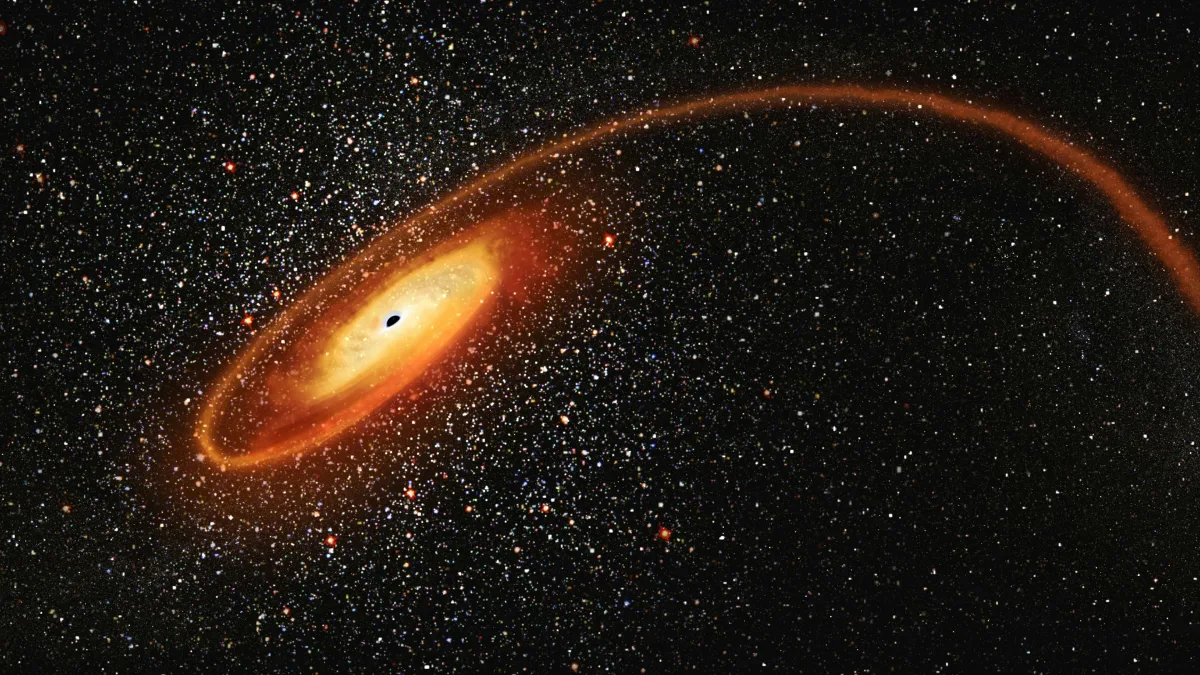
Only Binary Stars Can Create Interacting Supernovae: Understanding Cosmic Explosions
Most of the massive stars in our universe are not alone but actually live with a partner star? While our own Sun travels through space by itself, the heavy stars that eventually explode as supernovae usually exist in pairs - these relationships change how stars die and how bright their final moments appear to us on Earth.
Usually, a supernova happens when a heavy star runs out of fuel. The force that pushes outward stops and gravity pulls everything inward. The star collapses and then explodes in a giant flash. Many of these events stay bright for a few months before they fade away. Some special explosions stay bright for years, which has puzzled researchers for a long time.
The Secret Life of Binary Partners
Researchers recently looked at how these stars interact with their neighbors. Because most massive stars are in binary pairs, it makes sense that their partners play a role in their death. Scientists used computer models to study how the stars grow and change over time. They found that the partner star acts like a stage crew, setting the scene for a massive light show.
The study shows that as a star gets close to the end of its life, it grows much larger. In a binary system, the two stars are often close enough to affect each other - this closeness allows gas to move from one star to the other. You can think of it as a messy transfer of energy where not everything reaches the destination - this leaked gas stays near the stars and creates a dense environment.
The Mystery of the Long Lasting Glow
When a star explodes, it sends debris flying out at thousands of kilometers every second. If the star is alone, this debris eventually slows down in empty space - but in these special cases, the debris hits a thick shell of gas called circumstellar material (CSM). When the fast moving debris slams into this gas, the energy from the crash turns into light.
This process makes the supernova look much brighter and stay visible for much longer - these are called interacting supernovae. The main questions for scientists were
- Where does this thick shell of gas come from?
- Why is the gas so close to the star when it explodes?
- How often does this happen in the universe?
The new research suggests that only stars in pairs can create the specific conditions needed for this long lasting glow.
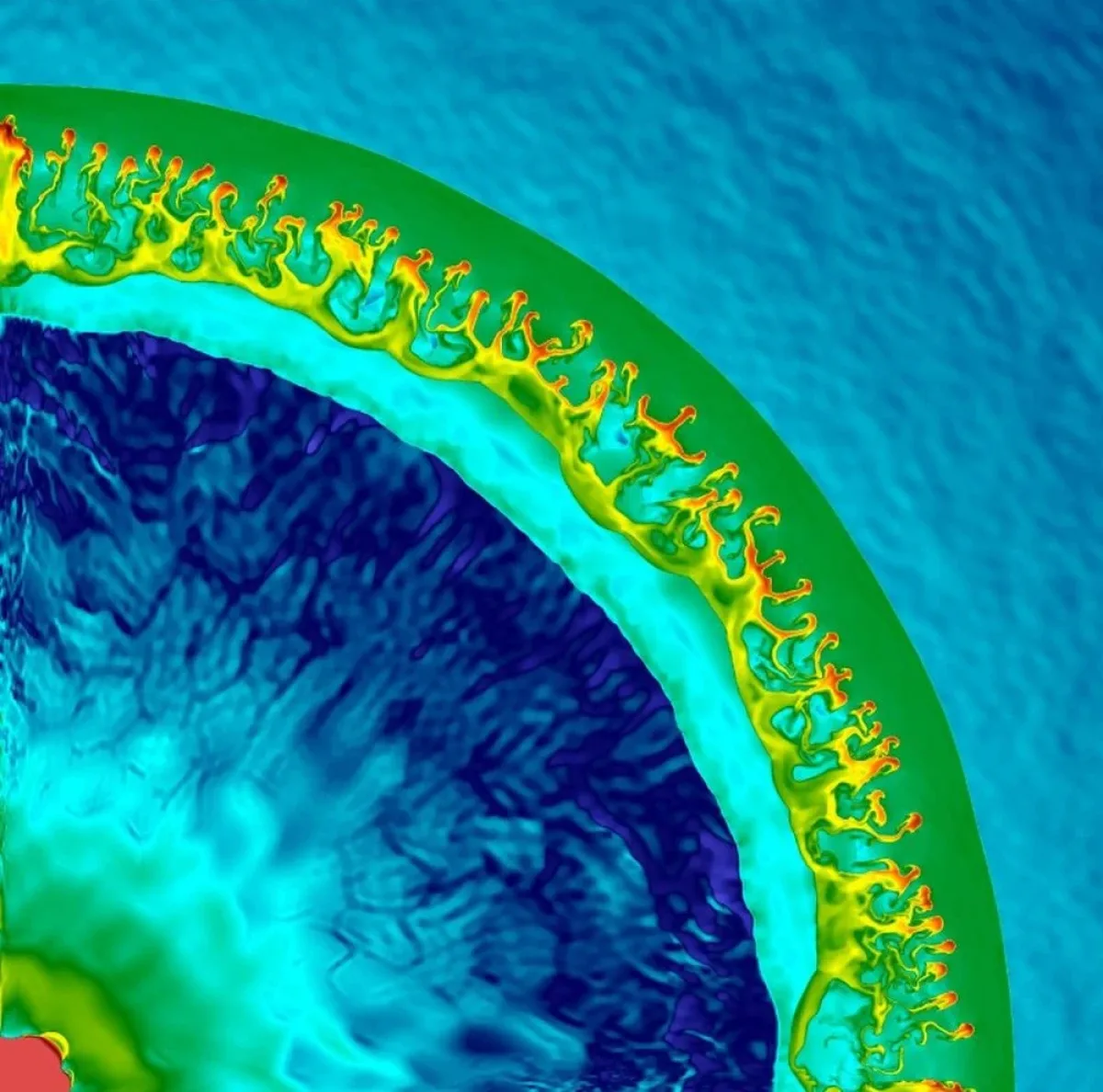
How Case C Mass Transfer Works
The researchers identified a specific process they call "Case C mass transfer" This happens after the star has already started burning helium in its center. As the star swells up, its outer layers of gas spill over a boundary called the Roche lobe - this gas is supposed to go to the companion star but a lot of it escapes and forms a cocoon around both objects.
This cocoon is the key to the whole mystery - It provides the "fuel" for the extra light. Because this happens so late in the star's life, the gas does not have time to drift away into deep space. It stays right where the explosion will happen - this creates a dense wall for the supernova shockwave to hit.
Timing Is Everything for Space Fireworks
If the gas moved away too early, the explosion would not hit anything. If it happened too late, the cocoon would not be thick enough. The study found that these stars eject their gas about 1 000 years before they collapse. In space time, 1 000 years is like the blink of an eye - this perfect timing ensures the cocoon is in the right place at the right moment.
The researchers found multiple facts about the events
- The donor stars are usually 10 - 20 times heavier than our Sun.
- The stars are separated by a distance of about 1 000 - 2 700 times the radius of the Sun.
- They eject a mass of gas equal to about 1 % to 20 % of the Sun's mass.
These specific conditions allow the explosion to transform its movement into visible light very efficiently.
A New Understanding of Stellar Death
This discovery helps explain famous supernovae like SN 2014C. In the past, people thought these stars produced an impossible amount of radioactive nickel to stay bright. We know the brightness comes from the physical crash between the explosion and the gas cocoon. It is a much simpler explanation that fits what we see through telescopes.
Scientists believe these interacting explosions make up about 13 % of all core collapse supernovae. While there are still some details to figure out regarding how the gas is shaped, the link to binary stars is now very strong. Your view of a "lonely" star dying in the dark might need to change to a pair of stars ending their journey in a crowded, dusty shell.
FAQ
What is an interacting supernova?
It is a type of stellar explosion that stays bright for a long time because the debris hits a thick cloud of gas surrounding the star.
Why do stars in pairs explode differently?
In a pair, one star can pull gas off the other - This gas creates a dense environment that a single star wouldn't have when it explodes.
How long do the explosions last?
While a normal supernova might fade in a few months, an interacting supernova can remain bright and visible for multiple years.
Is our Sun going to become an interacting supernova?
No, our Sun is not heavy enough to explode as a supernova and it does not have a close binary partner to help create a gas cocoon.