
Water Ice Extraction Factories: Processing Volatiles at Shackleton
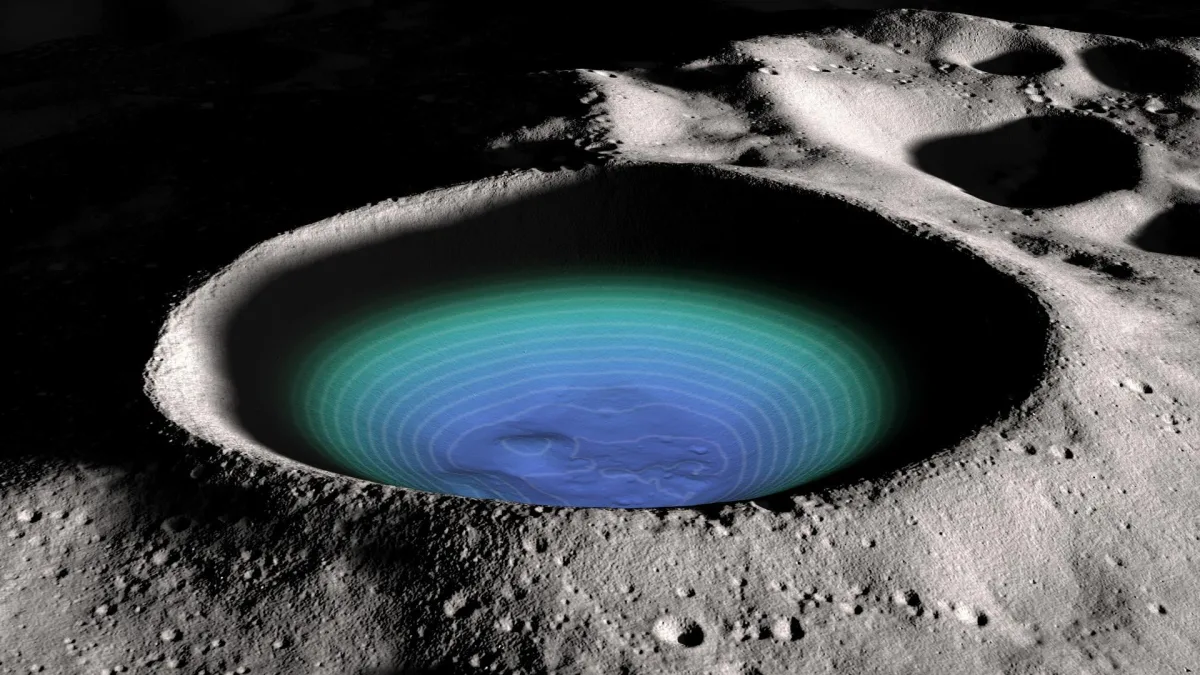
Shackleton Crater at the Moon’s south pole is one of the most interesting places for future lunar resource extraction because its deep interior remains permanently shadowed while parts of its rim receive sunlight for long periods. Scientists have strong evidence that water and other volatiles exist in permanently shadowed lunar regions, but the exact amount and form of ice inside Shackleton remain uncertain and still need direct measurements. As of October 6, 2026, no water-ice extraction factory is operating there. Instead, NASA, China, ESA and other researchers are developing the drilling, excavation, heating, purification and storage technologies that could eventually turn lunar ice into drinking water, oxygen and rocket propellant.
Why Shackleton Crater Matters
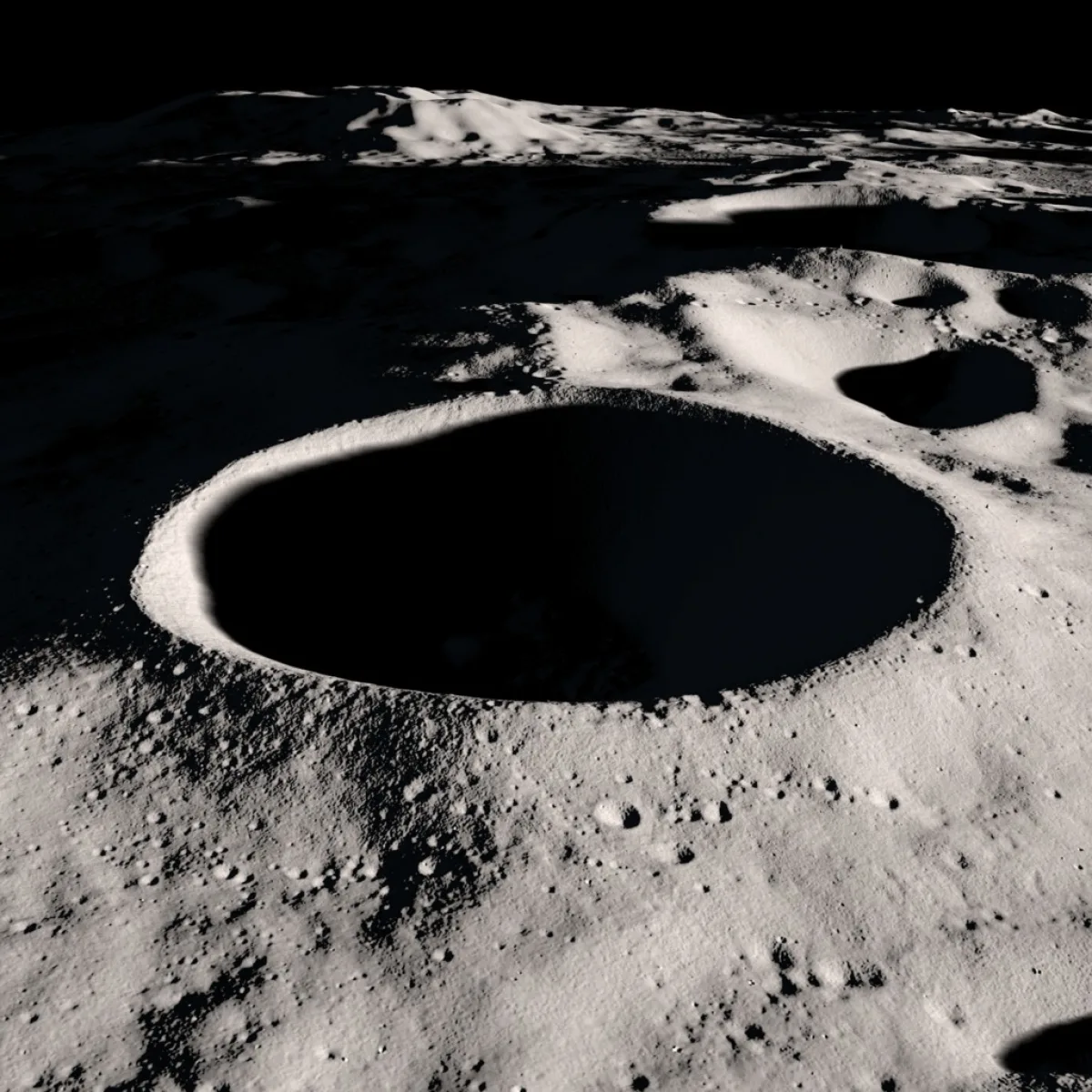
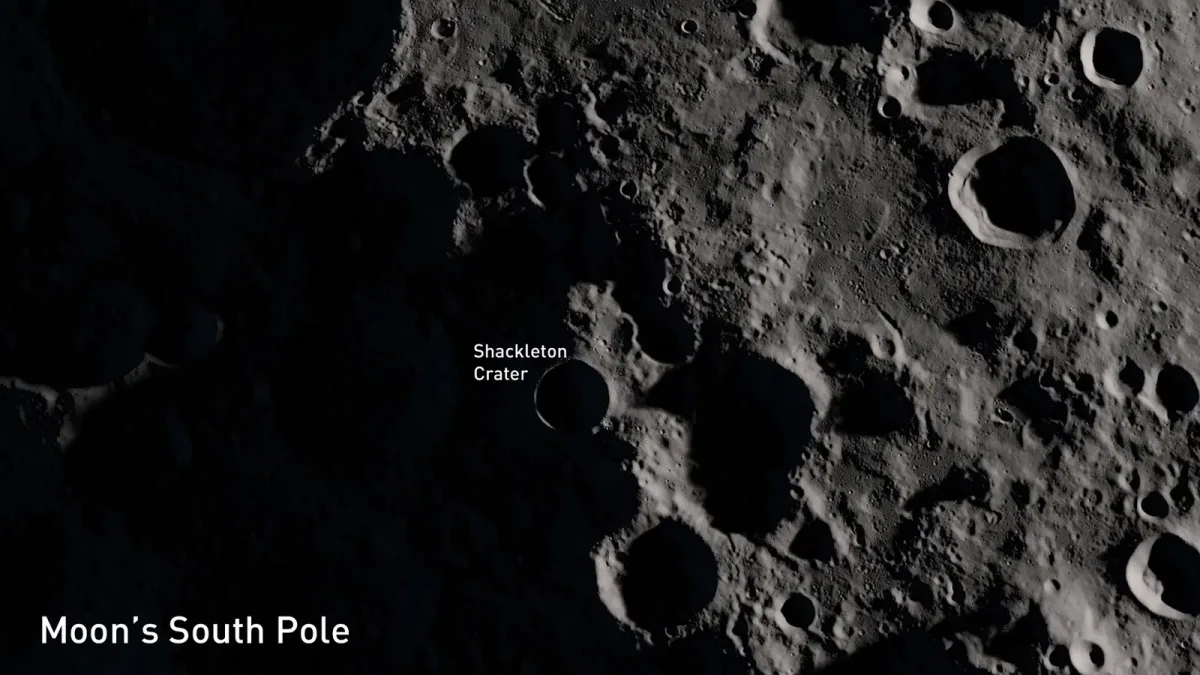
Shackleton is a roughly 21-kilometer-wide impact crater located almost directly at the Moon’s south pole. Its interior is in permanent shadow because of the Moon’s very small axial tilt. Some areas along its rim, however, receive sunlight for most of the year. NASA notes that three points around the rim are collectively illuminated for more than 90% of the year.
That combination is extremely useful for future lunar industry. A base could potentially place solar-power systems on sunlit high ground while robotic machines travel into colder, darker regions to investigate and extract volatiles.
The word potentially is important. Water ice inside Shackleton has not yet been directly confirmed at the scale needed for a mining operation. Research published in 2025 concluded that remote observations make water ice in the crater plausible, possibly extending from the surface to several meters deep in some areas, but also stressed that direct in-situ exploration is still needed.
What Would a Shackleton Ice Factory Look Like?
A future water-ice extraction factory would probably not resemble a giant industrial building on Earth. It would more likely be a collection of robotic excavators, drills, conveyors, thermal-processing equipment, purification systems, power units and storage tanks.
The process could work in several stages:
| Stage | What happens |
|---|---|
| Surveying | Radar, cameras, temperature sensors and drills identify promising icy material |
| Excavation | Robotic systems collect icy regolith from the permanently shadowed region |
| Heating | The material is warmed so frozen water turns into vapor |
| Capture | Cold traps collect and purify the water vapor |
| Processing | Water can be purified for use or split into hydrogen and oxygen |
| Storage | Water, oxygen and hydrogen are stored for future missions |
NASA research has already examined architectures in which icy regolith is excavated, sorted and heated in an auger-dryer system. The resulting vapor can pass through a cold trap before electrolysis produces hydrogen and oxygen.
Turning Lunar Ice Into Rocket Fuel
Water is much more valuable in space than simply as something astronauts can drink.
Through electrolysis, water can be separated into hydrogen and oxygen. Those gases can potentially become rocket propellant. Oxygen can also support breathing systems, while purified water can be used for life support and other activities.
This is why scientists often describe lunar water as an in-situ resource. Instead of launching every kilogram of water and propellant from Earth, future explorers could obtain some of those resources locally.
However, this only makes economic and technical sense if lunar ice is concentrated enough to extract efficiently. If water is spread thinly through ordinary lunar soil, enormous amounts of regolith could have to be processed.
The Biggest Problem: We Do Not Yet Know Exactly Where the Ice Is
The Moon’s polar water story is more complicated than many illustrations suggest.
NASA says orbital observations and lunar sample investigations provide evidence for water and other volatiles, especially in permanently shadowed regions. But scientists are still trying to determine the source, concentration, physical form and depth of those materials.
Shackleton has produced conflicting results over the years. Earlier radar work found no clear evidence for thick concentrated ice deposits, while later observations have provided additional evidence supporting the possibility of ice mixed with lunar material.
That uncertainty makes robotic prospecting essential before a large-scale factory could be built.
Technologies Already Being Developed
The basic idea is already being tested on Earth and in space technology programs.
NASA's PRIME-1 experiment was designed to demonstrate drilling into lunar regolith and analyzing material for water and other components. The mission flew aboard Intuitive Machines' Athena lander in 2025, but the lander ended up on its side, limiting operations.
NASA has also investigated the ICICLE concept, designed to collect and purify water vapor from lunar ice-mining operations. The proposed cold-trap system would separate water from other volatile contaminants before downstream processing. The project was updated in January 2026.
Another NASA study examined lunar water-processing architectures that combine excavation, heating, cold-trap purification, electrolysis and cryogenic storage.
What Happens Next?
The next major step is better exploration of the lunar south pole.
China's Chang'e-7 mission is planned for launch in the second half of 2026 and is intended to investigate the lunar south-polar environment and resources, including permanently shadowed regions. The launch vehicle and spacecraft were reported to be at the Wenchang launch site in July 2026.
NASA is also advancing its south-pole exploration plans. Artemis IV is currently listed for early 2028 and is planned to send astronauts to the lunar south-pole region for about a week of surface operations.
NASA also announced additional scientific investigations in September 2026 to support the future Moon Base effort near the lunar south pole.
Current Status of Shackleton Ice Processing
| Area | Status as of October 2026 |
|---|---|
| Water in lunar polar regions | Strong evidence exists |
| Large confirmed ice reserve inside Shackleton | Not yet established |
| Robotic ice excavation | Technology development and testing |
| Water-vapor capture | Experimental technology |
| Hydrogen/oxygen production | Studied in lunar ISRU system designs |
| Operating Shackleton factory | None |
| Future south-pole exploration | Actively planned |
The Future of Lunar Resource Processing
A Shackleton water-ice factory remains a future concept rather than an operating facility. The first priority is not industrial-scale mining but proving exactly where useful concentrations of ice exist and determining how difficult they are to extract.
If those deposits prove accessible, Shackleton could become part of a larger lunar resource system: solar power from sunlit terrain, robots working in permanently shadowed regions, processing plants converting icy regolith into usable water, and electrolysis systems producing oxygen and hydrogen.
The significance would go far beyond Shackleton itself. Successful lunar resource extraction could reduce the amount of mass launched from Earth and provide technologies that may eventually support longer missions deeper into the solar system.
For now, the Moon still has one major question to answer: how much usable ice is really waiting beneath the darkness?
References
NASA — Shackleton Crater’s Illuminated Rim & Shadowed Interior
NASA Technical Reports — Lunar Water Processing System
Space: Science & Technology — Water Ice and the Shallow Regolith Structure of Shackleton Crater
China National Space Administration — Chang'e-7 launch preparations