
Trojan Asteroid Discoveries: Hunting Jupiter’s Co-Orbital Rocks
Trojan asteroids are ancient space rocks that travel around the Sun along roughly the same orbital path as a planet. Jupiter has the largest known population of these objects, gathered mainly around two stable regions called the L4 and L5 Lagrange points. Since astronomers identified the first Jupiter Trojan, 588 Achilles, in 1906, thousands of others have been found. As of September 2026, NASA’s Lucy spacecraft is preparing for the first close-up exploration of Jupiter’s Trojan population, with its first encounter planned for August 2027.
Summary
- Subject: Jupiter Trojan asteroid discoveries
- First confirmed Jupiter Trojan: 588 Achilles
- Discovery date: February 22, 1906
- Discoverer: Max Wolf
- Main locations: L4 and L5 Lagrange regions
- Importance: They may preserve clues about the early Solar System
- Main spacecraft: NASA’s Lucy mission
- Latest status: Lucy made new observations of four Trojan targets in 2026
- First planned close Trojan encounter: Eurybates, August 11, 2027

What Are Trojan Asteroids?
Trojan asteroids are small bodies that share a planet’s orbit around the Sun while gathering around stable gravitational regions. In Jupiter’s case, these are the L4 and L5 Lagrange points. L4 lies about 60 degrees ahead of Jupiter in its orbit, while L5 lies about 60 degrees behind it.
These regions are stable because of the combined gravitational effects of the Sun and Jupiter. The asteroids are therefore not simply following Jupiter like a group of objects flying directly behind it. They move around the Sun in broad swarms associated with Jupiter’s orbit. NASA says Jupiter’s Trojan population may be nearly as numerous as the asteroids in the main asteroid belt.
The First Jupiter Trojan Discovery
The history of Trojan asteroid discoveries began on February 22, 1906, when German astronomer Max Wolf identified an asteroid at Jupiter’s L4 region. The object was later named 588 Achilles, after the Greek hero of the Trojan War.
The discovery was important because it provided real evidence that the stable orbital regions predicted by mathematician Joseph-Louis Lagrange could contain small bodies. More Jupiter Trojans were discovered soon afterward, including 617 Patroclus and 624 Hektor. Their names helped create the Greek-and-Trojan naming tradition associated with the two groups.
How Astronomers Hunt Jupiter Trojans
Finding a Trojan asteroid is not simply a matter of pointing a telescope at Jupiter. These objects are distant, faint and constantly moving against the background of stars.
Astronomers take repeated images of the same region and look for tiny objects that change position. Once an object is detected, observations over longer periods help researchers calculate its orbit and determine whether it really belongs to the Trojan population.
Modern digital cameras, large sky surveys, infrared observations and computer models have made this search much more powerful. Astronomers can now identify large numbers of faint objects and study differences in their color, size and composition. Those differences are particularly interesting because Jupiter’s Trojans are not a completely uniform population.
Why Trojan Asteroid Discoveries Matter
Jupiter Trojans are important because they may preserve material from the Solar System’s earliest history. NASA describes them as remnants connected to the formation of the giant planets and possible time capsules from more than four billion years ago.
Scientists are also investigating where these asteroids originally formed. Earlier ideas suggested that many may have formed close to Jupiter. More recent models indicate that some could have come from much farther across the outer Solar System before being scattered and captured into their present orbits during the Solar System’s early period of instability.
Studying different Trojans could therefore help researchers understand how the giant planets formed and how the young Solar System changed over time.
NASA’s Lucy Mission
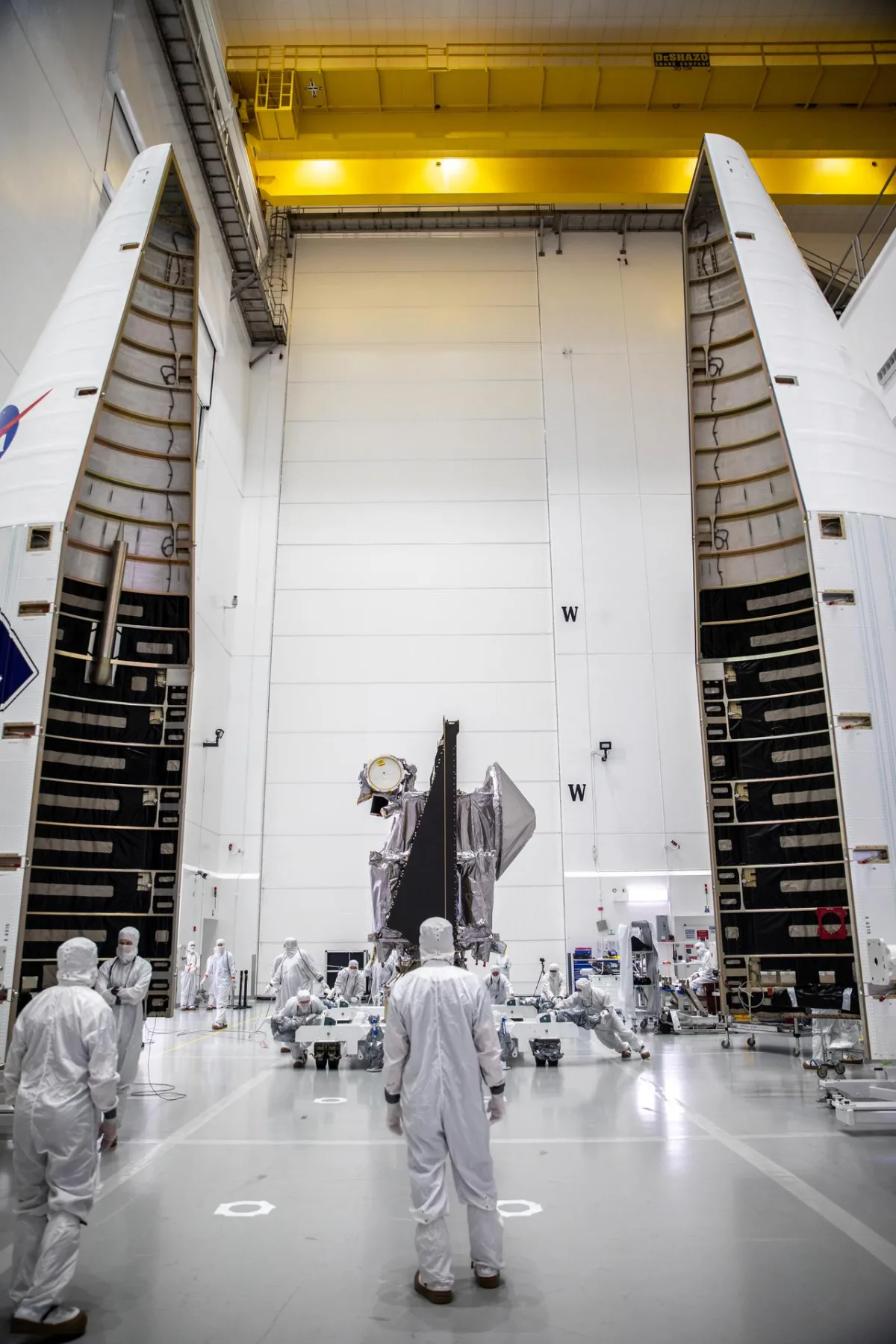
NASA’s Lucy spacecraft is the first mission specifically designed to explore Jupiter’s Trojan asteroids up close. Launched on October 16, 2021, Lucy is following a 12-year journey through the Solar System. It will study three main-belt asteroids as well as eight Trojan asteroids.
Before reaching the Trojan population, Lucy flew past Dinkinesh in 2023 and Donaldjohanson in 2025. The encounters helped test the spacecraft and produced discoveries of their own, including the unusual contact-binary moon Selam at Dinkinesh.
In August 2026, NASA reported that Lucy had begun camera tests for its upcoming Trojan encounters. The spacecraft had observed Eurybates, Polymele, Leucus and Orus earlier in 2026, with the images processed in July. These observations are helping scientists prepare for the close encounters beginning in 2027.

Lucy’s Trojan Targets
| Trojan | Planned Encounter | Location |
|---|---|---|
| Eurybates and Queta | August 11, 2027 | L4 |
| Polymele | September 14, 2027 | L4 |
| Leucus | April 18, 2028 | L4 |
| Orus | November 11, 2028 | L4 |
| Patroclus and Menoetius | March 3, 2033 | L5 |
NASA’s current mission schedule lists Eurybates as Lucy’s first Trojan encounter, followed by several other L4 objects before the spacecraft eventually reaches the L5 swarm.
What Comes Next?
The biggest breakthrough in Trojan asteroid research may come when Lucy begins making close flybys. From Earth, these objects mostly appear as faint points of light. Lucy will approach within hundreds of miles of several targets and examine their surfaces from angles that Earth-based telescopes cannot easily reproduce.
As of September 29, 2026, Lucy remains on its journey toward Eurybates. The mission could transform Trojan asteroids from distant objects identified mainly through their orbits into individual worlds with detailed surfaces, shapes, compositions and geological histories.
Frequently Asked Questions
What is a Jupiter Trojan asteroid?
It is an asteroid that shares Jupiter’s path around the Sun and remains associated with the L4 or L5 gravitational regions.
When was the first Jupiter Trojan discovered?
588 Achilles was discovered on February 22, 1906, by Max Wolf.
Why are they called Trojan asteroids?
They were named after the characters and heroes associated with the Trojan War.
Where are Jupiter’s Trojans found?
They mainly gather in two large swarms, one ahead of Jupiter and one behind it along Jupiter’s orbit.
Why are Trojan asteroids important?
They may contain clues about the materials and processes involved in the early formation of the Solar System.
What is NASA Lucy doing?
Lucy is traveling through the Solar System to make close flybys of eight Jupiter Trojan asteroids.
When will Lucy reach its first Trojan?
The current NASA schedule lists Eurybates for August 11, 2027.
Will Lucy land on a Trojan asteroid?
No. Lucy is designed to perform high-speed flybys rather than orbit or land on its targets.
References
NASA Lucy Mission
NASA Lucy Mission FAQ
NASA — Lucy Begins Camera Tests Ahead of 2027 Trojan Flybys
NASA — Asteroid Facts
NASA — Dinkinesh
ESA — Newly discovered asteroid just second of its kind
Astronomy — The First Trojan Found