
The Private Satellites Ruining Our Night Sky Legally
Did you know that a single government agency in the United States has the power to change how the night sky looks for every person on Earth? Private companies are moving faster than the laws meant to govern them. If current trends continue, the view of the stars you enjoy today might soon be covered by thousands of bright, moving lights.
The Unregulated Future of Our Night Sky
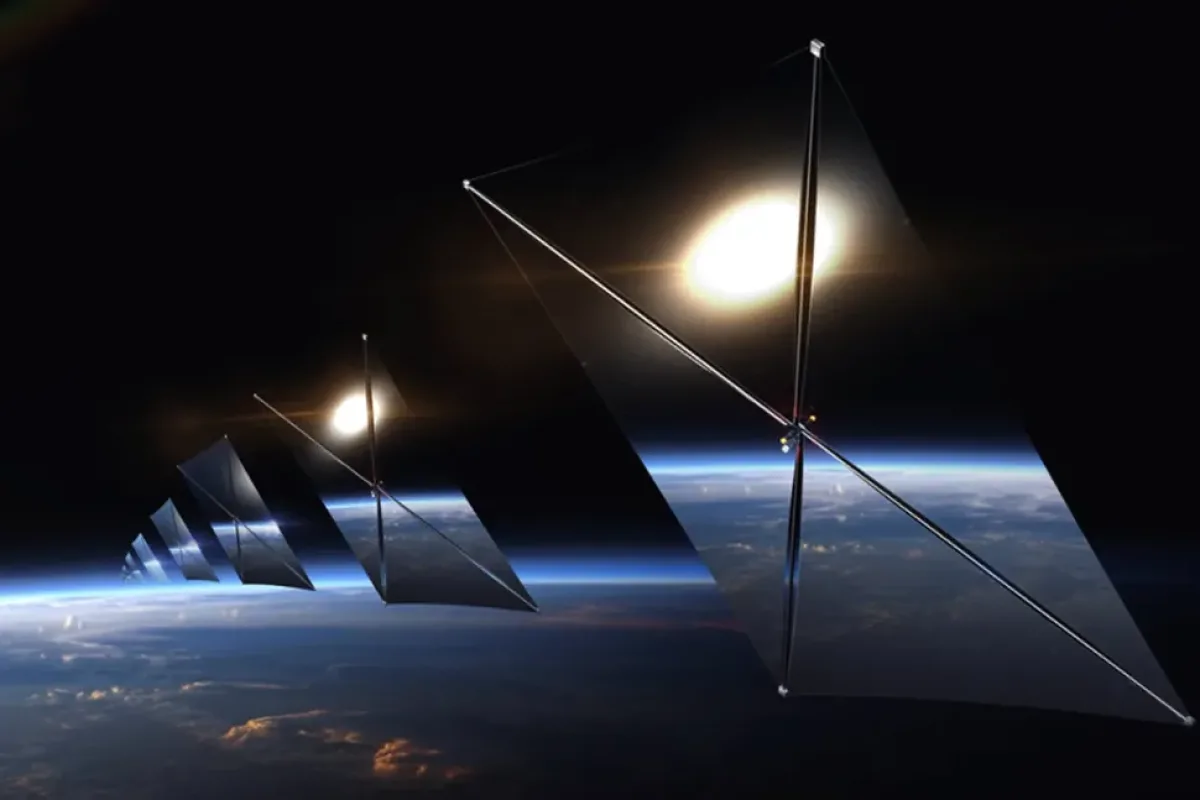
Recent approvals have opened the door for projects that sound like science fiction. The FCC lately gave a company called Reflect Orbital permission to test a large mirror in space - this mirror is about 60 feet wide and is designed to reflect sunlight down to Earth after the sun goes down. While it helps solar farms produce power at night, it also adds new brightness to the sky.
This test is just the beginning of a much larger plan - Experts worry that if this succeeds, we could see a fleet of 50 000 mirrors orbiting our planet. Other companies like SpaceX besides Blue Origin are also waiting for permission to launch their own massive groups of satellites - these projects are moving so fast that the rules meant to manage them are already out of date.
Why International Law Cannot Stop Private Satellites
You might think that global treaties would protect the sky but the existing framework is very old. The Outer Space Treaty from the 1960s says that the country where a satellite is registered has the final say, which means if the U.S. gives a green light, other nations have almost no way to stop the launch.
The main problem is how the law defines "damage" Currently, international rules only cover physical hits, like
- Satellites crashing into each other in orbit.
- Space junk falling and hitting buildings on the ground.
- Physical destruction of property by a falling spacecraft.
Light pollution and "optical interference" are not currently considered damage under these old rules. Even if a satellite ruins a billion dollar telescope's view, the law does not provide a clear way to sue for those losses.

How One U.S - Agency Decides for the World
The Federal Communications Commission (FCC) is a U.S. agency but its decisions have global reach. By granting licenses to American companies, it essentially dictates what the sky looks like for people in Europe, Africa, & Asia - this unilateral approach is not new but it is becoming more frequent as the space industry grows.
Critics point out that the FCC often bypasses international consensus to give U.S. businesses a competitive advantage. As an example, they have approved communication systems that use radio frequencies not but authorized by global unions. Because the U.S. represents such a large part of the global economy, it often acts alone, knowing other countries have little power to push back.
The Cost to Science and the Environment
For astronomers, these satellite "megaconstellations" are a nightmare. Every new satellite creates a streak of light that can ruin deep space images. If companies launch tens of thousands of mirrors and data centers, ground based telescopes might become useless for certain types of research.
Beyond science, there are environmental worries - These satellites are currently exempt from the National Environmental Policy Act - this means
- Companies do not have to prove their satellites won't hurt the environment.
- The FCC does not need to conduct a review of light pollution impacts.
- No one is officially tracking the long term effects on nocturnal wildlife.
This exemption started in the 1980s when launches were rare - Now, with thousands of objects going up every year, many advocates say this lack of oversight is a major regulatory failure.
Looking for a Legislative Fix
Stopping the projects is difficult because the United Nations moves very slowly. Groups like the International Astronomical Union are asking for a ban on space mirrors but the UN requires everyone to agree before passing a rule. Countries like Russia, China or the U.S. will block any rule that limits their own power in space.
Your best hope for a dark sky likely lies in new national laws. Some advocacy groups are suing the government to force environmental reviews. Until the laws catch up with the technology, the responsibility falls on individual nations to change how they grant licenses. Without a change in how we manage space, the "Saturn's ring" of satellites around Earth could become a permanent, bright reality.
FAQ
Can other countries stop a U.S. satellite launch?
Generally, no - Under current international law, the country where the satellite is registered has the authority to approve the project. Other countries can complain but they have no legal mechanism to block the launch itself.
Do satellites physically harm the environment?
While they don't usually drop chemicals on the ground, they cause significant light pollution. They can also create space debris, which makes it dangerous for future space travel and can damage the atmosphere when they eventually burn up upon reentry.
Why does the FCC handle space mirrors?
The FCC manages the communication licenses and various regulatory approvals for U.S. companies operating in space. Even though their primary job is communications, they have become the de facto gatekeepers for almost all commercial space activity in the U.S.

References
-
Space.com - Private companies could ruin the night sky for the entire world, and international law can't stop them
-
The Guardian - Companies' plans for satellite constellations 'put night sky at risk'
-
Physics World - Light pollution from satellite mega-constellations threaten space-based observations
-
Universe Today - Satellite Constellations Are Too Bright, Threatening Astronomy and Our Night Sky
-
United Nations - International Space Law Explained
-
Cambridge University Press - Mega-constellations and International Law
-
EJIL Talk! - Starlink and International Law: The Challenge of Corporate Sovereignty in Outer Space
-
International Dark-Sky Association - Position on Satellite Constellations