
Smelting Iron on the Moon: Heavy Metallurgy in Low Gravity
Smelting iron on the Moon could help future astronauts build habitats, repair equipment, manufacture tools, and construct infrastructure without transporting every metal component from Earth. Lunar soil, known as regolith, contains iron-bearing minerals and other metal oxides that researchers are investigating as raw materials. Technologies such as hydrogen reduction, molten regolith electrolysis, and molten-salt electrolysis could help turn these materials into useful metals. However, the Moon’s low gravity, extreme temperatures, vacuum environment, limited power supply, and demanding industrial requirements make lunar metallurgy a major engineering challenge rather than an established commercial activity.
Summary
-
Main topic: Producing iron and iron-based materials on the lunar surface.
-
Raw material: Lunar regolith containing iron-bearing minerals, including ilmenite.
-
Main technologies: Hydrogen reduction, electrolysis, and high-temperature chemical processing.
-
Low-gravity environment: The Moon has approximately one-sixth of Earth's surface gravity.
-
Potential benefits: Local construction materials, spare parts, tools, and reduced dependence on supplies from Earth.
-
Main obstacles: Energy requirements, dust management, heat control, equipment durability, and metal purification.
-
Current status: Research and prototype testing are advancing, but a full-scale lunar iron industry has not yet been established.
What Does Smelting Iron on the Moon Mean?
Smelting is a process that uses heat and chemical reactions to separate a metal from its compounds or ore. On Earth, iron production commonly involves iron ore, reducing agents, and high-temperature furnaces. The resulting iron can then be refined or combined with other elements to produce steel.
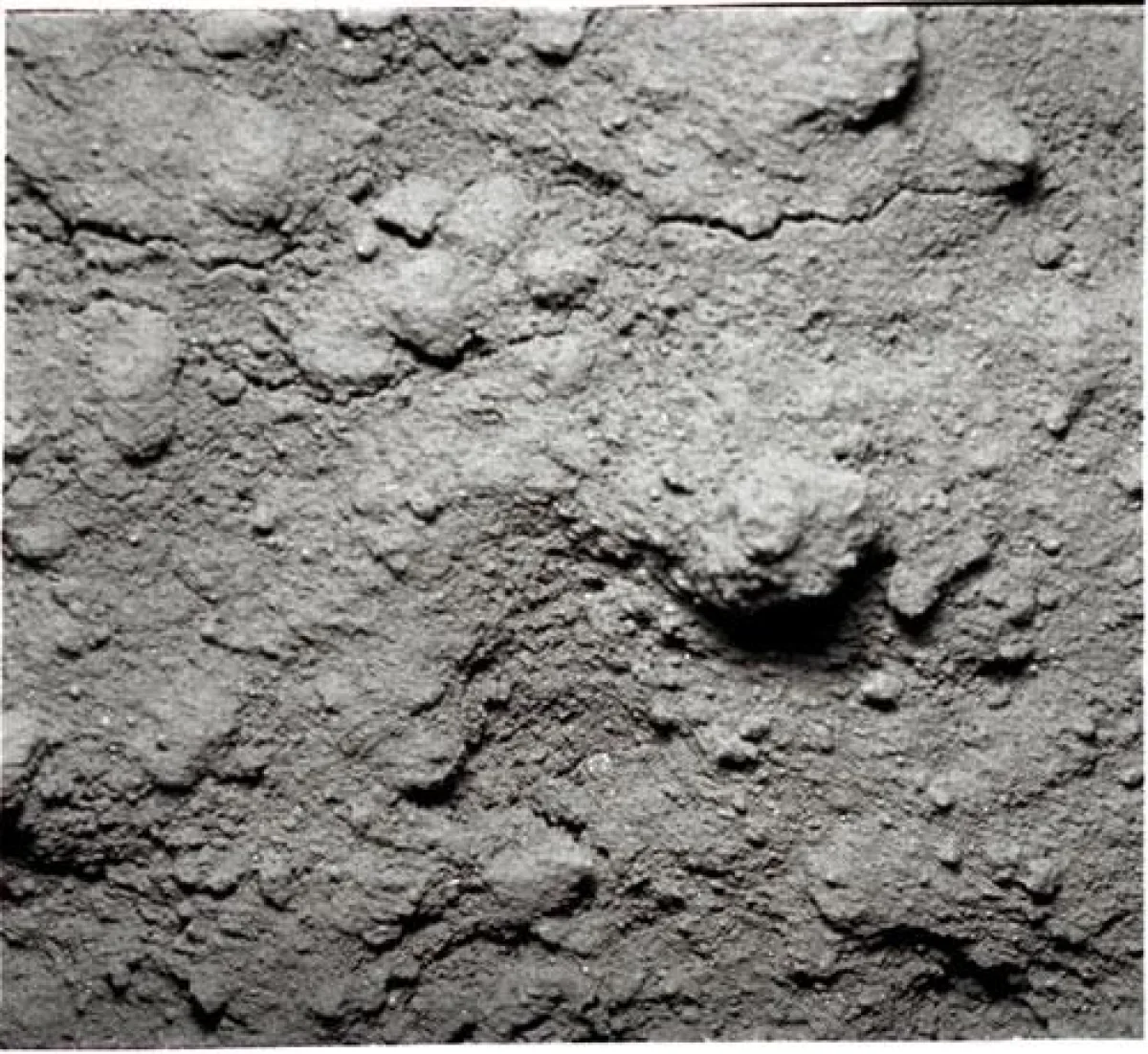
The Moon offers a different starting point. Its surface is covered with regolith, a mixture of fine dust, broken rock, and mineral fragments created by billions of years of impacts. Some of these materials contain iron chemically bonded to oxygen.
One important mineral is ilmenite, which contains iron, titanium, and oxygen. By removing oxygen from suitable iron-bearing materials, researchers can investigate ways to recover metallic iron. Other minerals contain silicon, aluminium, magnesium, and additional elements that could support future lunar manufacturing.
The goal is not simply to melt lunar soil. It is to develop an entire industrial process that collects the material, separates useful components, extracts metals, removes unwanted impurities, and prepares the resulting material for manufacturing.
How Could Iron Be Produced on the Moon?


Several technologies could contribute to lunar iron production.
Hydrogen Reduction
Hydrogen reduction uses hydrogen gas to remove oxygen from suitable iron-bearing minerals. When heated, iron oxide can react with hydrogen to produce metallic iron and water vapour.
The water can then be collected and electrolysed to recover oxygen and hydrogen. Recovering the hydrogen would help reduce the need to transport fresh supplies from Earth.
This method is particularly relevant to minerals such as ilmenite, although the amount of iron and oxygen recovered depends on the feedstock and processing conditions. It also requires systems to heat the soil, circulate gases, collect products, and recycle materials.
Molten Regolith Electrolysis
Molten regolith electrolysis takes a different approach. The lunar soil is heated until it melts, and an electric current passes through the molten material. This separates oxygen from metal-containing components.
NASA's technology development programme has investigated this process as a way to produce oxygen and metals from lunar or Martian soil. In a May 5, 2025 report, NASA described testing in which researchers heated approximately 25 kilograms of simulated lunar soil to about 1,700°C and measured the production of molecular oxygen under vacuum-chamber conditions. Metals were also produced during the test.
NASA explains that molten regolith electrolysis can separate oxygen and metals from the same resource.
This is important because lunar industry could need both products: oxygen for life-support and propulsion applications, and metals for construction and manufacturing.
Molten-Salt Electrolysis
Another option is molten-salt electrolysis, which uses an electrically conductive liquid salt to support chemical reactions that extract metals from suitable materials.
A research paper published in February 2026 reported selective iron extraction from JSC-1A, a lunar soil simulant, using the FFC Cambridge electrochemical process. The experiment operated at 900°C and reported an optimal iron-extraction yield of approximately 83.47% under its tested conditions.
The result demonstrates progress in laboratory-scale metal extraction. However, performance with a simulated lunar material does not prove that an equivalent system will operate reliably on the Moon. Real lunar soil, equipment maintenance, energy supply, and industrial-scale production introduce additional challenges.
Why Low Gravity Changes Metallurgy
The Moon's gravity is approximately 16.5% of Earth's surface gravity. That difference affects how equipment, liquids, particles, and molten metals behave.
On Earth, gravity helps molten metal settle, encourages denser materials to separate from lighter ones, and assists the movement of liquids through industrial equipment. Under lunar gravity, these effects are weaker.
Surface tension, wetting, capillary forces, and electromagnetic forces can therefore become more important in certain processes. Molten metal may not behave exactly as it does in an Earth-based furnace, particularly when it comes into contact with walls, electrodes, or narrow channels.
Low gravity does not mean that iron cannot melt or solidify. Those processes still depend on temperature, pressure, composition, and heat transfer. Instead, engineers must design equipment that can control the movement and collection of liquid metal without relying too heavily on Earth's gravitational conditions.
|
Factor |
Effect on lunar metallurgy |
|---|---|
|
Low gravity |
Changes liquid movement and particle settling |
|
Near-vacuum environment |
Encourages evaporation of some materials and complicates gas handling |
|
Extreme surface temperatures |
Creates demanding thermal-control requirements |
|
Fine lunar dust |
Can interfere with machinery, seals, and moving parts |
|
Limited available power |
Restricts the rate and scale of high-temperature processing |
These conditions mean that lunar furnaces may need specialised containment, controlled heating, gas collection, and automated material handling.
Can the Moon's Vacuum Make Iron Production Easier?
One surprising possibility is that the Moon's natural vacuum could help certain metal-extraction reactions.
On Earth, industrial processes may need to create and maintain a vacuum using pumps and sealed chambers. The lunar environment offers extremely low ambient pressure naturally, although processing equipment would still need suitable containment and control.
A study published in Vacuum in March 2025 investigated carbothermal reduction of lunar regolith under high-vacuum conditions. Its thermochemical modelling predicted that iron and silicon could be reduced at lower temperatures under sufficiently low pressures than under less extreme conditions. These were modelled results, not proof of a completed industrial process on the Moon.
The vacuum also creates difficulties. Some metals and other substances can evaporate more readily under reduced pressure, depending on their temperature and properties. Losing valuable material during processing would reduce efficiency. Engineers would need to manage vapours, recover useful products, and prevent unwanted contamination.
The key is to use the lunar environment where it offers an advantage while controlling the conditions that could damage equipment or reduce the quality of the metal.
From Lunar Iron to Steel and Building Materials


Potential applications include:
-
Structural supports for lunar habitats and equipment shelters.
-
Metal components for robotic vehicles and machinery.
-
Replacement parts produced using additive manufacturing.
-
Brackets, fasteners, and other hardware for lunar infrastructure.
-
Selected iron-based alloys for tools and industrial equipment.
However, iron is not automatically steel. Steel is an iron-based alloy containing controlled amounts of carbon and sometimes other elements. Producing reliable steel on the Moon would require suitable alloying materials, refining equipment, and quality-control systems.
A NASA technology project called Moon to Mars Oxygen and Steel Technology has investigated an integrated approach to producing metallic iron or steel and oxygen from lunar regolith. Its proposed processing chain includes particle sorting, mineral separation, hydrogen reduction, electrolysis, and melt refining. The project was listed as completed in NASA TechPort in January 2026, but that does not mean a commercial steel factory is already operating on the Moon.
The Main Challenges Facing Lunar Heavy Metallurgy
|
Challenge |
Why it matters |
Possible engineering response |
|---|---|---|
|
Energy consumption |
Heating and processing rock requires substantial power |
Solar power, energy storage, and efficient process design |
|
Equipment wear |
Abrasive lunar dust can damage moving parts and seals |
Dust-resistant mechanisms and protected components |
|
Temperature control |
Molten materials require reliable heating and cooling |
Insulation, thermal monitoring, and controlled furnaces |
|
Metal purity |
Extracted material may contain unwanted elements |
Additional refining and chemical analysis |
|
Limited maintenance |
Repairs and replacement parts are difficult to supply |
Robotics, modular equipment, and local manufacturing |
|
Lunar night |
Many locations experience long periods without direct sunlight |
Energy storage or other dependable power systems |
The challenges are connected. A more complex extraction process might produce higher-quality metal but require additional equipment and energy. A simpler system could be easier to operate remotely, yet produce material that needs further refinement.
Researchers must therefore assess the entire production chain rather than judging a technology only by how much iron it extracts in a laboratory experiment. A 2021 review of lunar mineral processing identified lightweight equipment, simple processing systems, and automation as important considerations for future operations.
Why Lunar Iron Could Matter for Future Space Exploration
Transporting heavy construction materials from Earth is expensive and places limits on the amount of equipment a mission can carry. If future missions can extract and process metals locally, they could gradually reduce their dependence on Earth-based supplies.
Local metal production could support repairs, construction, and the manufacture of selected replacement components. Combined with lunar oxygen extraction, it could also form part of a broader industrial system supporting long-term exploration.
NASA's work on in-situ resource utilisation, or ISRU, focuses on using resources found at a destination instead of transporting every required material from Earth. Metal extraction is one part of that wider effort.
Still, establishing such an industry would require more than a successful extraction experiment. Engineers would need dependable power, robotic excavation, material transport, furnaces, refining systems, storage, and reliable ways to inspect the finished products.
For early lunar missions, small-scale production of selected materials may be more realistic than a large ironworks. As technologies improve, more demanding manufacturing operations could become possible.
References
-
NASA Technical Reports Server. System Modeling of a Lunar Molten Regolith Electrolysis Plant.
-
NASA. In-Situ Resource Utilization.
-
NASA TechPort. Moon to Mars Oxygen and Steel Technology.
-
Separation and Purification Technology. High-yield selective extraction of metal iron from JSC-1A using molten salt electrolysis.
-
UK Government. UK In-Situ Resource Utilisation Technology Review.