

Should Pluto Be a Planet? The Ongoing Dwarf Planet Debate
Pluto is still officially classified as a dwarf planet, and the International Astronomical Union (IAU) has not changed its 2006 definition of a planet. Under that definition, Pluto meets the requirements of orbiting the Sun and being massive enough to become nearly round, but it does not satisfy the requirement that it has “cleared the neighbourhood” around its orbit. However, the debate is far from dead. In 2026, NASA Administrator Jared Isaacman publicly renewed calls to revisit Pluto's planetary status, bringing the issue back into scientific and public discussion. The disagreement is not really about whether Pluto is an interesting or geologically active world—it clearly is—but about what the word planet should mean and whether orbital dominance should be part of that definition.
Summary
-
Name: Pluto
-
Classification: Dwarf planet
-
Discovered: February 18, 1930
-
Discoverer: Clyde W. Tombaugh
-
Location: Kuiper Belt, beyond Neptune
-
Former status: Ninth planet of the Solar System
-
Current official status: Dwarf planet
-
Current governing definition: IAU 2006 planet definition
-
Main reason Pluto is not officially a planet: It has not cleared the neighbourhood around its orbit
-
Major exploration: NASA's New Horizons spacecraft
-
Historic flyby: July 14, 2015
-
Known moons: Five, with Charon being the largest
-
Current debate: Some planetary scientists argue for a broader, geophysical definition of planet
-
2026 development: NASA Administrator Jared Isaacman publicly expressed support for making Pluto a planet again and said papers were being prepared to reopen the scientific discussion.
Pluto's Early History
Pluto was discovered in 1930 by American astronomer Clyde Tombaugh at Lowell Observatory in Arizona. Its discovery followed years of efforts to find a planet thought to be influencing the orbit of Uranus and Neptune.
For decades, Pluto occupied a special place in astronomy. It was taught in schools as the ninth planet, appeared in books and models of the Solar System, and became one of the best-known objects in space.
But Pluto was unusual from the beginning.
It was much smaller than the other planets. It also followed a noticeably different orbit, travelling around the Sun on a more inclined and elliptical path than the eight major planets. As astronomers improved their telescopes, it became increasingly clear that Pluto was not alone in the distant region beyond Neptune.
The Discovery of the Kuiper Belt Changed Everything
The biggest challenge to Pluto's status came from a better understanding of the outer Solar System.
Beginning in the 1990s, astronomers discovered numerous icy bodies beyond Neptune in a broad region now known as the Kuiper Belt. Many of these objects were smaller than Pluto, but their existence showed that Pluto belonged to a much larger population of distant icy worlds.
Then came the discovery of Eris, an object roughly comparable to Pluto and initially thought to be slightly larger. The discovery created a major classification problem.
Astronomers faced two basic choices.
They could continue calling Pluto a planet and potentially add several other distant objects to the planetary list. Or they could create a new definition that separated Pluto-like bodies from the eight larger planets.
That debate eventually led to the controversial 2006 IAU decision.
Why Was Pluto Reclassified?
In August 2006, the International Astronomical Union adopted a formal definition of a planet in the Solar System.
According to the IAU, a planet must:
-
Orbit the Sun.
-
Have enough mass for its own gravity to make it nearly round.
-
Have cleared the neighbourhood around its orbit.
A dwarf planet meets the first two conditions but has not cleared its orbital neighbourhood and is not a satellite. The IAU specifically designated Pluto as a dwarf planet and described it as the prototype of a new class of trans-Neptunian objects.
That third condition is the heart of the Pluto controversy.
Pluto travels through the Kuiper Belt, where numerous other objects occupy the same broad region of space. In the IAU's framework, Pluto is therefore not gravitationally dominant enough in its orbital zone to qualify as a full planet.
Pluto Versus the Eight Planets
| Property | Pluto | Major planets |
|---|---|---|
| Orbits the Sun | Yes | Yes |
| Nearly round from its own gravity | Yes | Yes |
| Located in a populated orbital region | Yes | Generally no in the IAU sense |
| Cleared its orbital neighbourhood | No | Yes |
| IAU classification | Dwarf planet | Planet |
| Located in Kuiper Belt | Yes | No |
The important point is that “dwarf planet” does not mean Pluto is merely a small version of a planet. Under the IAU system, planets and dwarf planets are separate categories. (IAU)
What Does “Clearing Its Orbit” Really Mean?
The phrase can sound misleading.
It does not mean that Earth has literally swept every asteroid out of its orbital path. Earth, Jupiter and the other planets still share their broader orbital regions with smaller bodies.
Instead, planetary scientists use orbital dominance as a way to describe whether a body is the principal gravitational object in its region.
Earth is overwhelmingly more massive than the small objects that cross or approach its orbital zone. Pluto, by contrast, exists among a large population of Kuiper Belt objects and is not gravitationally dominant in the same way.
This difference is the central scientific reason the IAU places Pluto in the dwarf-planet category.
The Case for Keeping Pluto as a Dwarf Planet
The strongest argument for keeping Pluto's current classification is that the IAU definition provides a clear distinction between the major planets and the many smaller bodies discovered in the outer Solar System.
Without an orbital-dominance rule, the number of recognised planets could rise dramatically.
NASA explains that there may be many more dwarf planets waiting to be discovered, potentially numbering more than a hundred. That illustrates why the definition matters: changing the rules could substantially change how the Solar System is organized and taught.
Supporters of the IAU approach also argue that orbital dynamics tell us something important about how planetary systems form and evolve. A planet is not just a round object; it is also a body that has become dynamically dominant in its neighbourhood.
From this perspective, Pluto's location within a huge population of trans-Neptunian objects is not a minor technical detail. It is part of what Pluto actually is.
The Case for Making Pluto a Planet Again
Critics of the IAU definition argue that “clearing the neighbourhood” describes a planet's orbit, not the intrinsic physical nature of the object itself.
This is especially important to planetary geologists.
One alternative approach is often called a geophysical definition of a planet. Supporters argue that the classification should focus primarily on an object's physical properties—such as whether it is massive enough for its own gravity to make it round—rather than on its orbital environment.
Under one proposed geophysical definition, Pluto would be a planet.
But there is a major consequence: Pluto would not be the only additional planet.
Depending on the exact rules used, many dwarf planets and even some moons could also qualify as planets. Researchers who support broader definitions argue that this can be useful because planetary science is heavily concerned with geology, atmospheres, interiors and surface processes.
That would produce a Solar System with far more planets than the familiar eight.
Why Pluto's Geology Matters
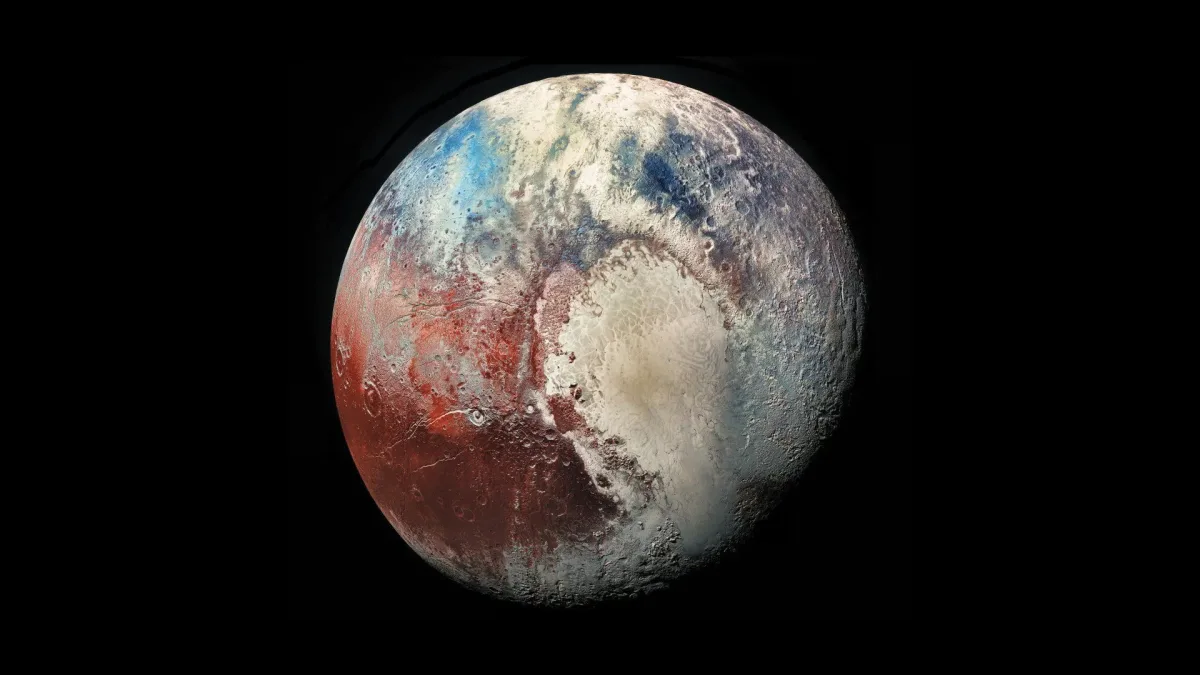
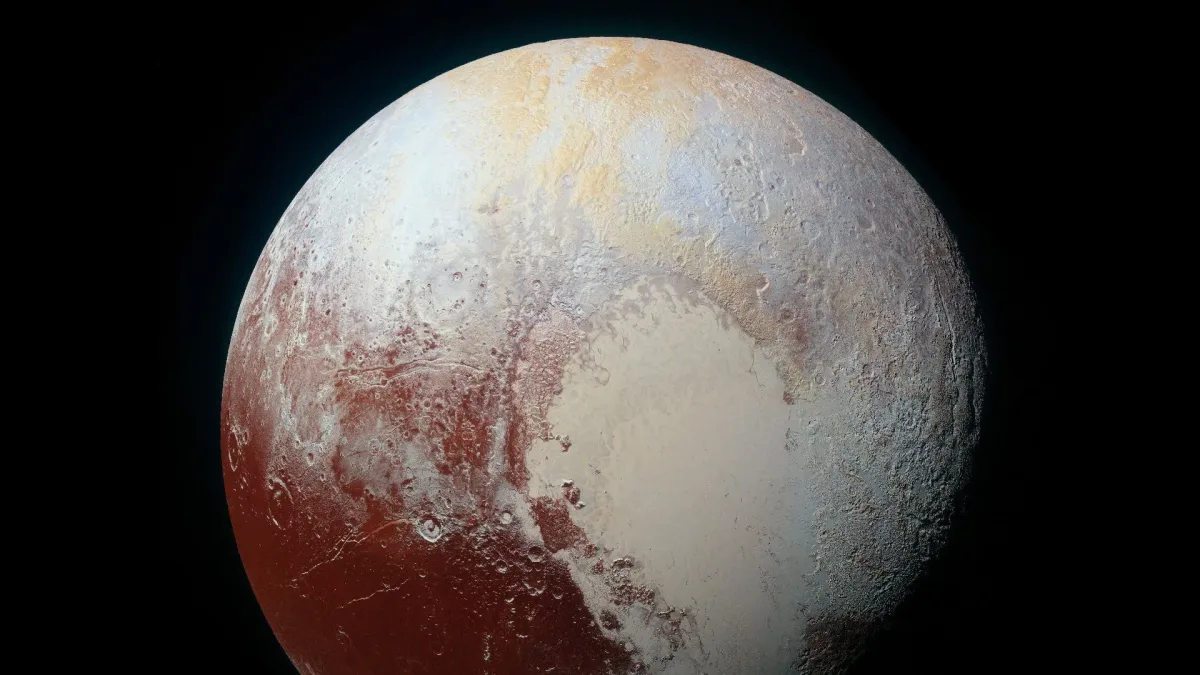
One of the strongest emotional and scientific arguments for Pluto comes from what NASA's New Horizons mission discovered.
Before 2015, Pluto was a distant point of light. On July 14, 2015, NASA's New Horizons spacecraft became the first spacecraft to fly past Pluto.
The mission revealed an unexpectedly complex world.
Pluto has mountains, valleys, plains, glaciers and a thin atmosphere. Scientists also found evidence of active or recently active geological processes, including flowing and convecting volatile ices and extensive tectonic features.
The famous bright, heart-shaped region called Sputnik Planitia became one of the most recognizable features in planetary exploration.
These discoveries did not automatically change Pluto's classification, but they changed our understanding of Pluto.
The spacecraft showed that being scientifically rich and geologically complex does not depend on being called a “planet.”
That is one reason some scientists argue that the debate may place too much importance on the label.
The New Horizons Mission Changed the Conversation
New Horizons was the first spacecraft to explore Pluto at close range and later became the first mission to investigate another Kuiper Belt object up close.
The mission transformed Pluto from a distant dot into a real world with mountains, plains, weather, geology and a complicated history.
This created an interesting contradiction.
The more scientists learned about Pluto, the more planet-like it appeared in terms of physical complexity. Yet its official classification remained unchanged because the IAU definition is based partly on orbital dynamics.
In other words, New Horizons did not settle the planet debate. It gave both sides more information to argue about.
The Scientific Debate Is Bigger Than Pluto
At first glance, the Pluto question seems simple:
Is Pluto a planet or not?
In reality, the deeper question is:
What exactly should the word “planet” mean?
There are several ways scientists can classify a celestial body.
A classification can focus on:
-
Physical structure
-
Geological activity
-
Composition
-
Size and mass
-
Orbital dynamics
-
Formation history
-
Relationship with neighbouring objects
The IAU definition gives strong importance to orbital dynamics.
Other planetary scientists prefer a definition that emphasizes physical characteristics.
A 2022 Icarus review by Philip Metzger and colleagues argued that planetary science could benefit from a taxonomy more closely aligned with geological complexity. Their work discusses a broader concept of planets that includes moons and other geologically complex worlds.
This does not mean the scientific community has agreed to replace the IAU definition. It means that legitimate scientific disagreement exists over how the category should be constructed.
Pluto's Five Moons
Pluto is also part of a fascinating planetary system rather than being an isolated ball of ice and rock.
It has five known moons:
| Moon | Key fact |
|---|---|
| Charon | Largest moon; exceptionally large compared with Pluto |
| Styx | Small inner moon |
| Nix | Small irregular moon |
| Kerberos | Small moon in the Pluto system |
| Hydra | Outer moon of the system |
Charon is particularly important. It is so large relative to Pluto that the pair is often described as a binary or near-binary system in scientific discussions.
NASA notes that Charon is nearly half Pluto's size, making the relationship between the two worlds unusual compared with most planet-moon systems.
The 2026 Pluto Debate: Why It Is Back in the News
For years, the Pluto argument had largely become a cultural debate rather than a major news story.
That changed in 2026.
NASA Administrator Jared Isaacman publicly expressed strong support for making Pluto a planet again during congressional hearings concerning NASA's future budget and priorities. He said he was “very much” in the camp of restoring Pluto's planetary status and indicated that scientific papers were being prepared to help reopen the discussion.
The comments generated renewed media attention because NASA's administrator is such a prominent figure in the space community.
However, an important distinction must be made:
NASA has not officially reclassified Pluto as a planet.
The IAU remains the organization responsible for the official Solar System definition, and its current FAQ states that it has not changed the definition of a planet since 2006. (IAU)
So, as of August 24, 2026, Pluto remains officially a dwarf planet.
Could Pluto Become a Planet Again?
Technically, yes.
Scientific definitions can change. The IAU could theoretically reconsider its resolution in the future, especially if a new definition gained broad support among astronomers.
But a reversal would not be automatic.
For Pluto to become an official planet again, there would need to be a serious scientific and institutional process involving debate over the definition itself.
There are several possible outcomes.
Scenario 1: Pluto Remains a Dwarf Planet
This is the current position and may remain the simplest solution.
The IAU could maintain the existing definition and continue to classify Pluto as a dwarf planet.
Scenario 2: The IAU Changes the Definition
A new definition could remove or change the orbital-clearing requirement.
That might allow Pluto to become a planet again, but it could also affect the classifications of many other objects.
Scenario 3: Scientists Use Different Definitions for Different Purposes
This may actually be the most practical outcome.
Astronomers could continue using the IAU definition for official nomenclature while planetary scientists use broader classifications when studying geology and planetary evolution.
That would acknowledge that scientific fields sometimes require different taxonomies for different purposes.
What Would Happen If Pluto Became a Planet Again?
The consequences would go well beyond adding one line to school textbooks.
A revised definition could require astronomers to reconsider many Solar System objects, including dwarf planets, trans-Neptunian objects and possibly large moons.
NASA already notes that the Solar System may contain many more dwarf planets than the five officially recognized by the IAU.
A definition based primarily on roundness rather than orbital dominance could therefore expand the number of recognized planets dramatically.
That is one reason many astronomers are cautious about changing the current system.
Current Status of Pluto
| Question | Current answer as of August 24, 2026 |
|---|---|
| Is Pluto officially a planet? | No |
| Is Pluto officially a dwarf planet? | Yes |
| Has the IAU changed its 2006 definition? | No |
| Is Pluto in the Kuiper Belt? | Yes |
| Was Pluto once considered the ninth planet? | Yes |
| Has NASA called for Pluto's official reclassification? | NASA Administrator Jared Isaacman has publicly supported revisiting the issue |
| Has Pluto actually been restored as a planet? | No |
| Is the scientific debate still active? | Yes |
The distinction between “someone wants to reopen the debate” and “Pluto has officially been reclassified” is important.
As of the current date, the latter has not happened.
References
-
International Astronomical Union — 2006 General Assembly resolution defining planets and dwarf planets. (IAU)
-
International Astronomical Union — Current Astronomy FAQs, including the current Pluto classification. (IAU)
-
NASA Science — Pluto overview and exploration history. (NASA Science)
-
NASA Science — Pluto and dwarf planets overview. (NASA Science)
-
NASA Science — What Is a Planet? History of the Pluto classification debate. (NASA Science)
-
NASA/NTRS — The Geology of the Pluto System, summarizing geological findings from New Horizons. (NASA Technical Reports Server)
-
Nature — 2026 report on NASA Administrator Jared Isaacman's renewed push to revisit Pluto's planetary status. (Nature)
-
Scientific American — 2026 analysis of Isaacman's support for reconsidering Pluto's classification. (Scientific American)
-
Space.com — Report on Isaacman's 2026 comments supporting “make Pluto a planet again.” (Space)
-
Metzger et al., Icarus — “Moons are planets: Scientific usefulness versus cultural teleology in the taxonomy of planetary science.” (ScienceDirect)
-
The Planetary Society — Discussion of alternative geophysical definitions of planets. (The Planetary Society)