
Shadow Biospheres: Looking for Life Built on Arsenic
Could life exist on Earth using a completely different chemical foundation from the organisms we already know? The idea of a shadow biosphere has challenged scientists to reconsider how life might develop and survive. One of the most fascinating possibilities involved arsenic, a toxic element that researchers once believed could replace phosphorus in essential biological molecules. Although the famous 2010 arsenic-life discovery was later retracted, the questions it raised remain important to astrobiology and the search for unfamiliar forms of life.
What Is a Shadow Biosphere?
A shadow biosphere is a hypothetical community of organisms that may exist alongside familiar life on Earth but operate using substantially different biochemistry. Unlike bacteria, plants, animals and other organisms we know, these hypothetical life forms might use unfamiliar molecular structures or biological processes.
The idea was explored in a 2009 scientific paper published in the journal Astrobiology. Researchers, including Paul Davies, Steven Benner and Felisa Wolfe-Simon, suggested that Earth might contain forms of life that conventional biological techniques have overlooked.
The possibility is important because scientists often search for extraterrestrial life by looking for familiar biological signs. If life can develop through different chemical systems, researchers may need broader methods to recognize it.
Why Scientists Considered Arsenic-Based Life
The idea of arsenic-based life attracted attention because of the way living organisms use phosphorus.
Phosphorus is one of the six major elements associated with life as we know it. It helps form DNA and RNA, which carry genetic information. It is also essential for molecules involved in storing and transferring energy inside cells.
Arsenic has some chemical similarities to phosphorus because both elements belong to the same group in the periodic table. However, arsenic behaves differently in biological environments and is toxic to many organisms.
Scientists wondered whether an unusual organism could adapt to use arsenic in biological processes normally dependent on phosphorus. This possibility became one of the most discussed questions in astrobiology.
The Discovery of GFAJ-1 at Mono Lake

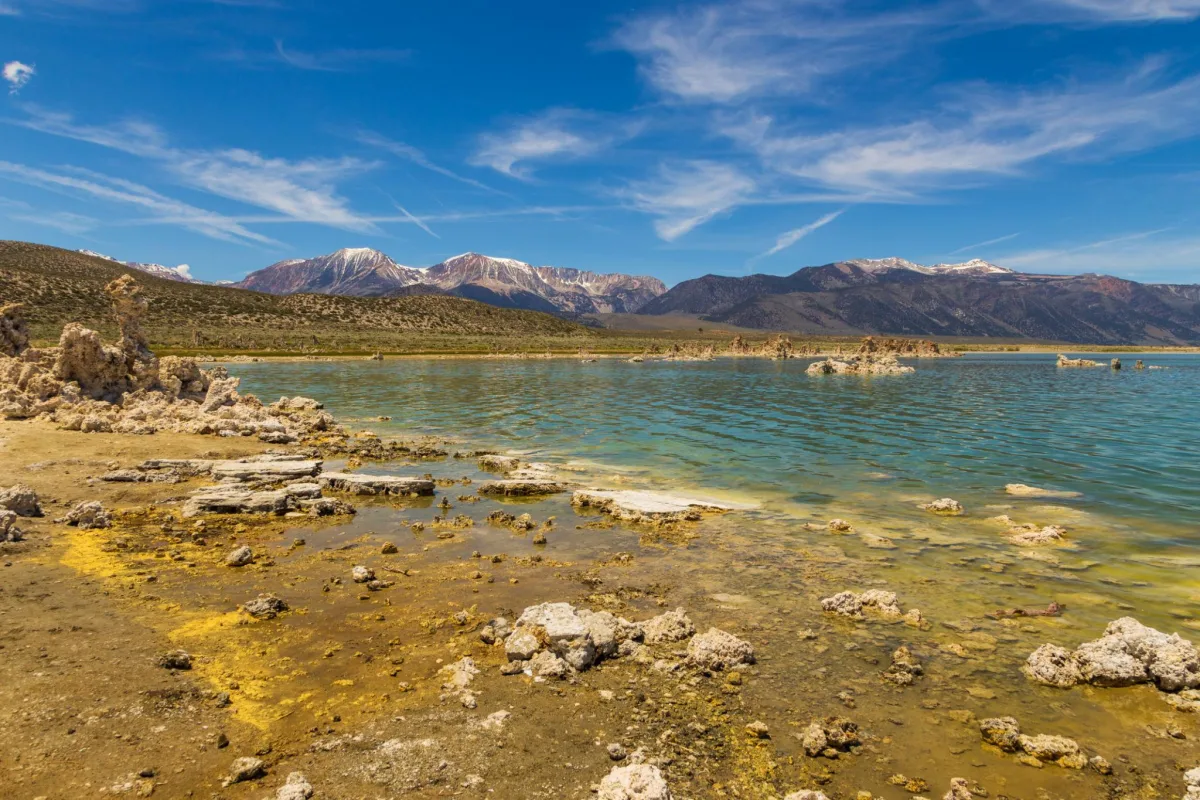
In 2010, researchers announced an extraordinary discovery involving a microorganism called GFAJ-1. The bacterium was collected from Mono Lake in California, an unusual environment known for its high salinity and naturally occurring arsenic.
The research team, led by Felisa Wolfe-Simon, published its findings in the scientific journal Science.

According to the original paper, GFAJ-1 could grow in an environment with very little phosphorus while exposed to arsenic. The researchers proposed that the organism could substitute arsenic for phosphorus in important biological molecules, including DNA.
If confirmed, the discovery would have challenged a major assumption about the chemical requirements of life. It would also have expanded the possibilities scientists considered when searching for organisms beyond Earth.

Why the Discovery Became Controversial
The announcement attracted enormous attention, but other scientists quickly questioned whether the experiments actually demonstrated arsenic-based biology.
One major concern was whether GFAJ-1 was genuinely using arsenic as a replacement for phosphorus or simply surviving by obtaining very small amounts of phosphorus from its surroundings.
In July 2012, two independent research teams published important findings challenging the original conclusion.
A study led by Tobias Erb and colleagues found that GFAJ-1 could tolerate high arsenic concentrations but still required phosphorus to grow. Their research also found no convincing evidence that arsenic had replaced phosphorus in its nucleic acids.
Another study, led by Marshall Reaves and Rosemary Redfield, found no detectable arsenic incorporated into the bacterium's DNA.
These findings significantly weakened the original discovery and established an important distinction: surviving in an arsenic-rich environment does not mean an organism uses arsenic as the foundation of its biology.
The 2025 Retraction: What Really Happened?

The controversy reached another major turning point on July 24, 2025, when Science formally retracted the original arsenic-life research paper, almost 15 years after its publication.
The journal's editor-in-chief, Holden Thorp, explained that the reported experiments did not adequately support the paper's central conclusions under the journal's current standards.
Importantly, the retraction was not based on a finding of deliberate fraud or data manipulation. Instead, it concerned whether the experimental evidence justified the extraordinary claims made in the original research.
The decision was controversial. Several scientists welcomed the retraction, while the original paper's authors disagreed with it and maintained that their findings deserved to remain published.
The retraction does not mean that GFAJ-1 is imaginary or that the bacterium cannot survive in arsenic-rich environments. It means that the central claim that it substitutes arsenic for phosphorus in its biological molecules has not been established.
Could a Shadow Biosphere Still Exist on Earth?
Although the arsenic-life discovery did not hold up, the broader shadow biosphere hypothesis remains an interesting scientific question.
Scientists know that Earth contains microorganisms capable of surviving in environments that would be extremely difficult for many familiar organisms. Some live in deep underground environments, while others survive in highly salty, acidic or extremely hot conditions.
However, organisms living in unusual environments are not automatically members of a separate shadow biosphere. They may still use the same fundamental biological chemistry as other known organisms.
The real question is whether Earth could contain independently originated life or organisms with substantially different molecular systems that conventional biological techniques have failed to identify.
A 2009 research paper by Paul Davies and colleagues explored possible ways scientists might recognize such unfamiliar organisms. The researchers argued that scientists should not limit their search to the biological signatures already familiar from life on Earth.
Why Shadow Biospheres Matter for the Search for Alien Life
The search for life beyond Earth depends partly on knowing what scientists should look for.
If researchers only search for familiar DNA, proteins and biological processes, they could potentially overlook organisms with very different chemistry.
This is why the idea of agnostic biosignatures has become important in astrobiology. These are potential signs of life that do not depend entirely on familiar Earth-based biological molecules.
A 2026 review in Annual Review of Earth and Planetary Sciences, by Heather V. Graham, examines approaches to identifying biological activity without assuming that extraterrestrial organisms must resemble life on Earth.
Such research could improve the way scientists investigate planets, moons and other environments that might support unfamiliar forms of life.
What Scientists Have Established So Far
The evidence needs to be separated into established findings and unanswered questions.
|
Scientific question |
Current understanding |
|---|---|
|
Does GFAJ-1 exist? |
Yes, it is a documented bacterium. |
|
Can it tolerate arsenic? |
Yes, it is unusually arsenic-resistant. |
|
Can it replace phosphorus with arsenic in its DNA? |
This claim has not been established. |
|
Was the original arsenic-life paper retracted? |
Yes, on July 24, 2025. |
|
Has a shadow biosphere been discovered? |
No verified discovery has been established. |
|
Is alternative biochemistry scientifically worth investigating? |
Yes, it remains relevant to astrobiology. |
Conclusion
Shadow biospheres offer an intriguing way to think about life and its possible chemical foundations. The controversial GFAJ-1 discovery initially appeared to provide evidence that an organism could use arsenic instead of phosphorus, but subsequent experiments failed to support that conclusion, and the original paper was eventually retracted in 2025.
Nevertheless, the larger scientific question remains relevant: could life exist in forms that scientists have not yet learned to recognize?
For researchers studying Earth's earliest organisms and searching for life elsewhere in the universe, keeping an open mind about biological possibilities remains important. The search for unfamiliar life is not over, even though one of its most famous discoveries did not survive scientific scrutiny.
References
1. Davies, P. C. W., et al. (2009). Signatures of a shadow biosphere. Astrobiology. Read the research on PubMed.
2. Wolfe-Simon, F., et al. (2011). A bacterium that can grow by using arsenic instead of phosphorus. Science. Read the original research record at USGS.
3. Erb, T. J., et al. (2012). GFAJ-1 is an arsenate-resistant, phosphate-dependent organism. Science. Read on PubMed.
4. Reaves, M. L., et al. (2012). Absence of detectable arsenate in DNA from arsenate-grown GFAJ-1 cells. Science. Read on PubMed.
5. Wolf, L. (2025). Controversial 'arsenic life' paper retracted after 15 years — but authors fight back. Nature. Read the report.
6. American Chemical Society (2025). Controversial arsenic life paper retracted from Science. Read C&EN.
7. Graham, H. V. (2026). Agnostic Biosignatures: Expanding the Search for Life in the Solar System. Annual Review of Earth and Planetary Sciences. Read the review.