

Orbital Fuel Depots: The Infrastructure Needed for Long Cruises
Long-distance space missions have a simple problem that becomes harder the farther humans travel: fuel is heavy, and carrying every kilogram needed for an entire journey from Earth can make a spacecraft larger, more expensive, and harder to launch. Orbital fuel depots could change that by allowing spacecraft to launch with only part of their propellant, meet a tanker or depot in space, refuel, and continue toward the Moon, Mars, or another destination. NASA, ESA and commercial companies are now developing cryogenic storage, transfer systems, docking interfaces and related technologies needed to make this possible. However, as of October 5, 2026, space refueling is still moving from demonstrations and development toward practical depot operations rather than being a mature network of orbital gas stations.
Summary
- Topic: Orbital fuel and propellant depots
- Main purpose: Store and transfer propellant in space
- Main users: Rockets, spacecraft, space tugs, satellites and future exploration vehicles
- Important propellants: Liquid oxygen, liquid hydrogen and liquid methane, as well as storable propellants such as hydrazine for some spacecraft
- Major organizations: NASA, ESA, SpaceX, Rocket Lab, Eta Space, Orbit Fab and other commercial and government technology developers
- Main challenge: Keeping cryogenic propellants cold enough for long periods while safely transferring them in microgravity
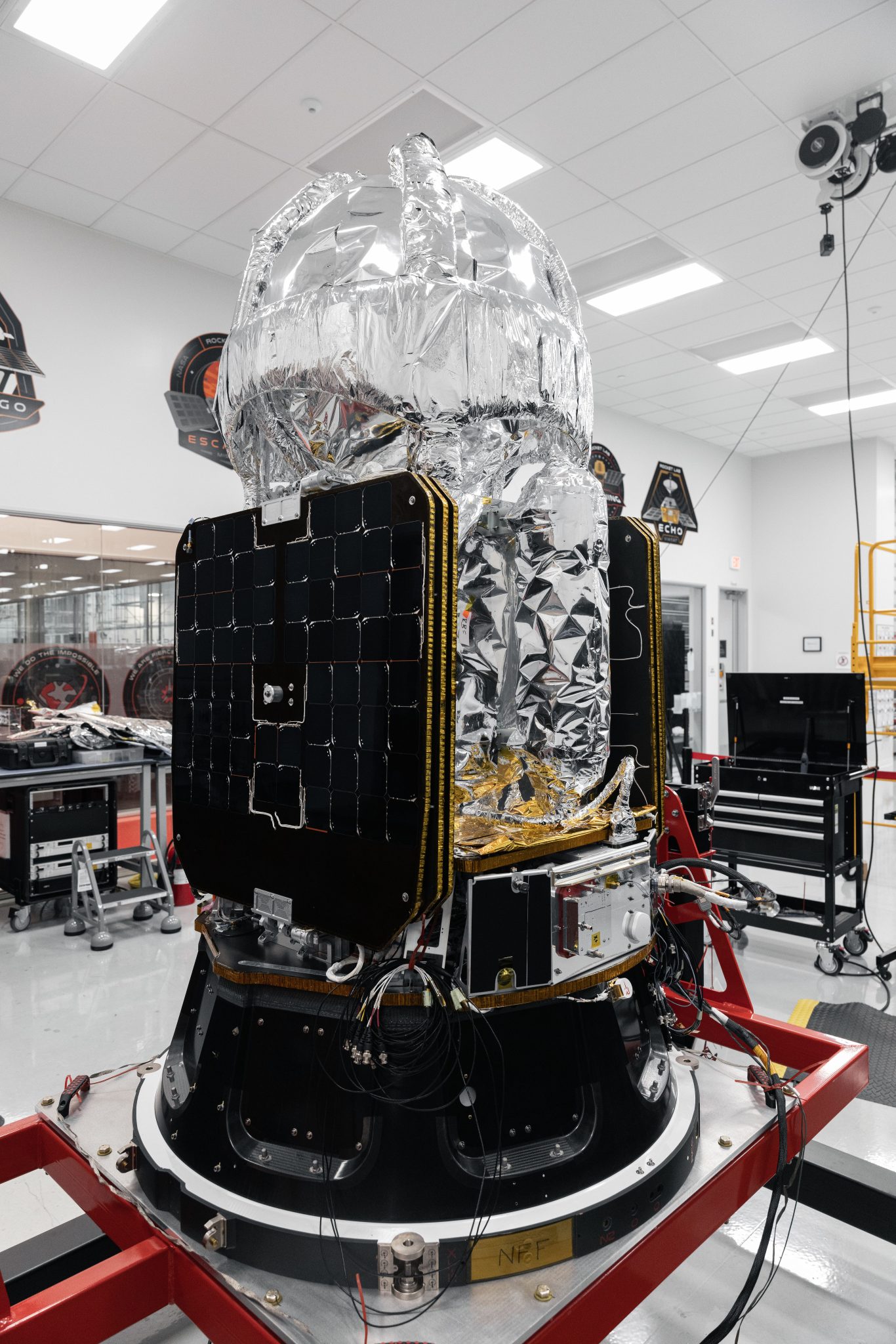
- Major 2026 development: NASA and Eta Space are preparing LOXSAT, a nine-month orbital test of cryogenic fluid-management technologies
- Commercial goal: Eta Space and Rocket Lab are using LOXSAT data to develop the proposed Cryo-Dock depot, targeted for operation in the 2030 timeframe
- Refueling standardization: Companies such as Orbit Fab are developing interfaces and systems intended to make routine on-orbit refueling possible
- Deep-space importance: Refueling could allow spacecraft to be launched in stages rather than carrying all propellant from Earth at once
- Current status: Technology demonstrations, flight tests and planned missions rather than a fully established orbital fuel-depot network
What Is an Orbital Fuel Depot?
An orbital fuel depot is basically a storage station for spacecraft propellant in space.
The idea is easy to understand. Instead of launching a spacecraft with everything it will ever need, another vehicle could carry fuel to orbit and transfer it to the spacecraft later.
NASA often describes the concept as "gas stations in space."
The term propellant depot is technically more accurate because rockets do not use "fuel" alone. A chemical rocket normally needs both fuel and an oxidizer. For example, liquid hydrogen can be burned with liquid oxygen, while methane can also be paired with liquid oxygen.
The depot itself would likely include large insulated tanks, cooling systems, sensors, valves, transfer lines, docking equipment, communications systems and power supplies. A more advanced depot could also be connected to tanker spacecraft that repeatedly deliver new propellant.
The important point is that the depot would become part of the transportation system rather than simply being another spacecraft.
Instead of thinking about a deep-space mission as:
Earth → Moon → Mars
future transportation networks could look more like:
Earth → orbital staging point → refuel → Moon → refuel → Mars
That difference could have a major effect on how spacecraft are designed.
Why Spacecraft Need Refueling in Orbit
The rocket equation is one of the biggest reasons.
A spacecraft needs propellant to change its velocity. But the propellant itself has mass. Carrying more propellant therefore makes the spacecraft heavier, which means additional energy is needed to move that spacecraft.
NASA describes the problem very simply: the farther the destination, the more fuel is required; additional fuel increases spacecraft mass, which in turn increases the fuel needed to launch it.
That creates a difficult cycle.
A spacecraft traveling from Earth toward Mars might need enormous quantities of propellant for departure, course corrections, arrival, landing or later return. Carrying all of that from the beginning can make the architecture extremely demanding.
An orbital depot offers another option.
A launch vehicle could place the spacecraft into orbit with a partial propellant load. Separate tanker launches could then deliver additional propellant. The spacecraft could fill its tanks before beginning the next stage of its journey.
This approach is especially attractive for reusable spacecraft, because the same vehicle could potentially be refueled and used again.
NASA's technology programs specifically identify in-space cryogenic propellant transfer as an important capability for reusable and sustainable transportation.
The Difference Between Storable Fuel and Cryogenic Propellant
Not every orbital depot would have to handle extremely cold propellants.
Some satellites and servicing vehicles use storable propellants, which are easier to keep in tanks for long periods. Orbit Fab, for example, is working on on-orbit refueling systems involving hydrazine and standardized interfaces. Its current plans include future depot and fuel-delivery demonstrations around geostationary orbit.
Cryogenic propellants are much harder.
NASA's cryogenic-fluid-management program focuses on ultra-cold fluids including:
- Liquid oxygen, or LOX
- Liquid hydrogen, or LH2
- Liquid methane
These substances have to be stored under carefully controlled thermal and pressure conditions.
That is one reason orbital fuel depots are not simply large tanks floating above Earth.
The Biggest Problem: Keeping the Propellant Cold
On Earth, cryogenic liquids can be handled with large ground systems, thick insulation, active cooling and frequent operations.
Space creates a different environment.
A depot could be sitting in sunlight and receiving heat from the surrounding environment and its own equipment. Even when the tank is insulated, small amounts of heat can eventually reach the stored liquid.
When a cryogenic liquid warms, some of it can turn into gas. This process is called boil-off.
Losing a small percentage of propellant might not matter for a short mission. But a depot intended to operate for months or years could not afford to continually lose useful propellant.
That makes zero-boil-off storage one of the important technologies under development.
NASA has studied systems combining insulation with active cryocooling so that heat entering a tank can be removed rather than allowing the cryogen to boil away.
Modern work is continuing this effort with new materials, cryocoolers, tank designs and fluid-management systems.
NASA's current cryogenic program describes the challenge as keeping hydrogen and other fluids cold for long periods so they can support Moon-to-Mars exploration and other deep-space missions.
Why Refueling in Microgravity Is Difficult
Keeping fuel cold is only half the problem.
The other major challenge is moving the liquid from one spacecraft to another.
On Earth, gravity helps separate liquids and gases inside a tank. In microgravity, that separation becomes much less straightforward.
A tank containing liquid oxygen, for example, does not behave exactly like a tank sitting on the ground. Engineers have to understand where the liquid is, where the gas is, how pressure changes, and how the liquid moves when the spacecraft accelerates or rotates.
That matters during a transfer because the system must send mostly liquid propellant through the transfer line rather than unwanted gas.
NASA has been developing technologies to address this problem, including specialized cryocouplers and systems designed to control gas-liquid behavior during transfer.
NASA's current technology portfolio also includes work intended to reduce propellant losses associated with microgravity fluid handling.
What Is a Cryocoupler?
A cryocoupler is essentially a specialized connection between the storage system and the spacecraft receiving the propellant.
It has to do far more than a normal fuel hose.
The connection must remain reliable in vacuum and extreme temperatures. It needs to handle very cold fluids without excessive leakage or heat transfer. It must also connect, seal and disconnect safely.
NASA compared this idea to a fuel-pump nozzle connecting to a vehicle's fuel tank.
In a future refueling network, standardized connections could become very important.
A spacecraft built by one company could potentially visit a depot built by another company, provided they use compatible refueling standards.
That is similar to the way standardized ports and fuel systems make today's transportation networks practical.
How an Orbital Fuel Depot Could Work
A mature depot could operate through several basic steps.
First, a tanker launches from Earth carrying propellant.
The tanker reaches the depot and performs rendezvous and docking operations.
The two spacecraft connect through a transfer interface. The depot then uses pressure, pumps or other fluid-management techniques to move the propellant into its storage tanks.
Sensors measure temperature, pressure and tank levels.
Later, a spacecraft arrives at the depot.
It docks with the station, connects to the refueling system and receives its required propellant.
The spacecraft then leaves with a much larger usable propellant reserve than it could practically have carried through the entire launch sequence.
This would turn space transportation into a more distributed system.
Instead of building every mission around one giant launch, planners could divide the mission into several launches and orbital operations.
NASA's 2026 Cryogenic Refueling Work
2026 has been an important year for orbital propellant technology.
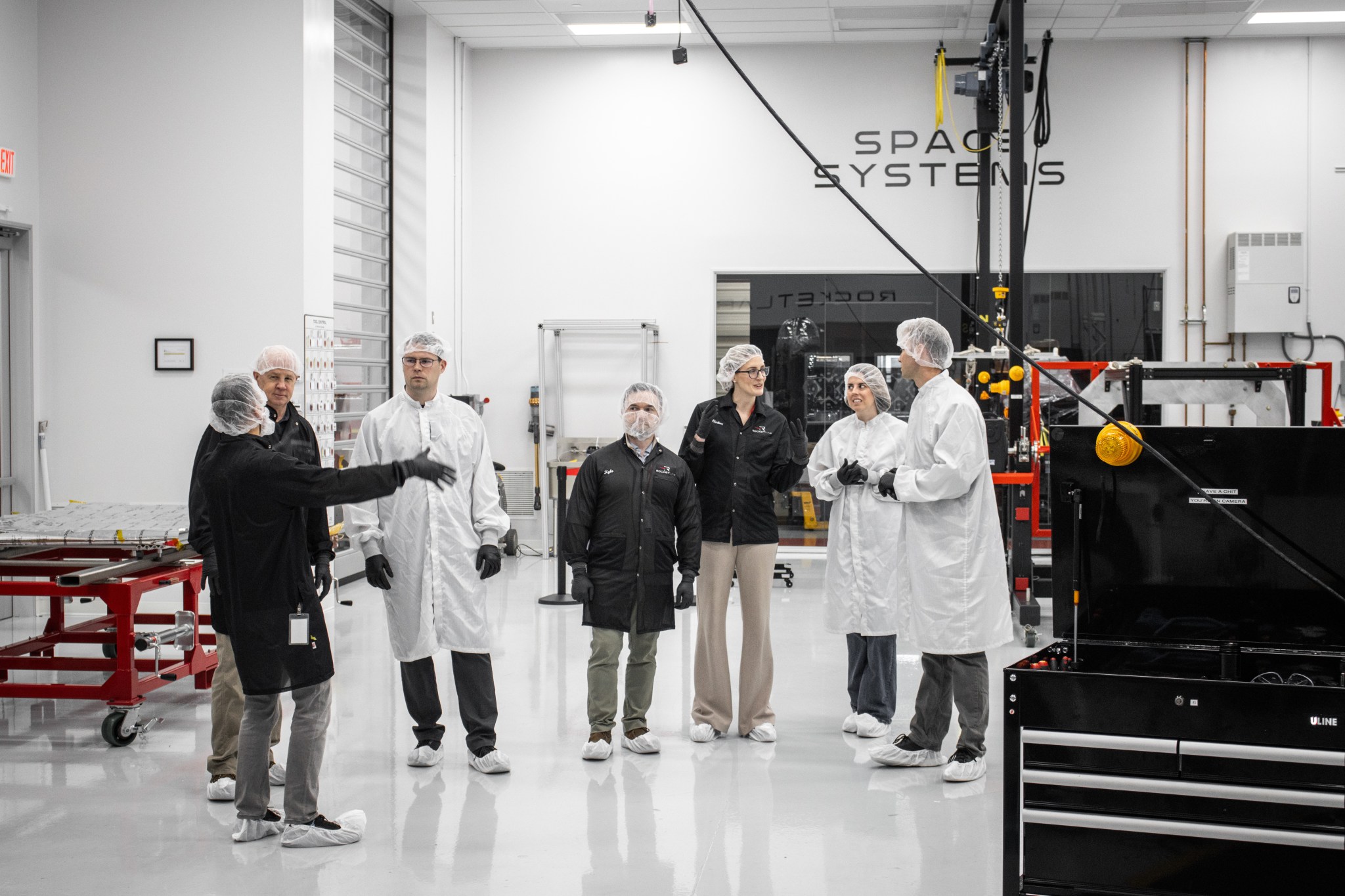
NASA is working with Eta Space on LOXSAT, a technology demonstration designed to investigate cryogenic fluid management in orbit.
NASA says LOXSAT will test 11 cryogenic fluid-management technologies during a planned nine-month mission. The spacecraft is intended to gather data needed for future in-space propellant depots.
Rocket Lab's current mission page describes LOXSAT as an orbital technology demonstration that will inform the design of Cryo-Dock, a proposed full-scale cryogenic propellant depot in low Earth orbit targeted for operation in 2030.
An important current-status point is worth noting: Rocket Lab's current page still lists LOXSAT as a 2026 mission with launch time to be determined. Therefore, as of October 5, 2026, it should not be described as an already operational depot or automatically assumed to be successfully deployed.
NASA's TechPort also lists LOXSAT as an active technology project designed to test storage, pressure control and transfer of liquid oxygen in low Earth orbit over nine months.
A NASA Cryogenic Fuel Test
NASA is also testing the hardware needed to connect spacecraft to future depots.
In June 2026, NASA reported operational testing of a developmental cryocoupler with L3Harris. The agency said the hardware is intended to help future spacecraft connect to orbital propellant depots and transfer cryogenic fluids safely.
That is an important step because a depot is useless without a reliable way to get the propellant into the spacecraft.
SpaceX and the Importance of Starship Refueling
SpaceX is one of the companies most closely associated with the future of orbital propellant transfer.
The reason is simple: Starship is being designed as a very large reusable transportation system, and many of the missions envisioned for it require huge amounts of propellant.
SpaceX's September 2026 update said Starship was entering a new orbital phase and specifically identified the first orbital propellant-transfer test as one of the upcoming flight activities.
Starship's 14th test flight reached orbit in September 2026 despite an engine problem. Reuters reported that one of its three main Raptor engines shut down after separation from the booster, forcing the mission to end earlier than planned. The flight nevertheless achieved orbital flight and satellite deployment.
That achievement matters for the larger refueling story because an operational Starship transportation system would need dependable in-space propellant operations for ambitious Moon and Mars missions.
It is also important not to confuse an announced test with a completed operational service. As of the October 5, 2026 cutoff used for this article, Starship's broader orbital-refueling capability is still being developed and tested.
NASA's Larger Moon-to-Mars Plan
Orbital refueling is not an isolated technology.
NASA's Moon to Mars Architecture treats long-term exploration as a collection of connected capabilities, including transportation, logistics, infrastructure support and in-situ resource utilization.
That is where depots become particularly interesting.
A depot near Earth could support vehicles leaving Earth orbit.
A depot in cislunar space could support missions moving between Earth and the Moon.
Eventually, propellant produced from lunar resources could potentially supply transportation systems operating farther away from Earth.
This is why NASA's work extends beyond simple orbital tanks.
The agency is also developing technologies for extracting and processing lunar resources into useful products, including oxygen and hydrogen propellants.
Lunar Ice Could Become Part of the Fuel Network
One of the most exciting possibilities is using resources already available away from Earth.
NASA has reported widespread evidence of water ice in permanently shadowed lunar regions. Water could have several uses for future exploration, including producing oxygen and hydrogen for rocket propellant.
The idea is straightforward in principle.
Water can be separated into hydrogen and oxygen through electrolysis. Those gases can then be processed and liquefied for use as propellant in systems designed for liquid hydrogen and liquid oxygen.
NASA technology projects in 2026 continued developing lunar water-processing, electrolysis and propellant-production systems.
This creates a possible future chain:
Lunar ice → water processing → hydrogen and oxygen → liquefaction → storage → spacecraft refueling
That would move the space transportation system one step closer to using resources found away from Earth.
Gateway and the Future of Cislunar Logistics
NASA's Gateway program is another part of this larger picture.
Gateway is planned as a multi-purpose space station in lunar orbit and is intended to support Artemis missions and longer-term exploration. NASA currently lists the first Gateway launch as no earlier than 2027.
Gateway itself is not simply an orbital fuel depot. It is a broader space station and logistics platform.
However, NASA's wider lunar architecture includes transportation, logistics and infrastructure systems that could eventually work together around the Moon.
NASA has also described Gateway as part of the infrastructure supporting sustained lunar exploration and future Mars missions.
In a mature cislunar economy, depots, tugs, stations, landers and cargo spacecraft could all become parts of the same transportation network.
ESA Is Also Planning for Orbital Refueling
NASA is not alone.
The European Space Agency's Future Launchers Preparatory Programme includes work on reusable and modular space transportation.
ESA says its future in-space transportation ecosystem is intended to allow spacecraft and space tugs to operate across multiple missions and orbits, with payloads and space tugs able to refill at orbital propellant depots.
ESA's InSPoC activities are focused on proving technologies for in-space transportation, including refilling, storage and logistics. The programme continues to develop the pieces needed for a future commercial space transportation system.
This is important because a depot network will only become useful if multiple vehicles can use it.
Commercial Refueling Is Already Moving Beyond Theory
Cryogenic deep-space depots receive much of the attention, but commercial refueling work is also advancing for satellites closer to Earth.
Orbit Fab has developed refueling hardware and has already carried out an earlier in-space fluid-transfer demonstration aboard the International Space Station.
Its current mission portfolio includes Podracer, which launched in March 2026 and is operating in orbit for rendezvous and proximity-operation demonstrations related to future refueling missions.
Orbit Fab is also preparing future demonstrations around geostationary orbit. Its Kamino and Mynock missions are currently listed for 2027 and are intended to demonstrate on-orbit hydrazine delivery using its refueling and docking interfaces.
These missions are different from a giant cryogenic depot for Mars-bound ships, but they address the same larger idea:
Spacecraft should not always have to be disposable after their original propellant runs low.
Key Technologies Needed for Orbital Fuel Depots
| Technology | Why It Matters | Main Challenge |
|---|---|---|
| Cryogenic tanks | Store liquid oxygen, hydrogen or methane | Heat leakage and long-term storage |
| Thermal insulation | Reduces heat entering tanks | Mass and long-duration performance |
| Cryocoolers | Remove unwanted heat | Power consumption and reliability |
| Cryocouplers | Connect depot and spacecraft | Leakage, temperature and safe connection |
| Propellant transfer systems | Move liquid between tanks | Microgravity fluid behavior |
| Pressure control | Keeps tanks within usable limits | Gas-liquid management |
| Sensors and gauges | Measure temperature, pressure and remaining propellant | Accurate measurements in microgravity |
| Docking systems | Hold vehicles in the correct position | Autonomous rendezvous and reliable capture |
| Autonomous operations | Reduces the need for constant human control | Fault detection and recovery |
| Standard interfaces | Allow different vehicles to use depots | Industry-wide compatibility |
| Power systems | Run pumps, sensors and cooling equipment | Long-term reliability |
| Tank materials | Reduce structural mass and leakage | Strength, compatibility and thermal performance |
NASA's current cryogenic-fluid-management activities cover many of these areas, including storage, transfer, measurement, pressure control and cryocoupling.
Current Orbital Fuel Depot and Refueling Projects
| Project | Organization | Status as of October 2026 | Purpose |
|---|---|---|---|
| LOXSAT | NASA, Eta Space, Rocket Lab | Scheduled for 2026; launch timing still listed as TBC | Test cryogenic oxygen storage and fluid management in LEO |
| Cryo-Dock | Eta Space / Rocket Lab | Planned | Proposed commercial cryogenic depot in LEO, targeted for 2030 |
| Starship orbital propellant transfer | SpaceX / NASA-supported technology work | In development and planned testing | Demonstrate large-scale cryogenic transfer for future Starship operations |
| Podracer | Orbit Fab / Momentus | On orbit | Test rendezvous and proximity operations supporting future refueling |
| Kamino | Orbit Fab / Impulse Space and partners | In test; planned Q2 2027 | Demonstrate GEO-adjacent hydrazine delivery |
| Mynock / APS-R | Orbit Fab / Astroscale U.S. | In test; planned Q2 2027 | Demonstrate hydrazine delivery and docking/refueling operations |
| ESA InSPoC | European Space Agency and industry | Technology development and demonstrations | Build future in-space transportation, logistics and refueling capabilities |
Status information is based on current NASA, Rocket Lab, SpaceX, Orbit Fab and ESA material available for this October 5, 2026 research cutoff.
What Could Orbital Depots Make Possible?
Longer Moon missions
Spacecraft could carry enough propellant to reach lunar orbit, refill and then continue to another destination or return.
Reusable spacecraft
Instead of launching a new spacecraft every time a vehicle runs low on propellant, an operator could potentially send a tanker.
More flexible Mars missions
Mars missions could be assembled from several launches instead of requiring one launch to carry everything needed for the full expedition.
Large cargo transportation
Heavy equipment could be moved in stages.
A cargo spacecraft could reach Earth orbit, receive propellant and then use a high-energy maneuver to continue outward.
Space tugs
A reusable tug could move satellites, payloads or other vehicles between different orbits and then refuel for another job.
ESA's current transportation programme specifically envisions reusable space tugs and payloads refilling from orbital depots.
A future lunar economy
If lunar resources can eventually be turned into propellant, the Moon could become part of a wider transportation supply chain instead of simply being a destination.
NASA continues to invest in technologies for extracting and processing lunar resources for long-term exploration.
The Problems Still Standing
Orbital fuel depots are promising, but they are not an easy solution.
Cost
A depot itself must be launched, assembled and maintained. It also has to be supplied with propellant.
If launching the depot and keeping it supplied costs too much, the system may not provide enough economic benefit.
Propellant losses
Cryogenic fluids can boil away.
Even a small loss becomes important when tanks contain large amounts of propellant and missions last months or years.
Microgravity
Fluid behavior becomes difficult to predict and control when gravity no longer keeps the liquid settled at the bottom of a tank.
NASA is researching technologies specifically to address this problem.
Reliability
A depot could become a critical part of a mission.
A spacecraft traveling hundreds of millions of kilometers from Earth cannot simply call a technician to replace a broken valve.
Different spacecraft
Future depots may need to work with vehicles built by different companies and countries.
Without common interfaces and operational standards, the network could become fragmented.
Safety
Large quantities of cryogenic oxidizers and fuels stored together create serious engineering and operational demands.
The depot needs reliable isolation systems, monitoring and fault protection.
Are Orbital Fuel Depots Already Operating?
Not in the way people might imagine.
There have already been demonstrations of fluid transfer and refueling-related technologies in space. Orbit Fab, for example, lists its earlier ISS demonstration as a successful on-orbit fluid-transfer mission.
But a large commercial network of orbital propellant stations capable of routinely refueling Moon- or Mars-bound spacecraft does not yet exist.
The current 2026 landscape is better described as a transition period:
laboratory testing → microgravity demonstrations → orbital technology tests → dedicated refueling missions → operational depots
LOXSAT, Cryo-Dock development, NASA cryocoupler testing, Orbit Fab's future missions and planned Starship transfer tests are pieces of that larger progression.
The Role of Lunar Resources
The ultimate goal may not be to launch every kilogram of future propellant from Earth.
NASA's Moon-to-Mars work increasingly considers in-situ resource utilization, or ISRU.
The concept is to take material already available on the Moon or another planetary body and turn it into useful products.
For lunar exploration, water ice is especially interesting because water can support life-support needs and can potentially be processed into hydrogen and oxygen propellants.
NASA's technology portfolio includes projects for water purification, electrolysis, oxygen and hydrogen production and cryogenic liquefaction.
This could eventually create a much larger transportation loop:
Earth launches equipment → Moon produces resources → lunar propellant supports spacecraft → spacecraft travel through cislunar space → depots distribute propellant where it is needed
That is a much bigger idea than simply putting a fuel tank into orbit.
References
NASA — Cryogenic Fluid Management: NASA Cryogenic Fluid Management program
NASA — NASA, Industry Prepare Cryogenic Fuel Technology Demo: NASA LOXSAT technology demonstration
NASA — NASA Tests New Device for Future In-Space Refueling Missions: NASA cryocoupler and orbital refueling technology
NASA TechPort — LOXSAT 1: NASA TechPort LOXSAT project
NASA TechPort — On-Orbit Large-Scale Cryogenic Propellant Management and Transfer Demonstration: NASA TechPort cryogenic transfer project
NASA — Ice to Fuel: NASA Tests Technology for Refueling Landers: NASA CryoFILL and lunar propellant research
NASA — Lunar Resource-Seeking Technologies: NASA lunar resource technology research
NASA — Moon to Mars Architecture: NASA Moon to Mars Architecture
NASA — Gateway: NASA Gateway program
ESA — Future Launchers Preparatory Programme: ESA space transportation and orbital refueling programme
SpaceX — Starship to Orbit: SpaceX Starship orbital development update
Rocket Lab — LOXSAT: Rocket Lab LOXSAT mission page
Orbit Fab — Missions: Orbit Fab refueling and depot missions
Reuters — SpaceX Starship 14th flight and engine issue: Reuters report on Starship's September 2026 orbital test