
Nearby "Super Earth" Could Host Life After All: GJ 3378b—Our Closest Cosmic Neighbor
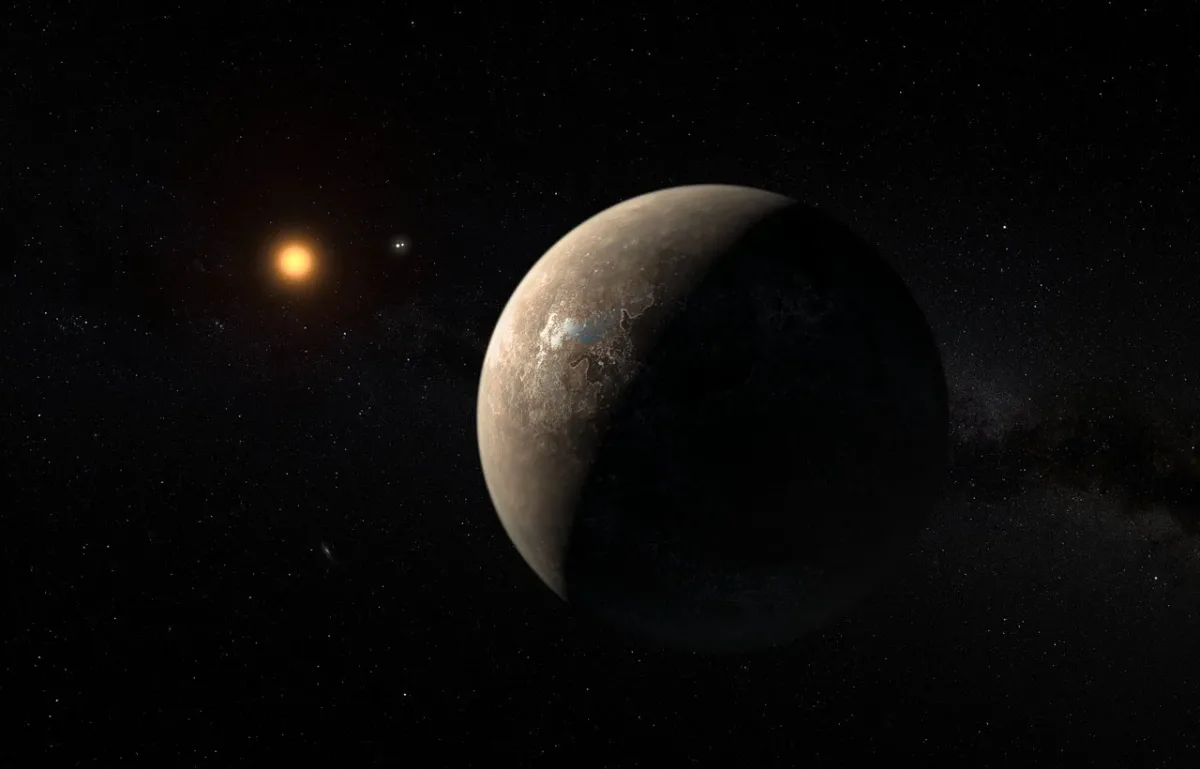
GJ 3378b, a rocky Super Earth 25 light-years from Earth, orbits within the habitable zone of its red dwarf star, making it a prime candidate for hosting liquid water and possibly life. Discovered in 2024 and refined by UC Irvine-led research in 2026, this planet’s updated mass (2.3x Earth) and orbital period (21 days) significantly boost its habitability prospects. While red dwarf flares pose risks, next-gen telescopes like the Giant Magellan Telescope (GMT) and Habitable Worlds Observatory (HWO) will soon probe its atmosphere for biosignatures, bringing humanity closer to answering whether life exists beyond our solar system.
Summary
- Discovery Timeline: First detected in 2024 via radial velocity; refined in 2026 by UC Irvine researchers.
- Location: 25 light-years away in Camelopardalis constellation—practically next door in cosmic terms.
- Planet Type: Rocky Super Earth (2.3x Earth’s mass), likely lacking a crushing atmosphere.
- Host Star: GJ 3378, a small, cool red dwarf (70–75% of all stars in the Milky Way).
- Habitable Zone: Orbital period of 21 days places it in the "just right" region for liquid water.
- Detection Tool: Habitable-zone Planet Finder (HPF) on the Hobby-Eberly Telescope, optimized for infrared light.
- Key Challenge: Red dwarf flares could strip atmospheres; more observations needed.
- Research Team: Led by Paul Robertson (UC Irvine), with NASA JPL, UT Austin, and global collaborators.
- Future Probes: GMT, ELT, and HWO will analyze its atmosphere for biosignatures (e.g., methane, oxygen).
- Scientific Consensus: Called "the most promising habitable Super Earth found to date."

The Discovery: A Rocky World in Our Cosmic Backyard
In 2024, astronomers turned their attention to GJ 3378, a dim red dwarf 25 light-years away. Using the Habitable-zone Planet Finder (HPF) on the Hobby-Eberly Telescope, they detected subtle wobbles in the star’s movement—a sign of an orbiting planet. Initial estimates suggested a massive Super Earth, five times Earth’s size. But new data, released in 2026 by a team from UC Irvine, changed everything. The planet, now named GJ 3378b, is only 2.3 times Earth’s mass. Smaller than previously thought, it’s less likely to have a crushing atmosphere. Its orbit? Just 21 days, placing it squarely in the habitable zone—where temperatures could allow liquid water to pool on its surface.
Paul Robertson, the lead researcher, called it a "game-changer." "Our mantra is ‘follow the water,’" he explained. "Every known living thing needs it, so that’s our first clue." Red dwarfs like GJ 3378 are everywhere—70–75% of stars in our galaxy are cool, dim stars like this. They’re efficient at forming rocky planets in their habitable zones. But they’re also volatile, prone to flares that could bake a planet’s atmosphere into oblivion. GJ 3378b’s smaller size and stable orbit make it a rare gem in a crowded field.
Why This Super Earth Matters
GJ 3378b isn’t just another exoplanet—it’s a stepping stone in humanity’s quest to find life beyond Earth. For decades, we’ve searched for "Earth 2.0," a world with similar conditions to our own. Most candidates were too far away or too poorly understood. GJ 3378b changes that. At 25 light-years, it’s close enough for detailed study. Its size (2.3x Earth) suggests a rocky surface with gravity similar to ours. Its 21-day orbit means it gets steady light from its star, avoiding extreme temperature swings.
But the real excitement lies in its potential atmosphere. A planet this massive could hold onto gases like nitrogen and oxygen—key for life. Yet its smaller size means it likely lacks the crushing pressure of a gas giant. As Michael Endl, an astronomer at UT Austin, put it: "Precision is everything. We’re looking for tiny signals. If your instruments aren’t sharp enough, you miss the prize." The HPF’s infrared spectrometer was built for this. Red dwarfs emit most of their light in infrared wavelengths, and HPF’s design lets it collect faint signals that other telescopes miss.
The Challenges: Red Dwarfs and Radiation
Red dwarfs are double-edged swords. They’re the most common stars in the universe, but they’re also unpredictable. GJ 3378, like many red dwarfs, could unleash powerful flares—bursts of radiation that strip atmospheres. GJ 3378b’s tight orbit (21 days) means it’s exposed to more intense radiation than Earth. If flares are frequent, any atmosphere it has could evaporate into space.
Robertson’s team acknowledges this risk. "We’re in the reconnaissance phase," Endl said. "We need to map our stellar neighborhood before we can say which planets are truly habitable." The good news? GJ 3378 appears calmer than some red dwarfs. Observations show fewer flares than expected. But more data is needed. Future telescopes like the Giant Magellan Telescope (GMT) and Extremely Large Telescope (ELT) will monitor the planet for atmospheric changes. If clouds or seasonal shifts appear, it could indicate a stable climate.
The Next Step: Hunting for Biosignatures
The ultimate goal? Detecting biosignatures—chemicals produced by living organisms. Methane, oxygen, ozone—these are the fingerprints of life. The James Webb Space Telescope (JWST) has already studied other exoplanets, but GJ 3378b is a prime target for next-gen tools. By the 2030s, GMT and ELT will use advanced coronagraphs and spectrometers to directly analyze its atmosphere. The Habitable Worlds Observatory (HWO), planned for launch in the 2040s, could even capture images of the planet’s surface.
"Are we alone in the universe?" Endl asks. "This planet brings us one step closer to answering that." If biosignatures are found, it would rewrite human history. If not, it doesn’t mean life is absent—just that this particular world isn’t home to it. Either way, GJ 3378b is a milestone. It proves we have the tools to find habitable worlds. And it fuels the dream of interstellar probes, like Breakthrough Starshot, that could one day visit these distant neighbors.

Tables
Table 1: Key Discoveries of Nearby Super Earths
Table 2: Upcoming Telescopes to Study GJ 3378b
FAQ
What makes GJ 3378b special?
It’s a rocky Super Earth in the habitable zone of a nearby red dwarf, making it one of the best candidates for liquid water and life.
How far away is it?
Only 25 light-years—that’s about 147 trillion miles, but the closest potentially habitable planet found to date.
Could red dwarf flares destroy its atmosphere?
Yes, but GJ 3378 appears calmer than expected. More observations will clarify the risk.
How do we detect biosignatures?
Using telescopes like GMT and ELT to analyze atmospheric gases (e.g., methane, oxygen) that life produces.
When will we know if life exists there?
If biosignatures are detected, it could happen within the next 10–20 years as new telescopes come online.