
NASA’s Next-Gen AI Chip: Giving Spacecraft Their Own Minds
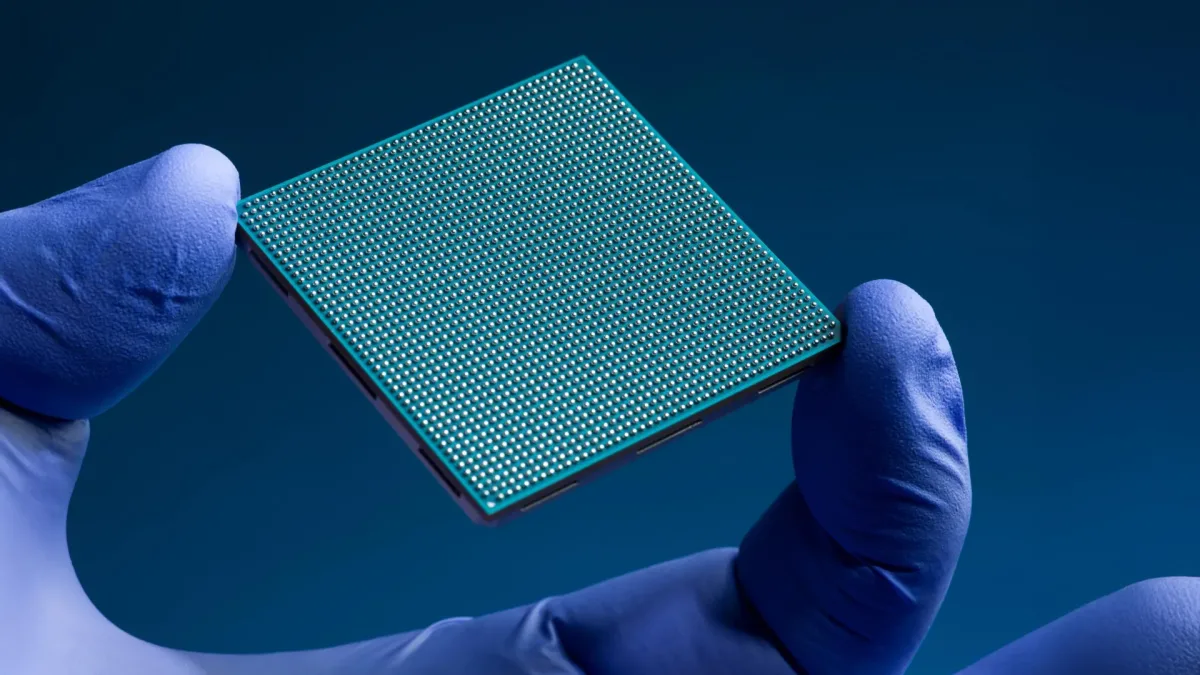
The robots we send to Mars often use computers with less power than the smartphone in your pocket? While your phone can recognize faces and play high definition games, most spacecraft rely on decades old technology because modern chips would fry in the radioactive environment of deep space. NASA is now changing this reality with a new processor that brings massive computing power to the stars.
The High Performance Spaceflight Computing (HPSC) project is a collaboration between NASA besides Microchip Technology Inc. They are building a "system-on-a-chip" that is small enough to fit in your hand but strong enough to survive a trip to another planet - this chip is not just a minor upgrade - it is a giant leap that makes our current space computers look like simple calculators.
The Gap in Modern Space Computing
Space is a difficult place for electronics - High energy particles from the sun can hit a normal computer chip and cause it to make mistakes or shut down entirely. Because of this, engineers usually choose "radiation-hardened" chips that are very slow but very reliable. You can think of these older chips as slow, heavy duty trucks that never break down, even if they cannot go very fast.
The new HPSC chip changes this trade off - It is designed to be 500 times faster than the chips NASA uses today - this extra speed is necessary because future missions will have to handle much more data than they do now. Missions to the Moon or Mars will need to process high resolution video and complex sensor data in real time to keep astronauts safe.
Key features of the new HPSC chip
- It combines many different computer parts into one small unit.
- The design is "fault-tolerant" meaning it can keep working even if parts of it fail.
- It uses very little power compared to the amount of work it can do.
Surviving the Harsh Reality of Deep Space
Engineers at the Jet Propulsion Laboratory are currently putting these chips through "the wringer" They want to make sure the hardware can handle the shaking of a rocket launch and the freezing temperatures of the lunar night. They are also hitting the chips with radiation to see if they can stay stable during solar storms.
One of the most interesting parts of the testing involves "high-fidelity landing scenarios" The team uses data from past missions to see if the chip can guide a lander safely to the ground. Landing on a planet is a fast and dangerous process where the computer must make thousands of decisions in a few seconds. If the computer is too slow, the mission could end in a crash.

Giving Spacecraft Their Own Brains
The most exciting part of this new technology is the ability to use Artificial Intelligence (AI) far away from Earth. Right now, if a rover sees something strange on Mars, it often has to wait for hours to get instructions from people on Earth. With this new chip, the rover could "think" for itself and decide to investigate an interesting rock without waiting for a human to tell it what to do.
This independence is vital for missions to the outer solar system, like the moons of Jupiter or Saturn. In those places, it can take over an hour for a radio signal to travel one way. A smart spacecraft with an HPSC chip could
- Identify and fix its own technical problems.
- Pick out the most important science data to send back to Earth.
- Navigate around dangerous obstacles on a planet's surface.
Why This Technology Matters on Earth
NASA is not the only group that will benefit from this invention. Microchip Technology Inc. plans to use the lessons they learned while building this chip to improve products here on Earth. Because the chip is very reliable and can handle extreme conditions, it is perfect for industries where failure is not an option.
You might eventually find versions of this technology in commercial airplanes or in the "brains" of self driving cars - these machines need to process data quickly and keep working even if they get hot or experience electrical interference. By solving the problems of deep space, NASA is helping to make technology on Earth safer and more efficient for everyone.
FAQ
Why can't NASA just use a normal laptop chip in space?
Normal chips are very sensitive to radiation - In space, tiny particles can hit a consumer chip and flip its internal bits, causing the computer to crash or give wrong answers. NASA chips are built with special materials and designs to prevent this.
When will the chips actually go into space?
Testing began in early 2026 - After the chips pass all the thermal, shock and radiation tests, they will be integrated into upcoming missions to the Moon and eventually Mars - this process usually takes a few years to ensure total safety.
Is this chip only for robots?
No. While it will help rovers and probes, it is also designed to support human crews. It will power the systems in habitats and spacecraft that keep astronauts alive and help them navigate through deep space.
References
- NASA JPL - Hello Universe: NASA's Next-Gen Space Processor Undergoes Testing
- Science Daily - NASA's new AI space chip could let spacecraft think for themselves
- NASA - High Performance Spaceflight Computing (HPSC)
- NASA HPSC White Paper - High Performance Spaceflight Computer
- Startup Fortune - NASA's new AI space chip could help spacecraft think for themselves