

NASA FALCON Technology: Navigating Space Without GPS Signals
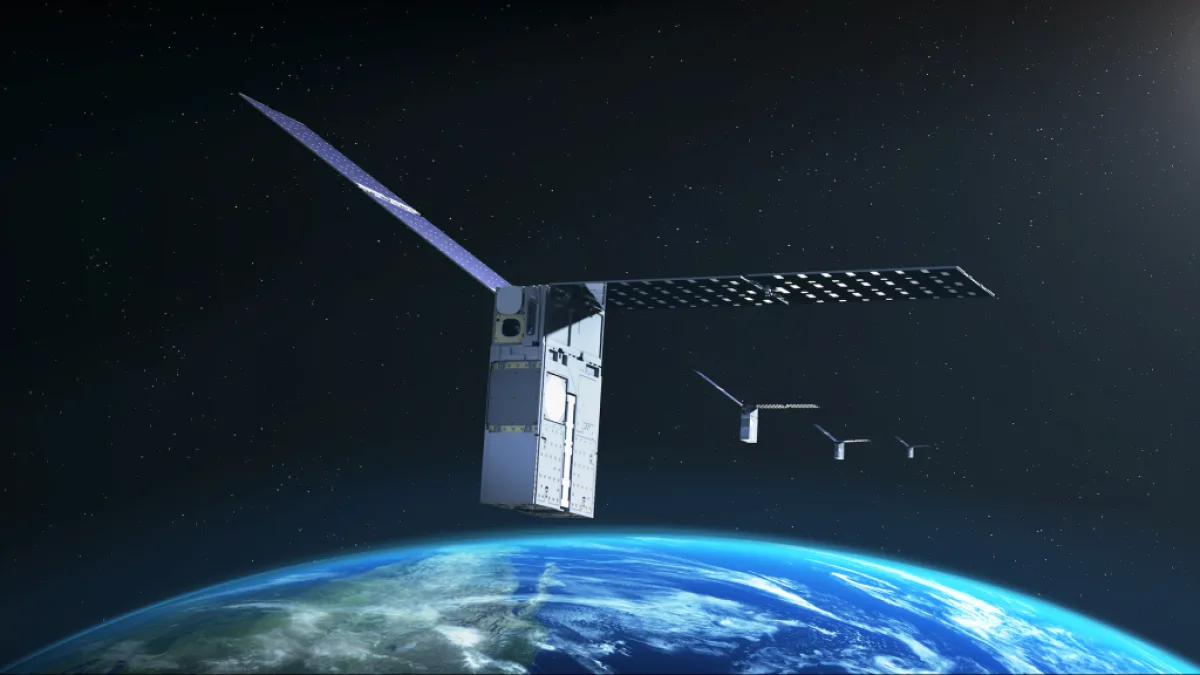
NASA’s FALCON (Fast Autonomous Lost-in-space Catalog-based Optical Navigation) technology is giving spacecraft a new way to figure out where they are without depending on GPS. Tested aboard NASA’s four-satellite Starling swarm, FALCON uses onboard cameras to observe other spacecraft and pieces of orbital debris, matches those objects against a catalog of known space objects, and uses them as reference points for determining its own orbit.
In a major 2026 milestone, the system demonstrated autonomous self-orbit determination and, during a three-day test, improved the orbit estimates of more than 200 objects from an onboard catalog of about 20,000—without intervention from operators on the ground. The work does not mean NASA has already replaced GPS for Moon or Mars missions; rather, it is an important flight demonstration of a technology that could help future spacecraft navigate in places where GPS is weak, unreliable, or unavailable.
Summary
-
Technology: FALCON — Fast Autonomous Lost-in-space Catalog-based Optical Navigation
-
Developed/tested by: NASA and EraDrive, with roots in Stanford University’s Space Rendezvous Laboratory
-
Flight platform: NASA’s Starling four-spacecraft CubeSat swarm
-
Launch: July 17, 2023
-
Orbit: Low Earth orbit
-
Main idea: Use optical observations of known objects in space as navigation references instead of relying on GPS/GNSS signals
-
Sensors: Starling’s onboard star-tracker cameras
-
Onboard catalog: Approximately 20,000 space objects and predicted orbits
-
2026 result: More than 200 object orbits improved during a three-day autonomous test
-
Major milestone: First demonstrated self-orbit determination using optical cameras and the relative positions of other space objects, according to NASA
-
Current status: Active Starling mission with further FALCON work planned in 2026
-
Future importance: Lunar satellite swarms, distributed spacecraft, space traffic monitoring, collision avoidance, and future Moon/Mars exploration (NASA)
Why Spacecraft Cannot Simply Use GPS Everywhere
For people on Earth, GPS makes navigation appear almost effortless. A phone can determine its location because it receives signals from a constellation of navigation satellites designed to provide positioning services around Earth.
Spacecraft do not always have that luxury.
GPS was created primarily to serve users around Earth. As spacecraft travel farther away, the geometry, signal strength and availability become increasingly challenging. NASA has long studied alternatives because future missions will operate around the Moon, between worlds, and eventually much farther from Earth. NASA has specifically noted that traditional navigation methods for deep-space missions rely heavily on Earth-based tracking and communications, introducing delays and operational demands that become more difficult as distances increase.
That is why NASA has worked on several different approaches to autonomous navigation.
The Deep Space Atomic Clock, for example, was designed to improve spacecraft navigation by giving a spacecraft extremely precise timekeeping onboard, potentially enabling more efficient one-way radio navigation.
FALCON attacks the problem from a different direction.
Instead of asking, “Can I receive a navigation signal?”, the spacecraft asks:
“What can I see around me, and can those objects tell me where I am?”
That shift is at the heart of the FALCON concept.
What Is NASA FALCON?
FALCON stands for Fast Autonomous Lost-in-space Catalog-based Optical Navigation.
The name sounds complicated, but the central idea is surprisingly easy to understand.
A spacecraft equipped with an optical camera looks into space and detects objects. Those objects can include other satellites, spacecraft and orbital debris. The onboard system compares what the camera sees with a catalog containing known objects and their predicted orbital information.
Once the spacecraft identifies objects it can trust, those objects become something like landmarks in space.
The spacecraft can then use the observed angles and the known identities and orbital information of those objects to estimate its own position and orbit.
Stanford’s Space Rendezvous Laboratory describes FALCON as an alternative approach to positioning, navigation and timing (PNT) and space situational awareness (SSA) based on passive optical sensing rather than relying on traditional navigation signals or continuous ground-based tracking. (Space Rendezvous Laboratory)
NASA’s 2026 flight results show that this concept has moved beyond simulations and laboratory studies into an actual orbital demonstration.
How FALCON Works
FALCON combines several pieces of technology.
1. The spacecraft looks outward
Starling already carries commercial star-tracker cameras. Their normal job is to identify bright objects and help a spacecraft determine its orientation.
For FALCON, those cameras become useful for something more ambitious: observing other resident space objects in the surrounding environment.
2. The system identifies what it sees
A camera image alone does not tell a spacecraft exactly what every bright point represents.
FALCON therefore compares observations against a catalog of known objects.
NASA says the Starling team loaded a catalog containing approximately 20,000 space objects and their predicted orbits onto the spacecraft.
The system then correlates the objects observed by the cameras with the catalog.
3. Known objects become navigation references
After an object has been identified and verified, its known or estimated orbital information provides geometric information.
FALCON can use several such reference objects to help determine where Starling itself is located.
This is fundamentally different from conventional GPS navigation. Instead of receiving specially designed positioning signals from a navigation constellation, the spacecraft uses the environment around it as a source of navigational information.
4. The onboard software calculates the orbit
The FALCON payload uses EraDrive's Era-Core flight software and algorithms together with Starling's cameras and object catalog.
The goal is to perform important navigation calculations onboard rather than continually depending on ground operators.
That onboard autonomy matters because communication delays and limited contact opportunities become increasingly important as missions move farther from Earth.
FALCON’s 2026 Breakthrough
The biggest FALCON news arrived in August 2026, when NASA announced results from the Starling mission's extended experiments.
NASA reported that FALCON demonstrated a capability to determine a spacecraft's own orbit using optical observations of other objects in space.
The experiment did not require the spacecraft to rely on GPS for that navigation demonstration. Instead, the system identified objects in camera imagery and used them as reference points.
NASA described this self-orbit determination capability as a first for spacecraft using optical cameras to navigate by their relative position to other objects in space.
There was another important result.
During a separate experiment, FALCON used the onboard catalog and fresh camera observations to refine the predicted orbits of objects it observed.
Over a period of three days, the system improved the known orbits of more than 200 objects without intervention from ground operators. NASA said the resulting onboard predictions were more precise than the current catalog data for those objects.
This makes FALCON more than a navigation experiment. It also becomes a tool for space situational awareness.
The Role of the 20,000-Object Catalog
One of the most interesting parts of FALCON is its dependence on a large catalog of known space objects.
The spacecraft does not simply point a camera at a random object and instantly know where it is.
It needs to compare what it sees with information about known objects.
NASA says Starling carried approximately 20,000 objects and their predicted orbits as part of the experiment
This creates a powerful feedback loop.
A simplified version looks like this:
Catalog → Camera Observation → Object Identification → Navigation Estimate → Improved Object Information
The more accurately the spacecraft can observe its environment, the more useful the catalog can become.
And the better the catalog becomes, the more useful it can be for future observations.
That could become extremely valuable in an orbital environment containing growing numbers of satellites and debris.
FALCON and Starling: The Bigger Mission
FALCON did not fly by itself.
It is part of NASA's broader Starling mission, which launched four 6U CubeSats into low Earth orbit on July 17, 2023.
Starling was created to demonstrate how spacecraft can work together as a swarm while reducing reliance on continuous ground control. NASA describes its broader goals as including autonomous maneuvering, networking, relative navigation and distributed decision-making.
The four spacecraft are named Blinky, Pinky, Inky and Clyde.
Starling's original mission demonstrated several technologies, including:
-
MANET for spacecraft-to-spacecraft networking
-
ROMEO for autonomous maneuver planning
-
DSA for distributed spacecraft autonomy
-
StarFOX for optical relative navigation
FALCON represents an important next step because it focuses specifically on obtaining navigation information from the surrounding space environment.
Important Starling and FALCON Timeline
| Year | Development | Importance |
|---|---|---|
| 2023 | Starling launched | Four CubeSats entered low Earth orbit |
| 2023–2024 | Initial Starling experiments | Demonstrated autonomous swarm technologies |
| 2024 | Starling completed primary mission | Core swarm objectives were achieved |
| 2025 | Extended Starling operations | Mission capabilities expanded |
| 2026 | FALCON optical navigation demonstration | Demonstrated GPS-independent self-orbit determination |
| 2026 | Catalog refinement experiment | Improved orbital estimates for 200+ objects |
| 2026 | Further FALCON work planned | Swarm will share tracking information and refine positions collectively |
How FALCON Differs From StarFOX
The two technologies are connected, but they are not the same thing.
StarFOX, developed through Stanford's Space Rendezvous Laboratory, demonstrated vision-based relative navigation using star trackers to observe other spacecraft. NASA reports that StarFOX achieved relative position estimates with about 0.5% error relative to target range in flight, while multiple observers achieved improved results in ground testing.
FALCON expands this idea.
Rather than focusing only on the relative navigation relationship between known spacecraft, FALCON uses cataloged resident space objects as optical reference points for GPS-independent absolute positioning and also works on improving the object catalog itself.
In simple terms:
StarFOX: “Where am I relative to that object?”
FALCON: “What objects am I seeing, where am I relative to them, and can I improve the information we have about them?”
That distinction makes FALCON particularly interesting for broader space traffic applications.
NASA FALCON Technology vs Traditional GPS
| Feature | Traditional GPS Navigation | FALCON Optical Navigation |
|---|---|---|
| Main reference | GPS satellites | Visible spacecraft and other space objects |
| Primary sensor | GPS receiver | Optical/star-tracker cameras |
| Navigation source | Radio navigation signals | Visual bearing observations + object catalog |
| Dependence on GPS | Yes | No for the demonstrated FALCON method |
| Ground dependence | Can still support corrections and operations | Designed to reduce dependence on ground-based navigation |
| Space traffic awareness | Not its main purpose | Built into the concept |
| Lunar/deep-space potential | Limited by GPS availability | Potentially useful as part of future alternative navigation architectures |
| Current maturity | Operational worldwide Earth system | Flight-tested technology demonstration |
FALCON should not be described as a complete replacement for GPS today. NASA's current demonstration took place in low Earth orbit, where the system could observe other cataloged objects. Its future value comes from showing how optical navigation could contribute to missions in environments where conventional GPS access is insufficient. (NASA)
Why This Matters for the Moon
The Moon is one of the most important destinations for this research.
NASA says traditional satellite navigation can become unreliable or unavailable in lunar and deep-space environments. FALCON could therefore contribute to future systems in which multiple spacecraft navigate with greater independence from Earth.
This is especially relevant as NASA develops lunar infrastructure and more complex missions around the Moon.
NASA currently targets Artemis IV for early 2028, with astronauts travelling to lunar orbit and two crew members descending to the lunar surface near the South Pole.
NASA is also developing Gateway, a lunar-orbiting station that will support sustained exploration and research.
FALCON is not currently being presented as the sole navigation system for Artemis IV. Rather, NASA describes technologies like FALCON as potential building blocks for future lunar satellite swarms, distributed science missions and human exploration.
That distinction is important.
Could FALCON Help Missions Reach Mars?
Potentially, but this is still a future application rather than an operational Mars navigation system.
NASA says autonomous navigation technologies such as FALCON could support future human exploration of the Moon and Mars.
A Mars mission presents a much harder environment than low Earth orbit.
There may be fewer useful nearby reference objects, larger distances, more demanding orbital dynamics and much greater communication delays.
For that reason, a future deep-space navigation architecture would probably combine multiple technologies rather than depend on one system alone.
FALCON could be one part of a larger toolkit involving:
Optical navigation + inertial sensors + radio navigation + precise clocks + onboard autonomy + ground support
The value of FALCON is that it introduces another source of navigation information that does not require a GPS signal.
Developments in 2026
As of August 29, 2026, Starling remains an active NASA mission.
NASA's August 17 update reported that FALCON had already demonstrated GPS-independent self-orbit determination and improved the orbital information for more than 200 objects
NASA also says the experiment will continue later in 2026, with Starling's four spacecraft using Era-Core to share tracking data and collectively refine their positions.
That next step is especially important.
The real goal is not simply for one satellite to navigate alone. Future missions may involve groups of spacecraft working together.
A swarm could potentially observe different regions, exchange measurements and build a better shared understanding of its environment.
Current FALCON Project Status
| Project | Role | Status as of Aug. 29, 2026 | Expected/Confirmed Timing | Notes |
|---|---|---|---|---|
| FALCON optical navigation | GPS-independent spacecraft positioning | Demonstrated in orbit | 2026 | NASA reported successful self-orbit determination |
| FALCON catalog refinement | Improve orbital estimates of observed objects | Demonstrated | 2026 | More than 200 objects improved in three days |
| FALCON swarm sharing | Share tracking data among Starling spacecraft | Planned/continuing | Later in 2026 | Intended to refine positions collectively |
| Starling mission | Four-spacecraft autonomy demonstration | Active | Ongoing | NASA continues extended operations |
| Lunar/deep-space application | Future navigation architecture | Research/development | Future | Not yet an operational lunar or Mars FALCON system |
Frequently Asked Questions
What is NASA FALCON technology?
FALCON stands for Fast Autonomous Lost-in-space Catalog-based Optical Navigation. It is an optical navigation technology that uses spacecraft cameras, known space objects and an onboard catalog to help a spacecraft determine its own position without relying on GPS for the demonstrated navigation method. (NASA)
How does FALCON navigate without GPS?
FALCON observes other objects in space with onboard optical cameras. It identifies those objects by comparing observations with a catalog of known objects and uses the objects as reference points for determining the spacecraft's orbit. (NASA)
What spacecraft tested FALCON?
FALCON was tested as part of NASA's Starling mission, a four-spacecraft CubeSat swarm launched in July 2023. (NASA)
How many objects were in the FALCON catalog?
NASA says approximately 20,000 space objects and their predicted orbits were loaded onto the Starling spacecraft for the experiment. (NASA)
How many objects did FALCON improve?
NASA reported that during a three-day experiment, FALCON improved the known orbital information for more than 200 objects without intervention from ground operators. (NASA)
Is FALCON already being used to navigate around the Moon?
Not as an operational lunar navigation system. NASA currently describes FALCON as a technology demonstration whose results could support future lunar satellite swarms, distributed science missions and human exploration. (NASA)
Can FALCON help spacecraft avoid collisions?
Potentially. NASA specifically identifies space traffic monitoring and collision avoidance as areas that could benefit from autonomous navigation and catalog updates. (NASA)
What is the difference between FALCON and StarFOX?
StarFOX demonstrated optical relative navigation between spacecraft using star-tracker observations. FALCON builds on related optical-navigation ideas but uses cataloged space objects as reference points for GPS-independent positioning and also works on improving information about those objects. (NASA)
Could FALCON be used for Mars missions?
NASA says the technology could support future human exploration of the Moon and Mars, but FALCON has not yet been demonstrated as an operational Mars navigation system. (NASA)
What is NASA's next step with FALCON?
NASA says that later in 2026, the Starling spacecraft will extend the experiment by sharing tracking data across the four-spacecraft swarm and using that shared information to refine their positions collectively. (NASA)
References
-
NASA, “NASA’s Starling Mission Opens New Frontiers in Space Navigation,” August 17, 2026. (NASA)
-
NASA, Starling Mission Overview, updated August 2026. (NASA)
-
NASA, “What is Starling?”, updated August 2026. (NASA)
-
Stanford University Space Rendezvous Laboratory, FALCON Project Overview. (Space Rendezvous Laboratory)
-
EraDrive, Starling Mission / FALCON Flight Experiments. (EraDrive)
-
NASA, “Swarming for Success: Starling Completes Primary Mission,” May 29, 2024. (NASA)
-
NASA, “Starling CubeSats Have Deployed,” July 17, 2023. (NASA)
-
NASA SmallSat Institute, Guidance, Navigation, and Control, 2026. (NASA)
-
NASA, “How an Atomic Clock Will Get Humans to Mars on Time,” June 14, 2019. (NASA)
-
NASA, Artemis IV Mission, updated 2026. (NASA)
-
NASA, Gateway Capabilities, updated 2026. (NASA)