
Methanol Fuel Cell Satellites: Exploring Alternate Space Power
Methanol fuel cells offer a potential alternative to conventional battery systems for small satellites and other spacecraft that need reliable electrical power. Direct methanol fuel cells convert the chemical energy in liquid methanol into electricity, producing water and carbon dioxide as byproducts. Their compact design, liquid fuel storage, and ability to generate electricity without sunlight make them interesting for space research. However, methanol fuel cells still face challenges involving efficiency, fuel leakage across membranes, heat management, reliability, and operation in microgravity. As of October 12, 2026, they remain a technology worth investigating, but they should not be mistaken for an established replacement for solar panels and batteries on operational satellites. NASA's current small-spacecraft technology resources and wider fuel-cell research help explain where this technology might fit into future space missions.
Summary
-
Technology: Direct methanol fuel cells convert chemical energy into electrical power.
-
Main fuel: Liquid methanol, which can be stored in tanks.
-
Potential benefit: Electricity generation without depending directly on sunlight.
-
Possible applications: Small satellites, spacecraft experiments, and specialised missions requiring compact power sources.
-
Main competitors: Solar panels combined with rechargeable batteries, as well as other fuel-cell systems.
-
Major challenges: Fuel crossover, efficiency, thermal control, system mass, and long-term reliability.
-
Research status: Fuel-cell technology is being developed for space applications, but methanol-powered satellites are not yet a mainstream operational solution.
-
Latest context: NASA's 2026 small-spacecraft technology overview and its recent work on regenerative fuel cells demonstrate continued interest in alternative space-power technologies.
What Are Methanol Fuel Cell Satellites?
A methanol fuel cell satellite is a spacecraft concept that uses a fuel cell powered by methanol to produce electricity for onboard equipment. Rather than relying entirely on solar panels and stored battery energy, such a spacecraft could potentially generate electricity through an electrochemical reaction between methanol and oxygen.
A fuel cell differs from an ordinary battery because it can continue producing electricity while its reactants are supplied. Methanol is attractive for some applications because it is a liquid under ordinary conditions, making storage and handling different from those required for compressed hydrogen.
NASA's Jet Propulsion Laboratory has contributed to direct methanol fuel-cell development, including research into compact systems. Its work demonstrates the technological potential of this approach, although developing a terrestrial fuel cell does not automatically make it suitable for a satellite.
How Direct Methanol Fuel Cells Work
A direct methanol fuel cell, commonly called a DMFC, converts chemical energy into electricity without first converting the methanol into hydrogen.
The process involves three main steps.
First, methanol and water enter the fuel-cell anode, where a catalyst helps oxidise the methanol. This reaction releases protons, electrons, carbon dioxide, and other reaction products.
Second, the electrons travel through an external electrical circuit, supplying power to equipment such as computers, communication systems, and scientific instruments. Meanwhile, protons move through a specialised membrane inside the cell.
Third, oxygen reacts with the protons and electrons at the cathode to produce water.
The overall reaction can be represented as:
The process generates electricity, but it also produces heat and carbon dioxide. A spacecraft would therefore need systems capable of controlling temperature, managing reaction products, and maintaining stable operation in its particular environment.
Why Methanol Fuel Cells Could Benefit Small Satellites
One of the biggest attractions of methanol fuel cells is their ability to produce electricity without depending directly on sunlight. Solar panels are effective for many spacecraft, but their output falls during orbital eclipses and decreases as sunlight becomes weaker farther from the Sun.
A fuel cell could offer another way to generate power, provided the spacecraft carries enough fuel and oxygen and the system meets its power requirements.
Liquid methanol also offers practical storage advantages compared with compressed hydrogen. This could make it useful for compact systems where fuel storage and packaging are important. Researchers have investigated direct methanol fuel cells for portable power and small-spacecraft applications.
However, fuel cells are not automatically lighter or more efficient than batteries. Engineers must consider the entire system, including the fuel tank, oxygen supply, pumps, cooling equipment, and fuel-cell stack.
Challenges and Limitations
Several obstacles must be addressed before methanol fuel cells can become a dependable satellite power source.
Efficiency and fuel crossover: Some methanol can pass through the membrane without contributing effectively to electricity production. This reduces efficiency and remains an important research challenge.
Microgravity operation: Fluid movement behaves differently in microgravity. Managing liquids, gases, bubbles, and reaction products requires careful engineering.
Temperature control: Fuel cells generate heat that must be managed in a spacecraft environment, where removing heat is different from cooling equipment on Earth.
Reliability: Satellites may need to operate for years without maintenance. Membranes, catalysts, seals, and other components must withstand long periods of operation.
Fuel safety: Methanol is toxic and flammable. Tanks, pipes, seals, and leak-detection systems would need suitable protection.
System mass: A fuel cell needs fuel and supporting hardware. For a small satellite with limited space, these additions may outweigh the benefits.

Methanol Fuel Cells vs. Conventional Satellite Power
|
Feature |
Methanol fuel cells |
Solar panels and batteries |
|---|---|---|
|
Energy source |
Stored chemical fuel |
Sunlight and stored electricity |
|
Operation in darkness |
Possible while reactants remain available |
Batteries provide power during darkness |
|
Refuelling |
Requires a fuel supply |
Solar energy replenishes rechargeable batteries |
|
Main limitation |
Fuel, efficiency, and system complexity |
Sunlight availability, battery capacity, and degradation |
|
Space heritage |
Limited compared with established satellite power systems |
Widely used on operational satellites |
NASA's small-spacecraft technology overview, updated on May 7, 2026, identifies solar cells and rechargeable lithium-ion batteries as established technologies, while regenerative fuel cells are among the technologies being explored for future power systems. This illustrates why methanol fuel cells should be considered a possible specialised option rather than a replacement already adopted across the satellite industry.
Latest Developments as of October 12, 2026
Space fuel-cell research continues, although recent NASA developments should not be confused with confirmed methanol-powered satellite deployments.
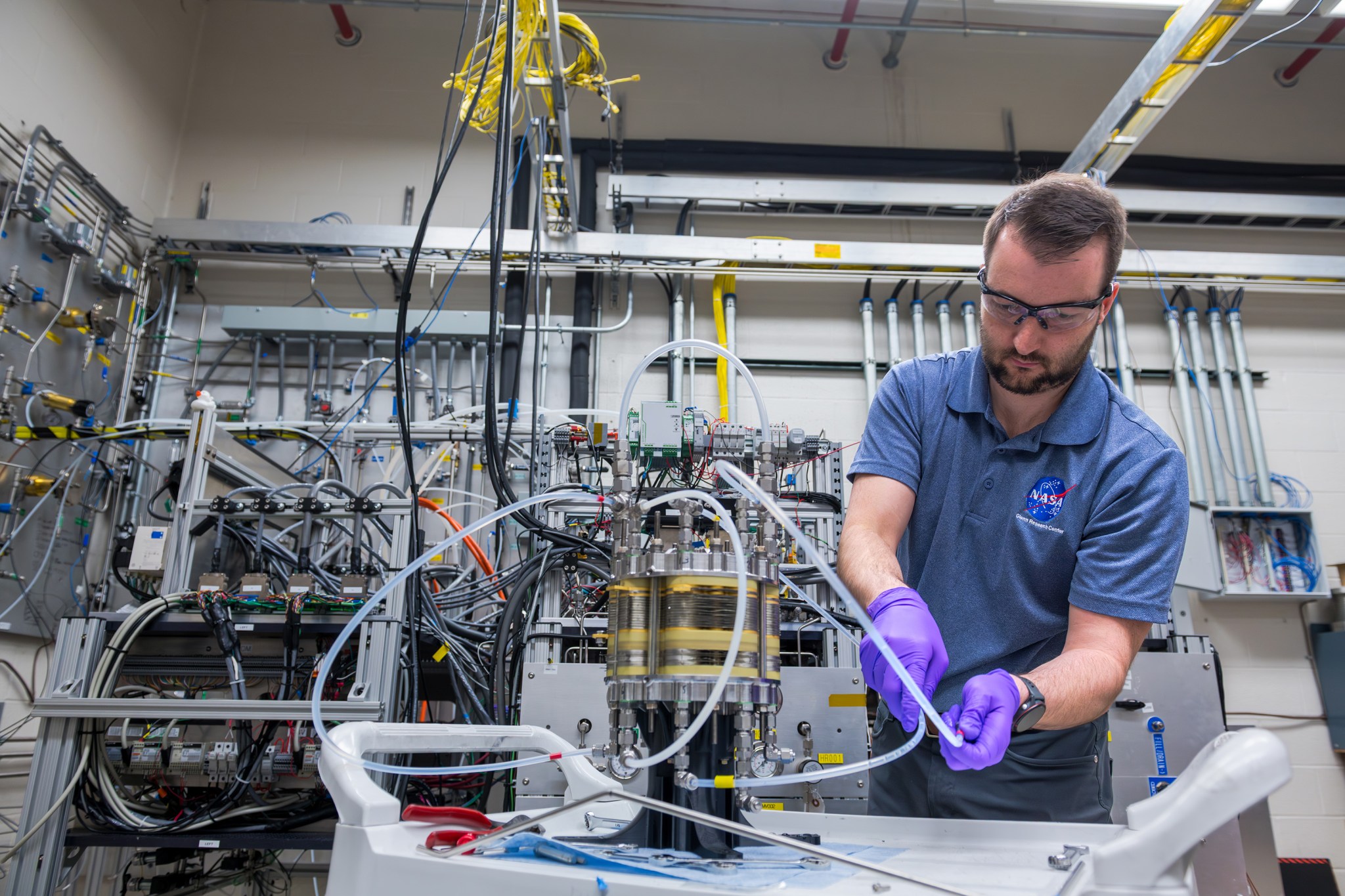
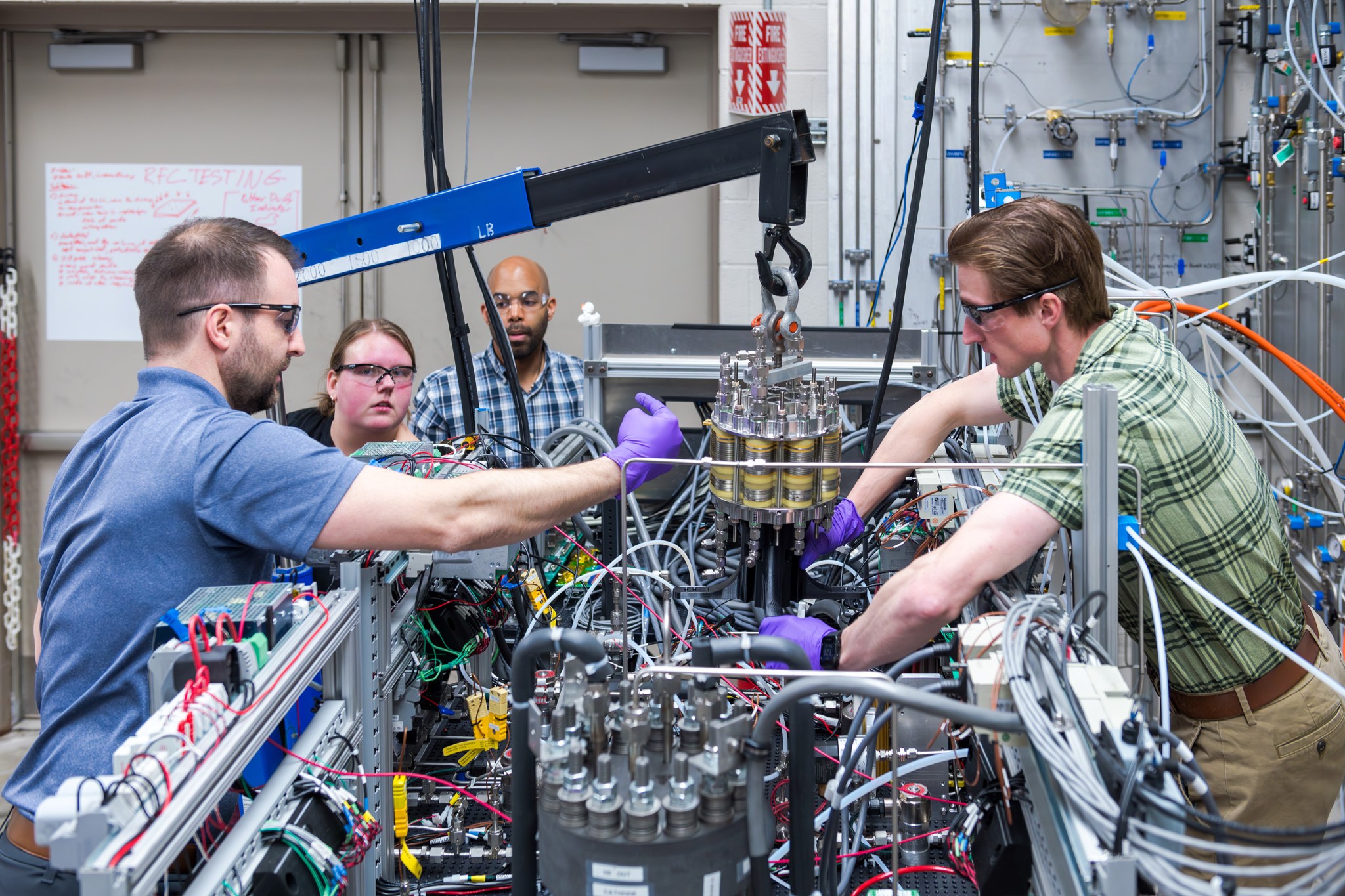
On May 8, 2026, NASA reported on testing a regenerative fuel-cell system intended to support future Moon and Mars missions. Regenerative systems store energy by using electricity to produce reactants that can later generate electricity again. This is different from a conventional direct methanol fuel cell.
NASA's current small-spacecraft technology overview also discusses established solar power systems and emerging energy-storage technologies. The available evidence does not establish a newly operational satellite powered by a direct methanol fuel cell as of the article's cutoff date.