
ISS Solar Array Upgrade: Space Walk Prep Moves Forward
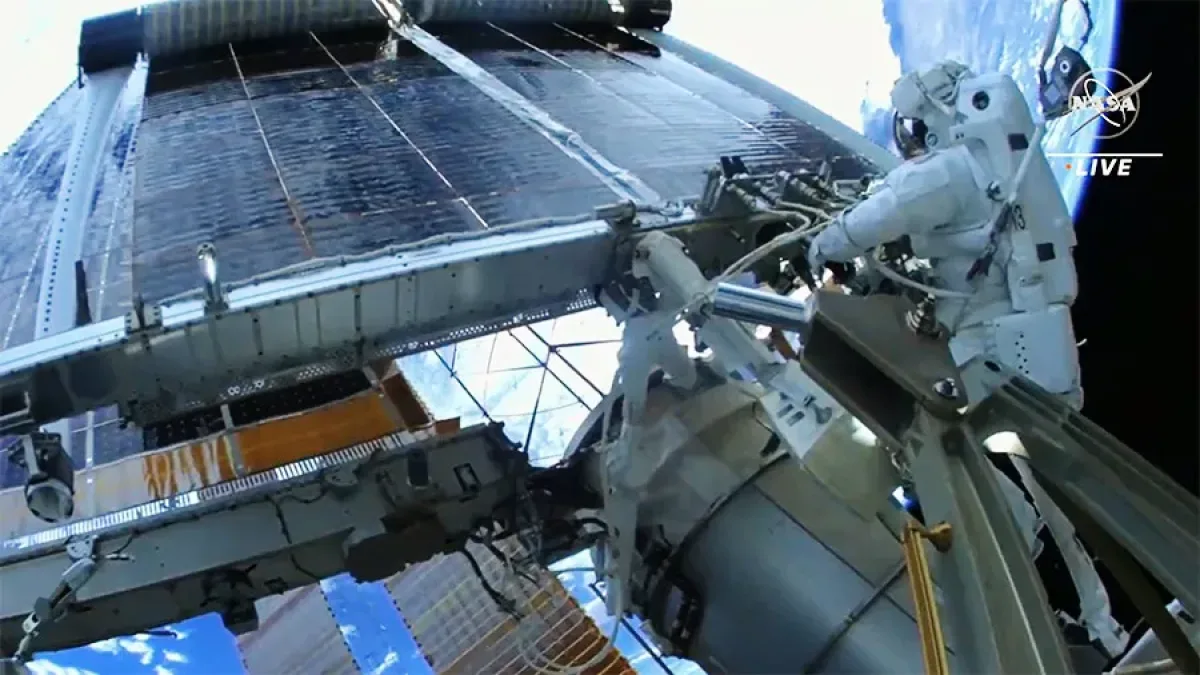
The International Space Station is currently running on solar panels designed to last only fifteen years? These original wings are now showing their age, which is why NASA is sending astronauts outside to install a modern energy solution. You might find it surprising that even in the vacuum of space, hardware needs a regular "battery" and "charger" boost to keep the lights on for the laboratory.
The mission focuses on a clever technology called iROSA or International Space Station Roll Out Solar Arrays. Instead of rigid structures, these new panels function like a flexible rug that unrolls in the sunlight - this upgrade ensures the station remains functional for the next decade of scientific research.
Boosting the Space Station's Power
Current energy levels on the station are dropping as the old solar cells degrade from constant exposure to radiation and micro meteorites. By adding these new wings, NASA expects to increase the total electricity supply by 20 % to 30 % - this extra juice is essential because the station now hosts more private modules and complex science experiments than ever before.
The new arrays do not replace the old ones - Instead, they sit in front of the existing wings. They are smaller and more efficient, allowing them to pull in massive amounts of energy while utilizing the original tracking motors to face the sun. You can think of it as adding a turbocharger to an old engine.

The Hard Work Outside the Hatch
Astronauts Jessica Meir besides Anil Menon recently spent 6 hours and 27 minutes working in the harsh environment of low Earth orbit. During this time, they focused on the 3B power channel, which is a specific pathway for electricity on the station's truss. Their movements are slow and deliberate because every tool must be tethered to avoid floating away into the dark void.
The duo completed multiple technical tasks to prepare the site
- They built and secured a heavy metal modification kit to the station's exterior.
- The crew routed thick power cables that will connect the new panels to the main grid.
- They applied specialized insulation to protect the sensitive electronics from extreme temperature swings.
This physical labor is exhausting because the pressurized suits are stiff and fight against every hand movement. Despite the fatigue, the astronauts finished the installation with precision - this work sets the stage for the actual solar arrays to arrive on a future cargo resupply ship.
How Roll Out Solar Arrays Work
The iROSA technology is a massive leap forward in space engineering. Traditional panels are heavy and require complicated mechanical hinges to fold up for launch - these new versions use stored strain energy in their carbon fiber booms to deploy automatically without the need for heavy motors.
When the panels are ready, they simply unroll like a giant yoga mat - this design is much lighter and takes up far less room inside a rocket. You are seeing the same technology that NASA plans to use for the Gateway station that will eventually orbit the Moon.
Preparing for a Sustainable Future
Space agencies are working hard to extend the life of the ISS through 2030 - these power upgrades are the backbone of that plan. Without more electricity, the station cannot support the new life support systems or the high performance computers that researchers use for medical breakthroughs.
The success of this recent spacewalk shows that maintenance in orbit is becoming more routine and efficient. As you watch the station pass overhead at night, remember that astronauts are actively working to keep that bright speck of light powered up. Each bolt they tighten helps bridge the gap between today's research and tomorrow's deep space missions.

FAQ
Why can't NASA just replace the old solar panels?
The original panels are integrated into the station's massive truss structure. Removing them is too risky and complex - it is much safer to install the new iROSA wings directly over the old ones to augment the power supply.
How much power does the station actually need?
The ISS needs enough electricity to run life support systems for seven or more crew members, power dozens of laboratory racks and maintain the cooling systems that prevent the station from overheating in direct sunlight.
How long do the spacewalks usually take?
Many spacewalks last between six and eight hours - This duration is limited by the amount of oxygen and battery power inside the astronaut's Extravehicular Mobility Unit or spacesuit.
References
- NASA: ISS Solar Arrays Upgrade: https://www.nasa.gov/mission_pages/station/structure/iss_solar_arrays.html
- ESA: iROSA Installation: https://www.esa.int/Science_Exploration/Human_and_Robotic_Exploration/International_Space_Station/Upgrading_the_ISS_solar_arrays
- Space.com: ISS Solar Array Upgrade: https://www.space.com/iss-solar-array-upgrade-spacewalks
- NASA Spacewalk Procedures: https://www.nasa.gov/content/spacewalk-procedures