
How Solar Wind Affects Satellite Communication on Earth
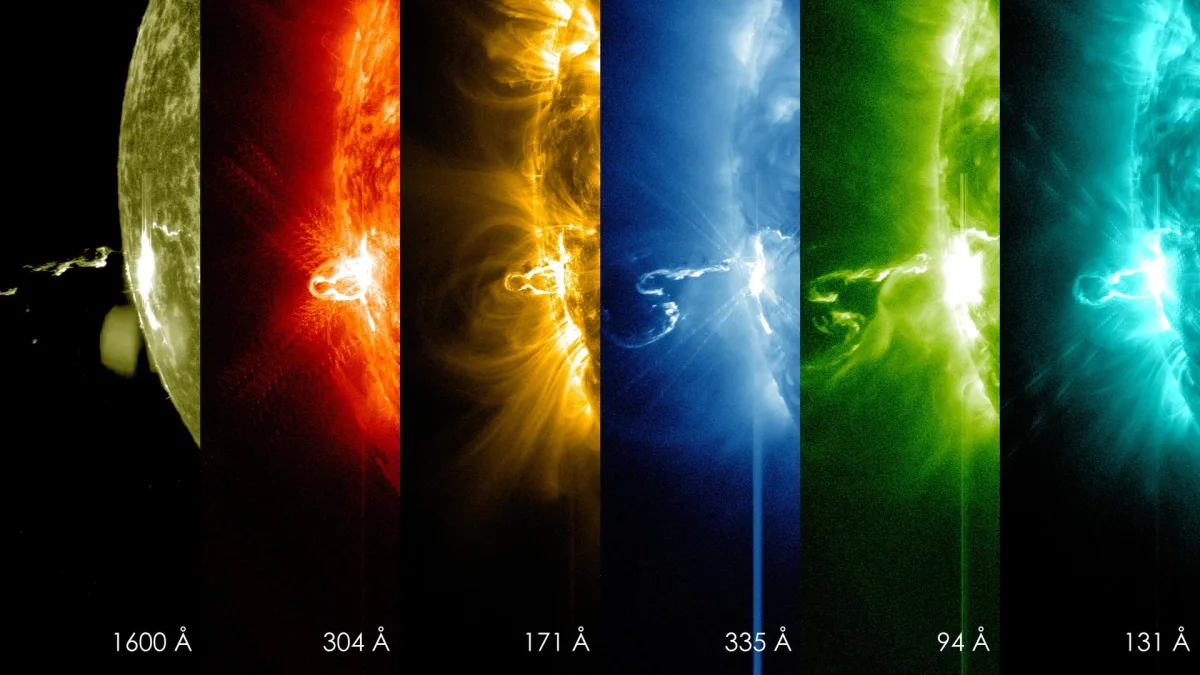
Solar wind can affect satellite communication not because the stream of charged particles directly blocks every satellite signal, but because strong solar activity can disturb Earth’s magnetic field, ionosphere, and near-Earth space environment. These changes can produce radio scintillation, signal delays, loss of accuracy, communication interruptions, spacecraft charging, radiation-related electronic errors, and increased atmospheric drag on low-Earth-orbit satellites. The risk becomes more important during periods of intense solar activity, and as of August 25, 2026, the Sun remains capable of producing significant space-weather events during Solar Cycle 25. NASA has continued to record strong flares in 2026, while recent August space-weather reports have also documented coronal mass ejections and energetic-particle activity.
Summary
-
Topic: How solar wind affects satellite communication on Earth
-
Main cause: Disturbances in the Sun's magnetic activity and charged-particle environment
-
Most important pathway: Solar wind interacts with Earth's magnetosphere and changes the ionosphere
-
Main communication effects: Scintillation, signal delay, signal fading, phase errors and temporary loss of communication
-
Most affected technologies: GNSS/GPS, satellite navigation, radio systems and some trans-ionospheric communication links
-
Spacecraft effects: Radiation damage, charging, electronic upsets and increased orbital drag
-
Earth-based effects: Radio and navigation disruptions can occur even when the satellite itself remains operational
-
Current relevance: Solar Cycle 25 remains active, with strong solar flares and recent CME/energetic-particle events observed in 2026.
What Is Solar Wind?
Solar wind is a continuous flow of electrically charged particles, mainly protons and electrons, moving outward from the Sun. It carries the Sun's magnetic field through the solar system.
Most of the time, Earth's magnetic field deflects much of this material around the planet. The region protected by Earth's magnetic field is known as the magnetosphere. During stronger solar events, however, the solar wind can become much more disturbed and energetic. Coronal mass ejections, or CMEs, can send large clouds of magnetized plasma toward Earth, producing geomagnetic storms when they interact strongly with Earth's magnetic field.
This distinction matters because the phrase "solar wind disrupts satellite communication" can be misleading.
The solar wind does not simply act like a wall between a satellite and a ground station. Instead, it can change the environment through which radio signals travel and the environment in which satellites operate.
How Solar Wind Reaches the Communication System
A typical satellite communication system may involve a satellite in orbit, a ground station, and a radio signal traveling between them.
During quiet space-weather conditions, that system operates within relatively predictable conditions.
During disturbed conditions, the chain can look like this:
Solar activity → solar wind/CME → magnetosphere disturbance → ionospheric disturbance → radio-signal changes → communication or navigation problems
At the same time, energetic particles can affect the spacecraft's electronics, while heating and expansion of the upper atmosphere can increase drag on satellites in low Earth orbit.
ESA identifies ionospheric disturbances, especially scintillation, as one of the major factors influencing radio propagation between ground and space systems.
How the Ionosphere Affects Satellite Signals
The ionosphere is the electrically charged part of Earth's upper atmosphere. It contains large numbers of free electrons and ions, and those charged particles influence radio-wave propagation.
When solar activity changes the ionosphere, the electron density can become more irregular.
That matters because radio signals passing through the ionosphere may experience changes in:
-
Speed
-
Phase
-
Amplitude
-
Direction
-
Propagation delay
ESA explains that GNSS signals such as GPS and Galileo can be delayed, refracted and diffracted as they travel through the changing ionosphere.
For ordinary communication, a small change may be manageable. For systems that depend on extremely precise timing and positioning, even relatively small disturbances can become important.
Radio Scintillation: One of the Biggest Problems
One of the most important effects is called ionospheric scintillation.
Scintillation occurs when small-scale irregularities in the ionospheric plasma cause rapid fluctuations in the amplitude and phase of radio signals.
ESA notes that GNSS signals can experience rapid and intense fluctuations because of small-scale ionospheric irregularities. In severe cases, scintillation can strongly disturb or even disrupt transmission.
Think of it as a radio signal passing through a constantly changing, turbulent layer.
Instead of arriving as a clean and stable signal, it may fluctuate quickly.
This can result in:
-
Temporary loss of signal lock
-
Reduced communication reliability
-
Navigation errors
-
Positioning inaccuracies
-
Interrupted data transmission
-
Reduced availability of some satellite services
The effect is especially important for GNSS systems because accurate positioning depends on receiving and processing very precise signals from multiple satellites.
Solar Wind and GPS Accuracy
GPS signals travel from satellites through the ionosphere before reaching receivers on Earth.
Changes in electron density can alter the amount of time it takes for these signals to travel.
NASA explains that variations in ionospheric electron density can introduce changing propagation delays into GPS signals, producing errors in the calculated range between a receiver and a satellite. Rapid changes can be especially significant during disturbed conditions.
This means solar activity can affect more than satellite "communication."
It can also affect where a system thinks it is.
For everyday smartphone location services, small errors may go unnoticed. For surveying, aviation, precision agriculture, scientific measurements and other high-accuracy applications, ionospheric disturbances can be much more important.
ESA specifically monitors total electron content, or TEC, and scintillation because these parameters help users understand whether standard ionospheric corrections remain reliable.

Does Solar Wind Affect All Satellite Frequencies Equally?
No.
Different frequencies respond differently to space-weather conditions.
HF radio is among the most vulnerable communication systems because it relies heavily on the ionosphere for long-distance propagation. NOAA states that communications at all frequencies may be affected by space weather, but HF communication is more routinely affected because it depends on ionospheric reflection.
Satellite links operating at much higher frequencies do not simply stop working whenever the solar wind becomes stronger.
Instead, the dominant problem can depend on:
-
Frequency
-
Orbit
-
Signal path
-
Geographic location
-
Ionospheric conditions
-
Severity and type of solar event
-
System design and error correction
So it is inaccurate to say that a solar storm automatically knocks out every satellite communication system.
The impact is highly dependent on the technology and the space-weather conditions at the time.
Solar Flares and Radio Communication
Solar flares are powerful bursts of radiation from the Sun. They are related to space weather but are not exactly the same thing as solar wind.
The distinction is important because a flare can affect radio communication through electromagnetic radiation before a CME reaches Earth.
Strong solar X-rays can rapidly increase ionization in the lower ionosphere on the sunlit side of Earth. This can absorb some radio waves, especially at lower frequencies, producing what are commonly called radio blackouts.
NASA notes that solar flares can impact radio communications and navigation signals, while NOAA's space-weather scale associates stronger flare events with increasing levels of radio-blackout impact.
ESA also explains that flare-related X-rays can affect short-wave radio transmissions after they reach Earth's ionosphere.
That means not every communication problem caused by solar activity is caused by the solar wind itself. Flares, CMEs and energetic particles can create different effects, sometimes at the same time.
Geomagnetic Storms and Satellite Communication
When a strong solar-wind disturbance or CME reaches Earth, it can compress and disturb the magnetosphere.
This can generate a geomagnetic storm.
During such storms, the ionosphere can undergo large-scale changes, including changes in electron density and irregularities that affect radio propagation.
NASA's Solar Dynamics Observatory information notes that geomagnetic storms can degrade HF communications and produce scintillation that causes GPS dropouts and navigation errors.
These disturbances may last for hours, and their intensity can vary by location.
High-latitude regions can experience particularly significant phase scintillation, while amplitude scintillation can be prominent closer to the geomagnetic equator. ESA's monitoring service tracks these variations using dedicated scintillation indices.
Solar Wind Can Also Affect the Satellite Itself
Communication problems are not limited to the radio signal.
The satellite hardware can also be affected by solar energetic particles and the changing radiation environment.
Highly energetic particles can enter spacecraft electronics and cause single-event effects, including temporary errors in memory and electronic commands. Spacecraft charging is another concern during periods of enhanced particle activity.
NOAA describes energetic particles as capable of producing bit flips and incorrect spacecraft commands or instrument data, while high geomagnetic activity can contribute to spacecraft surface-charging problems.
In more severe circumstances, charging can lead to electrical discharges that damage spacecraft components.
This creates a second pathway to communication failure:
Solar activity → particle radiation → spacecraft electronic anomaly → loss or degradation of satellite service
Increased Atmospheric Drag on Low-Earth-Orbit Satellites
Another effect is less obvious but extremely important.
Strong solar and geomagnetic activity can heat the upper atmosphere. When the thermosphere expands, the atmospheric density at satellite altitude can increase.
A satellite in low Earth orbit then experiences greater atmospheric drag.
ESA explains that thermospheric density can increase significantly during space-weather events and that increased density causes orbital altitude to decrease for satellites operating in the thermosphere.
More drag can mean:
-
Faster orbital decay
-
Additional fuel consumption
-
Greater station-keeping requirements
-
More difficult orbit prediction
-
Increased collision-management challenges
This does not necessarily interrupt the communication link immediately, but it can complicate satellite operations and, in severe conditions, contribute to service interruptions.
Solar Wind Effects on Satellite Communication at a Glance
| Space-weather effect | What changes? | Possible communication impact |
|---|---|---|
| Ionospheric disturbance | Electron density changes | Delay, refraction and signal instability |
| Scintillation | Small-scale plasma irregularities | Rapid fading, phase shifts and loss of lock |
| Solar flare | Strong X-rays reach Earth's ionosphere | Radio blackout, especially for affected frequencies |
| Geomagnetic storm | Earth's magnetic field and ionosphere become disturbed | Navigation and radio degradation |
| Energetic particles | Radiation environment intensifies | Electronic errors and spacecraft anomalies |
| Thermospheric expansion | Atmospheric density increases | More drag, orbit changes and operational difficulties |
The different effects can overlap, which is why major space-weather events can create complicated chains of problems rather than a single simple failure.
Which Satellite Services Are Most Vulnerable?
Different systems have different levels of vulnerability.
| System | Main vulnerability | Typical effect |
|---|---|---|
| GPS/GNSS | Ionospheric delay and scintillation | Positioning errors, loss of lock, reduced availability |
| HF radio | Ionospheric absorption and disturbance | Weakening or complete loss of communication |
| Satellite data links | Propagation disturbances and spacecraft anomalies | Signal degradation or interruption |
| Precision navigation | Phase and timing changes | Reduced accuracy and integrity |
| Low-Earth-orbit satellites | Increased atmospheric drag | Orbit changes and operational difficulty |
| Spacecraft electronics | Energetic particles and charging | Temporary errors, resets or hardware damage |
ESA's trans-ionospheric services specifically support GNSS, satellite data communications and other systems affected by ionospheric disturbances.
What Happens During a Major Solar Storm?
A severe event does not necessarily produce one single failure.
Several effects can unfold in stages.
A flare may first produce rapid radio disturbances because its electromagnetic radiation travels at the speed of light.
Later, if an Earth-directed CME arrives, it may disturb Earth's magnetic field and ionosphere, producing additional navigation and communication effects.
At the same time, energetic particles can affect spacecraft electronics and, depending on the orbit, enhanced atmospheric drag can alter satellite trajectories.
This is why space-weather forecasting is so important.
Operators do not simply ask, "Is there a solar storm?"
They need to know what type of storm, where it is going, how strong it may become, which orbital regions are exposed and which communication systems are most vulnerable.
How Satellite Operators Reduce the Risk
Space agencies and satellite operators use several layers of protection.
First, they monitor the Sun continuously.
NOAA operates real-time solar-wind monitoring using spacecraft located upstream of Earth, including the DSCOVR mission at the Sun-Earth L1 point. This allows forecasters to observe solar-wind conditions before they reach Earth.
Operators can also use:
-
Space-weather forecasts and alerts
-
Ionospheric TEC maps
-
Scintillation monitoring
-
Radiation monitoring
-
Redundant communication paths
-
Error-correction techniques
-
Satellite fault-protection systems
-
Extra fuel for orbit maintenance
-
Operational procedures for severe storms
ESA provides near-real-time scintillation maps and TEC forecasts specifically to help users assess trans-ionospheric radio-link conditions.
The goal is not to stop space weather.
The goal is to anticipate its effects and reduce the chance that a temporary natural disturbance becomes a serious service failure.
Why This Matters More in 2026
Solar activity remains a major operational consideration in 2026.
NASA's updated solar-cycle information was revised on August 3, 2026, and the current period remains part of Solar Cycle 25.
NASA also reported an X1.3 solar flare on July 4, 2026, noting that strong solar flares and eruptions can affect communications, navigation and spacecraft.
More recently, NASA's Community Coordinated Modeling Center recorded a series of August events, including a significant M8.1 flare on August 20, 2026.
A subsequent report documented a solar energetic particle event detected on August 23–24, 2026.
These events do not mean that every satellite communication network was disrupted. In fact, recent weekly reports also described periods when expected impacts on NASA spacecraft were low. That is an important point: solar activity is not automatically equal to communication failure. The actual effect depends on the event's strength, direction, particle population, magnetic orientation and interaction with Earth's environment.
NASA also reported in July 2026 that new research indicates the upper limit traditionally assumed for some solar-storm effects may be less restrictive than previously believed, which could have implications for understanding extreme space-weather risks.
The Difference Between a Satellite Failure and a Communication Failure
This distinction is often overlooked.
A satellite can remain physically healthy while its communication service temporarily becomes unreliable because the signal is being disturbed by the ionosphere.
Likewise, a satellite can experience an electronic anomaly even when the radio propagation environment itself is acceptable.
There are therefore at least three different kinds of problems:
1. Signal problem:
The radio signal is distorted or weakened while the spacecraft remains operational.
2. Spacecraft problem:
Radiation or charging causes an electronic anomaly inside the satellite.
3. Orbital problem:
Atmospheric expansion increases drag and changes the satellite's orbit.
A major solar event can produce one, two or all three.
How Long Can the Effects Last?
There is no single answer.
Some flare-related radio effects can occur very quickly because electromagnetic radiation from the Sun reaches Earth at the speed of light.
Ionospheric disturbances can evolve over minutes to hours, while geomagnetic storms may continue for longer periods.
Spacecraft radiation effects and orbital changes can also have consequences beyond the immediate storm period.
ESA notes that ionospheric disturbances operate across a wide range of spatial and time scales. Radio scintillation can change on very short time scales, while broader ionospheric responses can continue much longer.
That is why continuous monitoring is essential.
Can Solar Wind Completely Shut Down Satellite Communication?
Sometimes severe space weather can cause substantial communication or navigation disruption, but the phrase "solar wind shuts down satellites" is too broad.
Most satellite systems are designed with margins, fault protection, redundancy and operational procedures.
The biggest risks are often degradation and uncertainty, such as:
-
intermittent signal loss
-
navigation errors
-
reduced accuracy
-
radio blackouts
-
data corruption
-
satellite resets
-
temporary communication outages
-
increased orbital uncertainty
NOAA explicitly tracks satellite communication impacts as one category of space-weather effects, alongside GPS systems, HF radio and electric-power systems.
Why Monitoring Solar Wind Is So Important
Space weather cannot be prevented, but it can be monitored.
Ground-based observatories, satellites and forecasting centers work together to track solar activity, solar-wind conditions, geomagnetic disturbances, ionospheric behavior and energetic particles.
This information can help:
-
Satellite operators prepare for abnormal conditions
-
Navigation users understand possible accuracy degradation
-
Communication providers anticipate outages
-
Space agencies protect spacecraft
-
Scientists improve models of the Sun-Earth system
ESA has established dedicated services for ionospheric scintillation, TEC forecasting and trans-ionospheric radio links, while NOAA provides operational space-weather forecasts, alerts and real-time solar-wind information.
Why Solar Wind and Satellite Communication Will Remain Important
Modern society depends heavily on space-based infrastructure.
Navigation, timing, communications, weather observations, scientific measurements and many other services depend on satellites.
As more satellites are launched into low Earth orbit and satellite-based services become more widely used, understanding space weather becomes increasingly important.
The challenge is not simply putting stronger hardware into space.
It is developing communication systems, satellite electronics, navigation algorithms and forecasting models that can continue operating in an environment that is naturally variable.
This is particularly important as engineers prepare for increasingly complex satellite networks and more demanding applications.
Why Solar Wind Affects Satellite Communication on Earth
The most important idea is simple:
The solar wind changes Earth's space environment, and that changed environment can interfere with both radio signals and spacecraft operations.
The ionosphere can become disturbed.
Radio signals can experience delay and scintillation.
GPS and other GNSS systems can lose accuracy or signal lock.
Energetic particles can trigger electronic errors.
The upper atmosphere can expand and increase drag on low-orbit satellites.
And during major solar events, several of these effects can happen together.
So, while the solar wind does not simply "block satellite signals," it can create the conditions that make satellite communication and navigation less reliable.
Frequently Asked Questions
What is solar wind?
Solar wind is a continuous flow of charged particles, mainly protons and electrons, released by the Sun.
Does solar wind directly block satellite signals?
Not usually. Its main communication effects come indirectly through disturbances to Earth's magnetosphere and ionosphere, as well as through effects on spacecraft electronics.
How does solar wind affect GPS?
It can change the ionosphere's electron density, producing propagation delays, phase changes and scintillation that can reduce positioning accuracy or cause signal loss.
What is ionospheric scintillation?
It is the rapid fluctuation of a radio signal's amplitude and phase caused by small-scale irregularities in the ionosphere.
Can solar flares affect satellite communication?
Yes. Strong solar flares can increase ionization in Earth's ionosphere and cause radio-blackout conditions, especially for affected radio frequencies.
Can a solar storm damage satellites?
Yes. Energetic particles can cause electronic upsets, and charging can create additional spacecraft hazards.
Does every solar storm cause a satellite outage?
No. The impact depends on the type and intensity of the event, the satellite's orbit, its hardware, the signal path and the state of Earth's ionosphere and magnetosphere.
Why are low-Earth-orbit satellites affected by atmospheric drag?
Strong solar and geomagnetic activity can heat and expand the upper atmosphere, increasing atmospheric density at satellite altitude. This increases drag and can lower satellite orbits.
Are GPS satellites themselves always damaged during solar storms?
No. GPS accuracy can be affected by ionospheric conditions even when the GPS satellites themselves remain operational.
Why is space-weather forecasting important?
Forecasting gives satellite operators, navigation users and other infrastructure managers time to prepare for potential disturbances. NOAA and ESA operate monitoring and forecasting services for this purpose.
References
NASA — Solar Cycle Progression and Forecast: Updated August 3, 2026, with current solar-cycle and solar-activity information. NASA Solar Cycle Progression and Forecast
NASA — Strong Flare Erupts from Sun, July 2026: Covers the July 4, 2026 X1.3 flare and its possible effects on communications, navigation and spacecraft. NASA July 2026 Solar Flare Report
NASA CCMC DONKI — August 2026 Space Weather Reports: Provides recent records of CMEs, flares, geomagnetic activity and energetic-particle events. NASA CCMC DONKI
ESA Space Weather Service Network — Transionospheric Radio Links: Explains ionospheric disturbances, scintillation, GNSS impacts and radio propagation. ESA Transionospheric Radio Link Services
ESA — Near Real-Time Ionospheric Scintillation Maps: Details amplitude and phase scintillation and its effect on GNSS and radio systems. ESA Ionospheric Scintillation Maps
ESA — Ionospheric Weather: Covers ionospheric effects on communication, navigation and remote sensing, as well as thermospheric density and satellite drag. ESA Ionospheric Weather
NOAA Space Weather Prediction Center — Real-Time Solar Wind: Information about real-time solar-wind monitoring from spacecraft upstream of Earth. NOAA Real-Time Solar Wind
NOAA Space Weather Prediction Center — Space Weather Models: Explains NOAA's operational models, forecasts and space-weather impact scales. NOAA Space Weather Models