
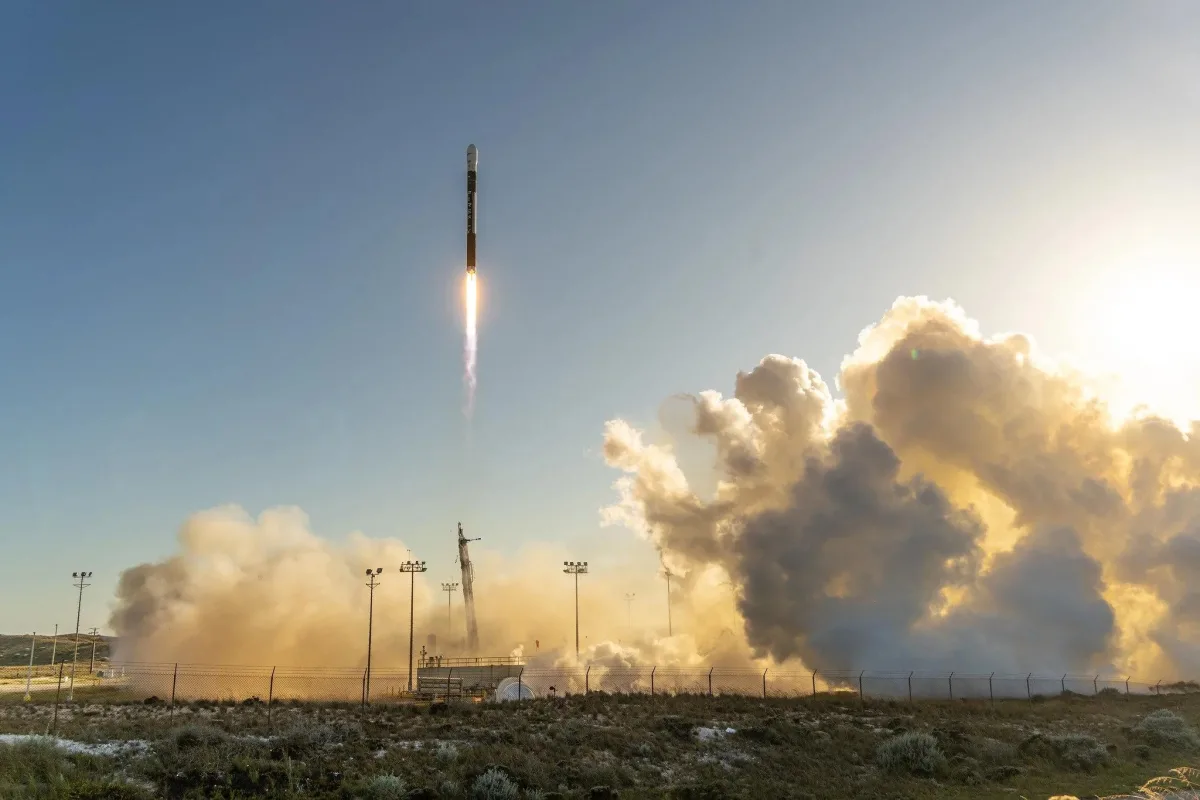
How SmallSat Launchers Are Surrounding the Rideshare Market
Small satellite launch companies are changing how spacecraft reach orbit by offering dedicated launches, greater control over deployment schedules, and access to specific orbital destinations. However, rideshare missions remain attractive because they allow several satellite operators to share the cost of one rocket. As demand for satellite constellations, Earth observation, communications, and national security missions grows, the industry is moving toward a mixed market in which dedicated small launchers and shared rocket flights serve different customer needs. Recent developments in 2026 also show that even rideshare providers are seeking more control over launch capacity as demand grows.
Summary
-
Industry: Commercial space transportation and small satellite launches.
-
Main development: Dedicated small launch vehicles are competing with traditional rideshare services.
-
Major advantage of rideshare: Lower launch costs through shared rocket capacity.
-
Major advantage of dedicated launches: More control over timing, orbital placement, and mission requirements.
-
Important companies: Rocket Lab, SpaceX, Firefly Aerospace, and emerging European launch providers.
-
Key market trend: Launch demand is growing, putting pressure on available capacity and delivery schedules.
-
Current outlook: Rideshare remains important, but dedicated launch services are becoming increasingly valuable for customers that need greater flexibility.
Introduction: A Changing Small Satellite Launch Market
Launching a satellite into space was once an expensive undertaking mainly available to governments, large companies, and major research institutions. Smaller spacecraft have changed that situation. Advances in electronics, miniaturisation, and satellite manufacturing have allowed universities, startups, research organisations, and commercial operators to develop smaller and more affordable spacecraft.
However, building a small satellite is only part of the challenge. Operators must still find a suitable rocket, secure a launch date, and ensure their spacecraft reaches the correct orbit.
For years, rideshare missions have offered an effective solution. Several satellites travel aboard the same rocket, allowing customers to divide launch costs. SpaceX's SmallSat Rideshare Program, for example, advertises missions starting at $350,000 for a payload of up to 50 kilograms to sun-synchronous orbit, with additional mass priced separately.
Now, dedicated small satellite launchers are attracting customers who want greater control over when and where their spacecraft enter orbit. Rather than replacing rideshare completely, these launchers are creating additional choices across the commercial space market.
What Is the Rideshare Market?
A rideshare launch carries multiple spacecraft on a single rocket. Each customer purchases a portion of the available payload capacity, often through a launch provider or a specialist satellite integration company.
This approach can significantly reduce costs because customers do not have to pay for an entire rocket launch.
Rideshare works particularly well for small satellites that can accept the launch provider's planned schedule and orbital destination. It also gives satellite developers an opportunity to test new technology without paying for a dedicated mission.
However, shared launches have limitations. Customers may have to wait for a suitable flight, adapt their spacecraft to the rocket's planned orbit, or coordinate deployment with other payloads. Additional equipment or in-space transportation may be needed when the target orbit differs from the launch's primary destination.
These trade-offs explain why dedicated launch providers continue to attract interest.
Why Dedicated SmallSat Launchers Are Growing

Dedicated small launch vehicles are designed to carry smaller payloads, making them suitable for missions that do not require a large rocket.
The main selling point is mission control. A customer booking a dedicated launch can have greater influence over the launch date, deployment sequence, and target orbit, subject to technical and operational constraints.
This flexibility matters for satellite constellations, technology demonstrations, and government missions with specific timing requirements.
According to NASA's Small Spacecraft Systems Virtual Institute, Rocket Lab's Electron was the most widely used dedicated small launch vehicle in its April 2026 overview. The institute also identifies vehicles and programmes from other providers, illustrating the range of launch options available to small spacecraft operators.
Dedicated launch does not automatically mean a lower price. The customer may pay considerably more per kilogram than on a shared flight. The value comes from the control, timing, and orbital flexibility the mission provides.
Major Companies Shaping the Market
Rocket Lab and Electron

This combination is important because customers do not always need an entire rocket. A provider that offers multiple launch arrangements can serve different budgets and mission requirements.
SpaceX and the Rideshare Advantage

SpaceX remains a powerful competitor because its Falcon 9 rocket can carry many satellites on one flight. Its rideshare programme provides relatively affordable access to orbit, especially for customers whose spacecraft can accept the available schedule and destination.
The company also publishes pricing and flight information through its official programme. Although rideshare is not suitable for every mission, its economies of scale make it difficult for smaller rockets to compete on price alone.
Firefly Aerospace and Responsive Launch

Firefly reports that Alpha can carry approximately 1,030 kilograms to low Earth orbit at 300 kilometres, with a published capability of 630 kilograms to sun-synchronous orbit at 500 kilometres. These figures depend on the target orbit and mission conditions. The company also promotes rapid-response launch capabilities for customers requiring more control over timing.
Europe's Emerging Launch Providers
Europe is also working to expand its commercial launch options. The European Space Agency's European Launcher Challenge aims to encourage competition, develop commercially operated launch services, and strengthen Europe's independent access to space.
In March 2026, ESA reported that the programme was moving toward contractual arrangements and operational milestones. It also noted that Orbital Express Launch had withdrawn after entering administration in February 2026, demonstrating that market growth does not guarantee every new company will succeed.
SmallSat Launchers vs Rideshare: The Main Differences
|
Feature |
Dedicated small launcher |
Rideshare launch |
|---|---|---|
|
Cost |
Usually higher for a small payload |
Often lower per satellite |
|
Launch timing |
Greater customer control |
Depends on the shared mission |
|
Orbital placement |
More mission-specific options |
Usually based on the primary mission |
|
Payload sharing |
May carry one customer's payload or a selected group |
Carries multiple customers' spacecraft |
|
Best suited for |
Time-sensitive or specialised missions |
Cost-conscious missions with flexible requirements |
|
Main limitation |
Price and available launch capacity |
Scheduling and deployment constraints |
The important distinction is not simply rocket size. It is the level of control the customer needs and how much the customer is prepared to pay for it.
Why Demand Is Putting Pressure on the Market
The small satellite industry is expanding as operators build constellations for communications, environmental monitoring, navigation, and other services. These systems may require many satellites, replacements for ageing spacecraft, or new technology demonstrations.
The European Space Agency reported in November 2025 that the market for satellites weighing less than 200 kilograms had been growing since 2021, with further growth expected over the 2025–2028 period. This trend supports demand for more launch options.
However, rocket development and launch infrastructure take time. A company may have customers waiting for a launch but still face limits in manufacturing, testing, launch-site availability, and regulatory approval.
A report published by SpaceNews on August 25, 2026, described rideshare specialists Exolaunch and SEOPS booking dedicated Falcon 9 launches to gain more control over launch capacity. The report highlighted a wider industry challenge: demand for launch services was growing faster than available capacity.
This development is particularly revealing. Companies that built their businesses around helping customers share launches are also seeking dedicated capacity. It shows that the boundary between the two markets is becoming less rigid.
How SmallSat Launchers Are Reshaping the Business
The growth of dedicated launch services is creating several important changes across the industry.
First, it gives satellite operators more choices. Customers can compare a low-cost shared flight with a more tailored launch instead of relying on one type of service.
Second, it encourages competition. New launch companies must demonstrate that their vehicles can operate safely, deliver payloads reliably, and meet customer schedules. Competition may improve services and create pressure to control costs, although lower prices are not guaranteed.
Third, it creates opportunities for specialist companies that arrange launches, integrate satellites, and coordinate deployment. Some customers may not need to deal directly with a rocket manufacturer because an intermediary can organise the entire launch package.
Finally, dedicated launchers can support missions where timing matters more than the lowest possible launch price. This is relevant to certain scientific experiments, replacement satellites, and government missions.

Current Projects and Market Developments
The following table summarises the status of selected launch services based on available official information as of October 13, 2026.
|
Company or programme |
Launch service |
Status and significance |
|---|---|---|
|
Rocket Lab |
Electron |
Established operational small launch vehicle with dedicated and rideshare options. Rocket Lab
|
|
SpaceX |
Falcon 9 SmallSat Rideshare |
Active programme advertising shared launch services and published pricing. Rideshare
|
|
Firefly Aerospace |
Alpha |
Operational launch service supporting dedicated and multi-payload missions. Firefly Aerospace
|
|
European Space Agency |
European Launcher Challenge |
Developing a broader European commercial launch ecosystem, with operational demonstration milestones targeted by 2027. European Launcher Challenge
|
These examples show that the market is not moving in one direction. Established operators are expanding their service options while new providers work toward commercial operations.
The Biggest Challenges for Small Launch Companies
Despite the opportunities, dedicated small launchers face several obstacles.
Launch cost is a major challenge. A smaller rocket does not automatically offer a cheaper launch per kilogram. Larger vehicles can spread fixed costs across many payloads, making rideshare difficult to beat on price.
Reliability matters. Satellite operators invest heavily in spacecraft development and testing. They need confidence that their launch provider can deliver the mission successfully. New companies must build flight experience and demonstrate consistent performance.
Launch frequency is another concern. Customers may choose a dedicated launcher for schedule flexibility, but that advantage depends on the provider having available vehicles, launch facilities, and the necessary approvals.
Competition is intense. Established launch companies benefit from operational experience and existing customer relationships. New entrants must find customers willing to pay for their particular advantages.
There is also the challenge of financing. Rocket development requires substantial investment before a company can build a reliable, repeatable commercial service. Some projects will succeed, while others may be delayed, restructured, or abandoned.
What Comes Next for the SmallSat Launch Market?
The likely direction is a more specialised market rather than the complete replacement of rideshare launches.
Rideshare will remain attractive for universities, research teams, startups, and satellite operators that prioritise affordability and can work around shared schedules. Dedicated launchers will remain valuable for customers requiring more control over orbital insertion, launch timing, or mission arrangements.
Some operators may also combine approaches. They could use rideshare for routine satellite deployments while reserving dedicated launches for time-sensitive spacecraft or missions requiring a particular orbit.
The growth of launch brokers and satellite integration companies may further blur the distinction between these services. Customers increasingly need a reliable route to orbit, not necessarily a specific type of rocket.
Ultimately, the strongest providers will be those that combine reliability, reasonable pricing, sufficient launch frequency, and a clear understanding of customer requirements.
References
1. NASA Small Spacecraft Systems Virtual Institute. Integration, Launch, and Deployment. https://www.nasa.gov/smallsat-institute/sst-soa/integration-launch-and-deployment/
2. SpaceX. SmallSat Rideshare Program. https://new.spacex.com/rideshare
3. Rocket Lab. Electron Launch Vehicle. https://rocketlabcorp.com/launch/electron/
4. Firefly Aerospace. Alpha Launch Vehicle. https://fireflyspace.com/alpha/
5. European Space Agency. European Launcher Challenge. https://www.esa.int/Enabling_Support/Space_Transportation/European_Launcher_Challenge
6. European Space Agency. ESA Preparation Paved the Way for the Commercialisation of Micro and Mini Launchers. https://www.esa.int/Enabling_Support/Preparing_for_the_Future/Discovery_and_Preparation/ESA_Preparation_paved_the_way_for_the_commercialisation_of_micro_and_mini_launchers
7. SpaceNews. Rideshare Providers Get Creative to Meet Growing Demand. August 25, 2026. https://www.thespacenews.org/rideshare-providers-get-creative-to-meet-growing-demand/index.html
8. Rocket Lab Investor Relations. Rocket Lab's Biggest Launch Deal Yet: Confidential Customer Books Multiple Neutron and Electron Launches. May 7, 2026. https://investors.rocketlabcorp.com/news-releases/news-release-details/rocket-labs-biggest-launch-deal-yet-confidential-customer-books