How Mega-Constellations Ruin Optical Asteroid Tracking
Mega-constellations of communication satellites are creating a growing challenge for ground-based telescopes that search for asteroids and other objects in space. As thousands of satellites orbit Earth and reflect sunlight, they leave bright streaks across astronomical images. These trails can hide faint objects, interfere with computer-based detection systems, and make some measurements less reliable. The problem matters because astronomers need repeated, accurate observations to discover near-Earth asteroids and calculate their orbits. Research from the Vera C. Rubin Observatory shows why satellite interference deserves serious attention as asteroid surveys become more powerful. However, satellite trails do not make asteroid tracking impossible, and astronomers are developing ways to reduce their impact.
Summary
-
Main topic: The effect of large satellite constellations on optical astronomy and asteroid detection.
-
Mega-constellations: Large groups of satellites working together, often to provide broadband internet and communications.
-
Main problem: Sunlight reflected by satellites creates bright streaks across telescope images.
-
Affected research: Near-Earth asteroid discovery, orbital measurements, time-sensitive observations, and other astronomical surveys.
-
Key observatory: The Vera C. Rubin Observatory in Chile, designed to repeatedly survey large areas of the sky.
-
Important concern: A satellite trail can obscure a faint object or contaminate pixels needed for accurate measurements.
-
Current evidence: Rubin Observatory reported more than 11,000 new asteroid discoveries from preliminary observations in April 2026, demonstrating the scientific value of wide-field surveys.
-
Possible solutions: Darker satellite surfaces, changes in satellite orientation, improved scheduling, image-processing software, and international cooperation.
-
Overall conclusion: Satellite internet and planetary defense can coexist, but avoiding unnecessary interference requires action from satellite operators, astronomers, and regulators.

What Are Satellite Mega-Constellations?
A satellite mega-constellation is a large network of satellites placed in orbit to work together as a connected system. Many of these satellites operate in low Earth orbit, relatively close to our planet.
Companies deploy these networks to provide internet access, improve communications, and connect people in remote areas. These services can be valuable, especially where traditional communication infrastructure is limited.
However, placing more satellites in orbit also changes the environment in which astronomers work. Satellites moving across the sky can reflect sunlight toward Earth, appearing as bright points to observers and streaks in long-exposure telescope images.
The International Astronomical Union (IAU) has warned that the growing number of satellite constellations creates challenges for both optical and radio astronomy. Its work on protecting dark and quiet skies includes cooperation with satellite operators to reduce interference.
The issue is not that satellites physically block the view of an asteroid. Instead, their reflected light interferes with the measurements that astronomers collect using sensitive digital cameras.
How Optical Asteroid Tracking Works
Optical asteroid tracking relies on telescopes that collect visible light from objects in space. Many asteroids are small, distant, and faint, so astronomers need sensitive instruments and repeated observations to identify them.
A telescope records an image of a section of the sky. Software then searches for points of light that move between images. When an object appears in several observations, astronomers can compare its position over time and estimate its trajectory.
For near-Earth objects, this process is especially important. A single observation may reveal that an object exists, but additional observations help scientists determine its orbit and assess whether it could approach Earth.
A successful survey therefore needs more than a powerful telescope. It also needs clean images, accurate measurements, reliable detection software, and enough observing time to follow moving objects.
When satellite trails cross these images, some of that information can become harder to recover.
How Mega-Constellations Interfere With Asteroid Detection

Bright Streaks Can Hide Faint Asteroids
A satellite reflecting sunlight can produce a bright line across an astronomical image. If an asteroid lies along that line, its light may become difficult to distinguish from the satellite trail.
This is particularly concerning for surveys searching for faint objects across large sections of the sky. A faint asteroid may be detectable in a clean image but difficult to identify when a bright streak crosses its position.
The result does not automatically mean that the asteroid will be missed permanently. It may appear in a later observation. However, losing a useful observation can delay discovery or reduce the amount of information available to calculate its orbit.
Satellite Trails Can Confuse Detection Software
Modern asteroid surveys use automated software to process large numbers of images. These systems search for moving objects and compare observations taken at different times.
A satellite trail introduces an unwanted feature into the image. Depending on its brightness and shape, it can interfere with the software's ability to identify genuine astronomical sources.
Image-processing systems can flag or mask affected pixels, but masking also removes information. If an asteroid happens to be within the affected area, the software may lose some or all of the signal needed to detect it in that exposure.
Measurements Can Become Less Reliable
Finding an asteroid is only the first step. Astronomers also need accurate measurements of its position and brightness.
A bright streak can contaminate nearby pixels, making it harder to estimate an object's position or measure its light. Errors in individual observations can affect how astronomers combine measurements to determine an orbit.
The consequences depend on the satellite's brightness, the asteroid's location in the image, the telescope's design, and the quality of the processing software. Not every satellite crossing creates a serious problem, but repeated interference can reduce the efficiency of a survey.

Why This Matters for Planetary Defense
Planetary defense is the scientific work of finding asteroids and comets that could pose a danger to Earth, calculating their paths, and determining whether action might eventually be needed.
Optical surveys are an important part of this effort. They help scientists discover objects, recover previously known asteroids, and collect the observations required to improve orbital predictions.
Satellite interference does not mean that Earth is suddenly less protected or that a dangerous asteroid will inevitably go undetected. Many objects can be observed repeatedly, and astronomers use different telescopes and detection methods. Nevertheless, any avoidable loss of useful observations matters when surveys are trying to identify as many near-Earth objects as possible.
The concern is particularly relevant to wide-field observatories that repeatedly photograph large portions of the sky. These facilities collect enormous quantities of data, so even a relatively small amount of interference can create additional work or reduce the quality of some measurements.
The Vera C. Rubin Observatory: A Major Example

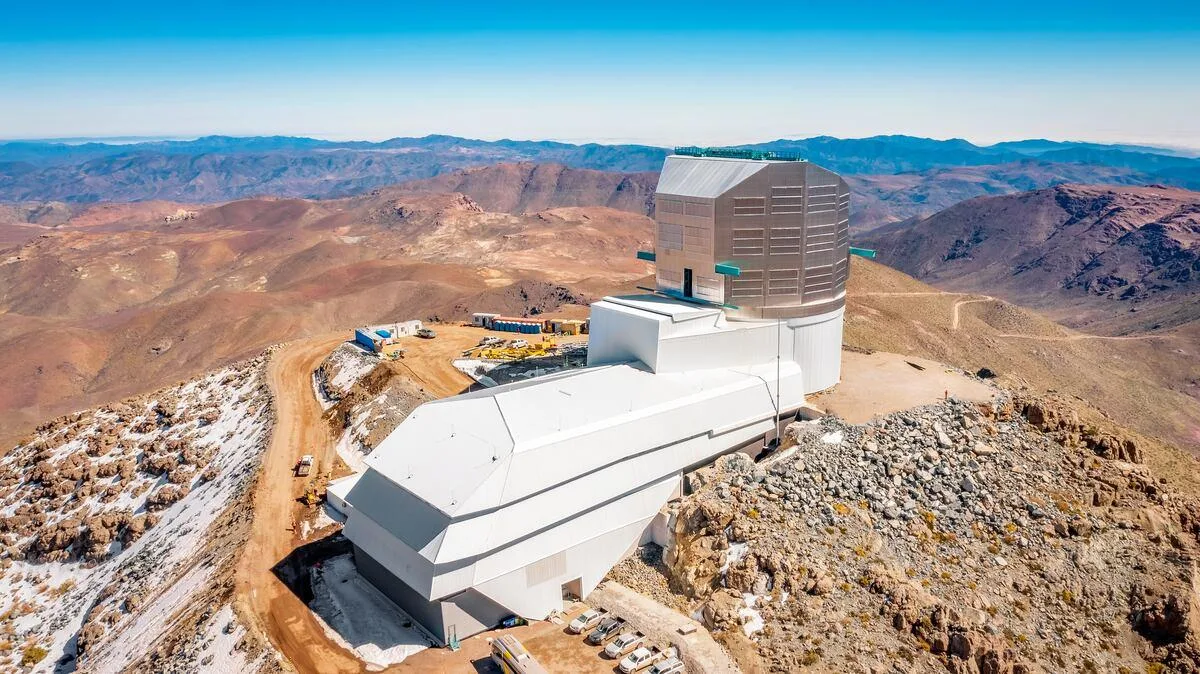
The Vera C. Rubin Observatory is an important example of the opportunities and challenges facing modern optical astronomy. Located in Chile, it is designed to repeatedly image the southern sky through the Legacy Survey of Space and Time (LSST).
Its wide field of view and powerful camera make it well suited to discovering moving objects, including asteroids. Yet those same wide-field observations can be affected by satellite trails crossing the camera's images.
Rubin Observatory's official discussion of satellite interference warns that these streaks can make astronomical sources underneath them undetectable. It also highlights concerns about systematic errors and the possible effects of future satellite deployments.
In April 2026, the observatory reported that preliminary observations had produced more than 11,000 new asteroid discoveries, including 33 previously unknown near-Earth asteroids. These results demonstrate how much valuable information large astronomical surveys can produce.
They also show why keeping survey images as useful as possible is important. When an observatory is designed to discover many objects, preserving the quality of its observations becomes a major scientific priority.
How Serious Is the Problem?
The level of interference depends on how many satellites are present, how bright they appear, where they are in orbit, and when a telescope observes the sky.
A Rubin Observatory analysis describes a simulation involving 40,000 low-Earth-orbit satellites in which approximately 10% of LSST images would contain at least one satellite trail. Most images taken during twilight in that scenario would contain streaks. This is a modelled scenario, not a measurement of the percentage of images affected by the current satellite population.
That distinction matters. The number of satellites, their brightness, and the telescope's observing schedule all affect the outcome. Future projections should not be treated as guaranteed results.
|
Issue |
Possible effect on asteroid surveys |
|---|---|
|
Bright satellite trails |
Hide or obscure faint asteroids |
|
Contaminated image pixels |
Reduce the quality of measurements |
|
Automated detection errors |
Make some objects harder to identify |
|
Repeated interference |
Reduce observing efficiency |
|
Increased background light |
Make faint sources more difficult to detect |
|
Lost or weakened observations |
Leave less information for orbit calculations |
The concern is not limited to asteroid research. Satellite trails can also affect observations of distant galaxies, supernovae, and other faint astronomical targets.
What Can Be Done to Reduce the Damage?
The challenge is difficult, but several approaches can help.
Darker satellite designs: Satellite operators can test materials and surface treatments that reduce reflected sunlight. Less reflective satellites can leave less intrusive trails, although the effectiveness of any design depends on its materials, orientation, and operating conditions.
Changes in orientation: Operators can adjust satellite positions or the orientation of their surfaces to reduce reflections toward Earth. The IAU has identified such measures as part of efforts to limit optical interference.
Smarter observation scheduling: Observatories can use satellite orbit information to predict when spacecraft may cross a planned field of view. Where practical, they can adjust observation times to avoid some crossings.
Improved image processing: Software can identify satellite trails and flag contaminated pixels. This can help researchers preserve usable information elsewhere in the image, although it cannot always restore a faint object hidden by a bright streak.
Better coordination: Astronomers and satellite operators can share information about satellite positions, brightness, and observing schedules. International organizations, including the IAU, are working to support cooperation on these issues.
No single solution will eliminate every problem. The best results are likely to come from combining better satellite designs, accurate orbital information, careful scheduling, and more effective image-processing methods.
The Balance Between Internet Access and Space Science
Mega-constellations provide real benefits. Satellite internet can help connect remote communities, support communications, and provide another option when ground-based networks are unavailable.
The challenge is to preserve those benefits without placing an unnecessary burden on scientific research.
The IAU's work on dark and quiet skies reflects the need for a shared approach. The organization has supported discussions involving astronomers, satellite operators, and policymakers, including international discussions under the United Nations framework.
A balanced solution does not require abandoning satellite communications. Instead, it requires designing and operating satellite networks with the needs of astronomy in mind.
As more satellites are launched, the decisions made today about brightness, orbital planning, information sharing, and international standards will help shape how well the two activities can coexist.
Latest Developments as of October 21, 2026
Three developments provide useful context for understanding this issue.
-
April 2, 2026: Rubin Observatory reported more than 11,000 asteroid discoveries from preliminary observations, including 33 new near-Earth asteroids.
-
July 22, 2026: Rubin Observatory updated its public explanation of the effects of artificial satellites and debris on its observations, discussing bright trails, possible systematic errors, and projected impacts from future deployments.
-
September 4, 2026: The International Telecommunication Union published a discussion of satellite constellations, astronomy, and approaches to reducing interference, including measures to control reflected sunlight.
These developments show that satellite interference remains an active scientific and policy issue. They do not establish that a specific asteroid has been missed because of a satellite trail, nor do they prove that a collision with Earth is more likely. Those claims would require separate evidence.
Frequently Asked Questions
What are satellite mega-constellations?
They are large groups of satellites operating together as a network, often to provide internet access and communications across wide areas of Earth.
How do mega-constellations affect asteroid tracking?
Satellites can reflect sunlight into telescope cameras, producing bright streaks that hide faint asteroids or interfere with measurements used to calculate their orbits.
Can satellite trails cause astronomers to miss an asteroid?
They can make an asteroid harder to detect in a particular image. Whether it is missed entirely depends on factors such as its brightness, later observations, and the survey's detection methods.
Does this mean Earth is in greater danger from asteroids?
Not automatically. Satellite interference is an observational challenge, not evidence that an asteroid impact is imminent. Planetary defense relies on several surveys, repeated observations, and orbital analysis.
Which observatory is especially relevant to this problem?
The Vera C. Rubin Observatory in Chile is a major example because its wide-field survey is designed to discover large numbers of moving objects, including asteroids.
Can computer software remove satellite trails?
Software can detect and mask many trails, allowing astronomers to use unaffected parts of an image. However, information hidden beneath a bright trail may not be recoverable.
Why not simply make satellites less reflective?
Reducing reflected sunlight is an important mitigation strategy, but satellite brightness also depends on orientation, materials, and operating conditions. No single design change solves every form of interference.
Will satellite mega-constellations eventually make optical astronomy impossible?
Current evidence does not support that conclusion. Astronomy can continue, but the cost, efficiency, and scientific quality of some observations may be affected if interference grows without effective mitigation.
What is the difference between optical and radio astronomy?
Optical astronomy studies visible light and related wavelengths, while radio astronomy detects radio waves. Satellite constellations can affect optical astronomy through reflected sunlight and radio astronomy through unwanted radio-frequency emissions and electromagnetic interference.
What is the main solution to satellite interference?
A combined approach is needed: reduce satellite brightness, improve scheduling and image processing, share orbital information, and develop international cooperation between the space industry and the scientific community.
References
-
Vera C. Rubin Observatory — Impacts from Artificial Satellites and Debris. Updated July 22, 2026.
-
Vera C. Rubin Observatory — Early Data Reveals Over 11,000 New Asteroids. April 2, 2026.
-
International Astronomical Union — Satellite Constellations and Their Effects on Astronomy.
-
International Astronomical Union — Understanding the Impact of Satellite Constellations on Astronomy. February 12, 2020.
-
European Southern Observatory — Large Satellite Constellations and Their Impact on Astronomy.
-
International Astronomical Union — UN Meeting Features Satellite Impact on Astronomy.
-
International Telecommunication Union — Satellites, Astronomy and Society: Sharing Space and the Skies. September 4, 2026.