How Light Pollution Echoes Affect Ground-Based Space Telescopes
Light pollution is becoming a growing challenge for astronomers who study the universe from Earth. Artificial lighting from cities, industrial areas, roads and commercial buildings brightens the night sky, making faint stars, distant galaxies and other celestial objects harder to observe. At the same time, sunlight reflected from satellites in orbit is creating additional problems for modern astronomical telescopes.
Although the phrase “light pollution echoes” is not a standard scientific term, it can describe the continuing effects of artificial light on astronomical observations. These effects can extend beyond the original light source, scattering through the atmosphere or appearing as unwanted brightness and streaks in telescope images.
According to the European Southern Observatory (ESO), both artificial lighting on Earth and the growing number of satellites in orbit threaten the quality of astronomical observations. New research published in 2026 has also highlighted the potential consequences of expanding satellite networks for the night sky.
Light pollution reduces the ability of ground-based telescopes to detect faint objects by increasing the brightness of the background sky. Satellite trails, atmospheric scattering and unwanted artificial illumination can also interfere with observations, reduce image quality and increase the time needed to obtain reliable scientific measurements. Researchers are responding through improved lighting policies, better observation planning, advanced image processing and international efforts to protect dark skies.
Understanding Light Pollution and Its Effects on Astronomy
Light pollution occurs when artificial light is used excessively or spreads into places where it is unnecessary. Streetlights, illuminated buildings, advertising signs and poorly directed outdoor lighting are common sources.
When artificial light travels upward, some of it is scattered by molecules, aerosols and particles in the atmosphere. This creates skyglow, which makes the night sky appear brighter than it would under natural conditions.
For professional astronomers, this creates a serious difficulty. Telescopes collect light from distant objects, including galaxies whose signals may be extremely faint. When the surrounding sky becomes brighter, the difference between the astronomical signal and the background becomes harder to measure.
The ESO explains that this problem particularly affects astronomical imaging and photometry, the process of measuring the brightness of celestial objects. Observatories are therefore often established in remote locations with naturally dark skies.
How Light Pollution Affects Ground-Based Telescopes
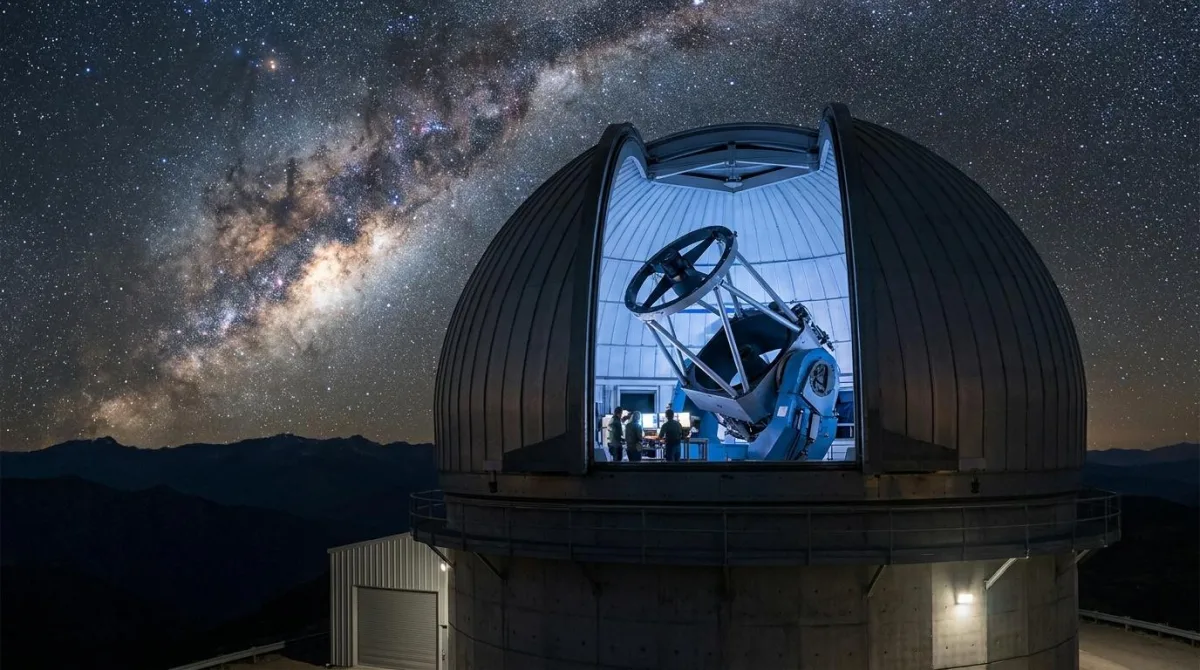
Ground-based telescopes are designed to collect and analyse light arriving from space. Their performance depends not only on the quality of their mirrors, lenses and detectors but also on the darkness and stability of the sky.

Skyglow makes faint galaxies, nebulae and distant stars more difficult to distinguish from the background. Astronomers may need longer exposures, and some observations may become impractical under heavily polluted skies.

Satellites reflecting sunlight can cross a telescope's field of view, leaving bright lines across images. Such trails may obscure objects, interfere with measurements or require affected portions of an image to be removed or corrected.

Unwanted background light adds noise to observations. This can affect brightness estimates, the identification of faint objects and the accuracy of measurements used to investigate the evolution of galaxies and other cosmic phenomena.
These effects are especially important for large surveys that photograph extensive areas of the sky repeatedly. A small amount of contamination in an individual exposure can become a substantial problem when researchers analyse millions of images.
Why Satellite Networks Are Becoming a Major Concern
Traditional light pollution mainly originates from artificial lighting on Earth's surface. However, modern astronomy faces another challenge: the increasing number of satellites operating in low Earth orbit.
Satellites can reflect sunlight towards observatories even when the ground below is dark. As they move across the sky, they may leave streaks in telescope images. Their effects are particularly noticeable around twilight, when satellites may remain illuminated by the Sun after darkness has reached the observing site.
A study published in Nature on December 3, 2025, examined how proposed satellite megaconstellations could affect space telescopes. The researchers estimated that, if the proposed constellations were completed, around one-third of Hubble Space Telescope images could contain satellite trails. Several other studied missions could experience even higher levels of contamination. These are projections based on proposed deployments, not measurements of the current condition of every telescope.
Although this study focuses on space-based observatories, it illustrates the wider problem of artificial light interfering with astronomical imaging. Ground-based telescopes face their own challenges from satellite trails, skyglow and scattered light.
The Meaning of “Light Pollution Echoes”
In astronomy, an echo usually refers to light that arrives after being reflected or scattered by material, or to a delayed signal associated with an astronomical event. “Light pollution echoes,” however, is not a widely established technical category for the effects discussed here.
The idea is still useful as a description of how the consequences of artificial lighting can persist. Light scattered through the atmosphere contributes to skyglow, while contamination recorded in telescope images may require further processing long after an observation has finished.
For example, an image affected by a satellite trail might need specialised software to identify the interference and distinguish it from genuine astronomical features. Even when researchers can correct the image, the original contamination can increase processing costs and introduce uncertainty.
The important distinction is that atmospheric skyglow and satellite trails are different problems. Skyglow raises the background brightness across an area of the sky, while satellite trails usually create localised streaks or other unwanted signals in an image.
Recent Research and Developments in 2026
The protection of dark skies has become an increasingly important subject for astronomical organisations.
On July 1, 2026, the European Southern Observatory reported research examining the possible effects of proposed satellite deployments on astronomical observations. The study considered proposals involving more than 1.7 million satellites and warned that large, bright satellite constellations could significantly increase night-sky brightness. The figure represents proposed deployments, not the number of satellites currently in orbit.
Meanwhile, research published in Monthly Notices of the Royal Astronomical Society in June 2026 examined ways to reduce the impact of satellite brightness on astronomy through laboratory characterisation and simulations. Such work can help researchers understand how satellite surfaces reflect light and assess possible mitigation methods.
These developments demonstrate why astronomers are looking beyond the traditional problem of excessive city lighting. Protecting scientific observations increasingly requires cooperation between observatories, lighting designers, satellite operators and policymakers.
How Scientists Can Reduce Light Pollution
Several practical measures can help protect ground-based astronomy.
-
Improve outdoor lighting: Shielded lights direct illumination towards the ground instead of allowing unnecessary light to escape into the sky.
-
Use appropriate brightness: Reducing excessive illumination and switching off unnecessary lights can limit skyglow and energy waste.
-
Protect observatory locations: Planning rules and lighting standards around observatories can help preserve dark observing conditions.
-
Improve observation scheduling: Telescope operators can plan observations around satellite positions and other predictable sources of interference.
-
Develop better image-processing tools: Software can identify and sometimes correct satellite trails and other forms of image contamination.
-
Encourage international cooperation: Shared guidelines can help balance satellite communications and outdoor lighting needs with the protection of scientific observations.
The International Astronomical Union and the ESO support international efforts to preserve dark and quiet skies, including work on policies and technical approaches to reduce interference.
Why Protecting Dark Skies Matters
Ground-based telescopes help scientists investigate how stars form, how galaxies evolve, what distant planets may be like and how the universe has changed over billions of years.
When artificial light interferes with these observations, researchers can lose valuable information or spend additional time collecting and processing data. The impact is particularly significant for surveys that depend on detecting faint objects across large portions of the sky.
Dark skies also have cultural and environmental importance. Excessive artificial lighting can disrupt wildlife, obscure the natural night sky and waste electricity. Reducing unnecessary illumination can therefore benefit astronomy while supporting wider environmental goals.
The challenge is not to eliminate all outdoor lighting or prevent useful satellite services. It is to manage these technologies responsibly so that their benefits do not come at an unnecessary cost to scientific discovery.
References
-
European Southern Observatory. Dark and Quiet Skies Preservation.
-
International Astronomical Union. Recommendation on the Protection of Astronomical Sites — March 20, 2025.
-
International Astronomical Union. Dark and Quiet Skies Global Outreach Project.
-
Borlaff, A. S., Marcum, P. M. and Howell, S. B. Satellite Megaconstellations Will Threaten Space-Based Astronomy. Nature, December 3, 2025; author correction published May 27, 2026.
-
European Southern Observatory. “Beyond the Limit”: One Million Satellites and Mirrors in Space Pose Grave Threat to the Night Sky. July 1, 2026.
-
Monthly Notices of the Royal Astronomical Society. Reducing the Impact of Satellite Brightness for Astronomy: Laboratory Characterization and Simulations. June 30, 2026.