
Hayabusa 2 Makes History with Torifune Flyby: Japans Space Probe Continues Asteroid Exploration Success
TL;DR

Hayabusa2 continues its remarkable journey with a successful flyby of asteroid Torifune in July 2026, demonstrating Japan's leadership in space technology and advancing planetary defense research while en route to its final destination.

Hayabusa 2 Makes History with Torifune Flyby: Japan's Space Probe Continues Asteroid Exploration Success

The Hayabusa 2 mission represents a remarkable achievement in space exploration, born from Japan's growing interest in understanding our solar system's origins and mitigating potential asteroid threats. Long before its December 2014 launch, the project emerged as a natural progression from Japan's successful first Hayabusa mission, which had visited asteroid Itokawa in 2005. The Japan Aerospace Exploration Agency (JAXA) recognized that studying asteroids could provide crucial insights into the formation of our solar system and help identify potential hazards to Earth.

The development of Hayabusa 2 was a testament to years of meticulous engineering and scientific preparation. Built by NEC Corporation, the spacecraft was designed to overcome the formidable challenges of deep space navigation, asteroid proximity operations, and sample collection. Its launch aboard an H-IIA rocket from the Tanegashima Space Center marked the beginning of an ambitious journey that would ultimately span more than a decade, pushing the boundaries of what was possible in asteroid exploration.

A Journey Through the Solar System

Hayabusa 2's odyssey began on December 3, 2014, with the spacecraft embarking on a multi-year journey through deep space. Using its advanced ion engines, the spacecraft gradually approached its primary target, culminating in a critical breakthrough on June 27, 2018, when it successfully rendezvoused with asteroid Ryugu. This achievement required the spacecraft to precisely match the asteroid's orbit while preparing for complex surface operations.

The mission continued with the deployment of several groundbreaking rovers and landers. The MINERVA-II rovers became the first mobile robots to explore an asteroid's surface, gathering invaluable data about Ryugu's composition and structure. The MASCOT lander conducted a brief but intensive 17-hour mission, providing detailed images and measurements that enhanced our understanding of the asteroid. These operations were followed by two separate touchdowns that collected both surface and subsurface samples, demonstrating remarkable precision despite the challenges of operating in a low-gravity environment.

The mission's crowning achievement came in December 2020, when Hayabusa 2 successfully returned pristine asteroid samples to Earth, landing in the Australian outback. This accomplishment marked Hayabusa 2 as only the second mission in history to bring back asteroid samples, representing a significant milestone in space exploration.

Groundbreaking Achievements and Firsts

The Hayabusa 2 mission has rewritten the record books in multiple ways. Its deployment of multiple rovers on an asteroid surface was unprecedented, with the MINERVA-II rovers setting the standard for future asteroid exploration. The MASCOT lander's brief but intensive mission provided scientists with a wealth of data about asteroid surface characteristics.

Another major accomplishment was the collection of both surface and subsurface samples, offering scientists unprecedented insights into asteroid formation and evolution. The mission also demonstrated advanced navigation techniques that allowed the spacecraft to operate with remarkable precision in the challenging gravitational environment near an asteroid. Most importantly, Hayabusa 2 has established Japan as a world leader in asteroid exploration, showcasing the nation's capability to handle complex deep space operations with world-class technology.

The Human Story Behind the Mission

While Hayabusa 2 is a spacecraft, its journey reflects the dedication and resilience of the engineers and scientists who have operated it. The mission has faced significant challenges, including technical issues with its ion engines. During the extended mission, three of the four ion engines experienced performance degradation, forcing the team to rely on a single engine for critical operations.

Despite these setbacks, the mission has continued successfully, demonstrating both the spacecraft's resilience and the ground team's problem-solving abilities. The team has made difficult decisions about resource allocation and operational strategies to ensure the mission's continued success, far exceeding the original mission duration. This human element highlights the dedication, teamwork, and innovation required to maintain a deep space mission for years in the harsh environment of space.

Recognition and Scientific Impact

The Hayabusa 2 mission has received widespread recognition for its scientific and technological achievements. Featured in scientific journals and news outlets worldwide, the mission has significantly advanced our understanding of asteroids and the solar system. The successful sample return from Ryugu has been particularly celebrated, providing scientists with pristine material from a carbon-rich asteroid that offers clues about the early solar system.

The mission has set numerous records, including the closest approaches to asteroids and the most complex surface operations ever conducted on an asteroid. The spacecraft's navigation systems have been praised for their precision, allowing it to operate safely in the challenging gravitational environment near Ryugu. Additionally, the mission has contributed to the development of new technologies for asteroid exploration and planetary defense, earning awards from various space organizations and scientific societies.

The Extended Mission and Future Horizons

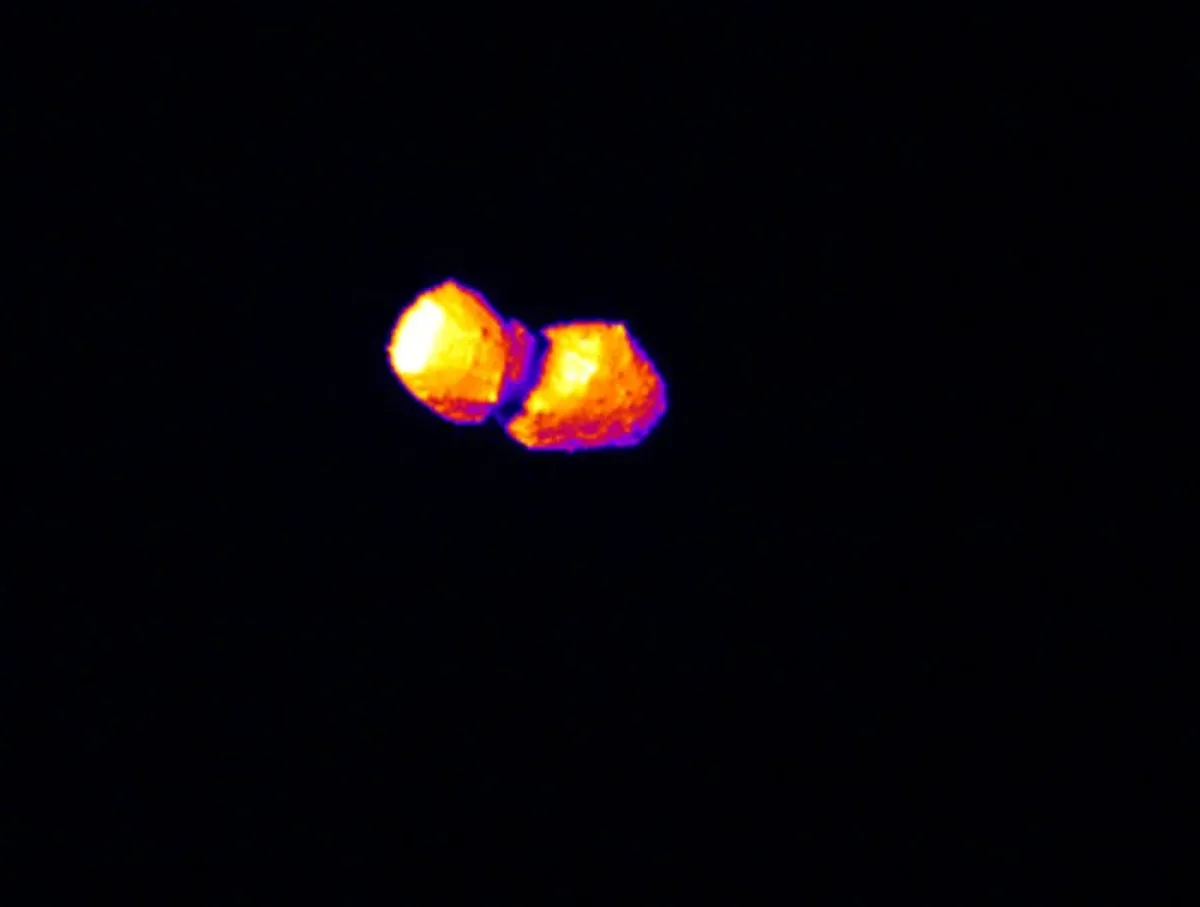
After returning samples from Ryugu in 2020, Hayabusa 2 embarked on an extended mission that continues to push the boundaries of space exploration. The spacecraft's recent flyby of asteroid Torifune on July 5, 2026, represented a major achievement, with the spacecraft approaching within 800 meters of the asteroid's center while traveling at an incredible 5 km/s relative velocity. This close approach provided valuable data about Torugai's composition and structure, helping scientists understand asteroid evolution and potential threats to Earth.

Looking ahead, the spacecraft is scheduled to rendezvous with asteroid 1998 KY26 in 2031, marking another important milestone in the mission. The extended mission focuses on small, potentially hazardous asteroids, contributing significantly to planetary defense efforts and our understanding of these space rocks. Despite technical challenges, the team continues to operate the spacecraft using innovative solutions to maintain mission capabilities.

Mission Timeline and Current Projects

Table 1: Hayabusa 2 Mission Timeline

Year
Project
Role/Note
2014 Launch Successfully launched aboard H-IIA rocket
2015 Earth Flyby Used Earth's gravity to assist trajectory
2018 Ryugu Arrival Rendezvoused with asteroid Ryugu
2018-2019 Surface Operations Deployed rovers, conducted touchdowns
2020 Sample Return Successfully returned samples to Earth
2026 Torifune Flyby Completed close approach to asteroid Torifune
2031 KY26 Rendezvous Planned meeting with asteroid 1998 KY26

Table 2: Recent & Upcoming Projects

Project
Type
Status/Notes
Torifune Flyby Asteroid Observation Completed July 5, 2026, at 800m distance
1998 KY26 Mission Asteroid Rendezvous Scheduled for 2031, studying small asteroid
Ion Engine Operations Propulsion Operating with single engine after others degraded
Planetary Defense Research Technology Development Testing asteroid navigation and deflection techniques
Deep Space Navigation Operations Using optical-radio hybrid navigation methods

Frequently Asked Questions

What is Hayabusa 2?
Hayabusa 2 is a Japanese space probe designed to study asteroids and collect samples for scientific analysis. It was launched by JAXA in 2014 and has successfully visited asteroid Ryugu and asteroid Torifune.

Why study asteroids?
Asteroids provide valuable information about the early solar system and the origins of life. They also pose potential threats to Earth, so studying them helps develop planetary defense strategies.

How does Hayabusa 2 navigate in space?
The spacecraft uses ion engines for propulsion and advanced navigation systems that combine optical and radio tracking to maintain precise control during asteroid operations.

What makes the Torifune flyby special?
The flyby was conducted at a very high speed (5 km/s) and close distance (800 meters), testing new navigation techniques and providing detailed data about the asteroid's composition.

What are the future plans for Hayabusa 2?
The spacecraft will continue its extended mission, with a planned rendezvous with asteroid 1998 KY26 in 2031, further advancing our understanding of small asteroids.

The Hayabusa 2 mission stands as a testament to human ingenuity and our relentless pursuit of knowledge about the cosmos. From its inception to its ongoing extended mission, this remarkable spacecraft has expanded our understanding of asteroids, demonstrated advanced technological capabilities, and paved the way for future generations of space exploration. As it continues its journey through the solar system, Hayabusa 2 will undoubtedly continue to provide groundbreaking discoveries and inspire new frontiers in our quest

References

  1. JAXA Hayabusa 2 Project - Official Mission Website: https://www.hayabusa2.jaxa.jp/en
  2. NHK World News - Hayabusa 2 completes Torifune flyby: https://www3.nhk.or.jp/nhkworld/en/news/20260705_01
  3. Sky & Telescope - Hayabusa 2 completes flyby past asteroid Torifune: https://skyandtelescope.org/astronomy-news/hayabusa-2-completes-flyby-past-asteroid-torifune
  4. ISAS JAXA - Flyby of asteroid Torifune on July 5, 2026: https://www.isas.jaxa.jp/en/topics/004151.html
  5. Wikipedia - Hayabusa 2 Mission Overview: https://en.wikipedia.org/wiki/Hayabusa2
  6. NASA Science - Hayabusa 2 Mission Information: https://science.nasa.gov/mission/hayabusa-2
  7. Planetary Society - Hayabusa 2 Mission Details: https://www.planetary.org/space-missions/hayabusa2
J

joson3000

Contributing writer for ALLTHINGSGEO.

Related Articles