

Cryogenic Fluid Management: The Toughest Space Challenge
Storing liquid fuel in space is one of the biggest problems preventing humans from reaching Mars. Cryogenic fluid management represents the most difficult challenge in space exploration today. These super-cold liquids – liquid hydrogen, liquid oxygen, and liquid methane – must stay liquid for weeks or months in the harsh environment of space, where temperatures swing wildly and gravity works differently. The problem is so hard that even with all our advanced technology, we can only keep these fuels cold for a few days right now. This single limitation could stop our dreams of exploring the solar system.
Summary
- Early Development: Cryogenic fuel use began in the 1960s with Apollo missions, but storage was limited to hours due to rapid evaporation
- Current Limitations: Today's technology can only store cryogenic fluids for days, not the weeks or months needed for Mars missions
- Main Challenge: Boil-off occurs when heat from the sun and spacecraft systems causes super-cold liquids to evaporate
- Microgravity Issues: In space, fuel doesn't settle like on Earth, making it hard to measure and transfer accurately
- Key Players: NASA leads development with partners including SpaceX, Lockheed Martin, and United Launch Alliance
- Temperature Extremes: Liquid hydrogen needs -423°F, liquid oxygen -297°F, and liquid methane -260°F to stay liquid
- In-Situ Production: Future missions plan to make these fuels on the Moon and Mars, but storage remains a problem
- Transfer Technology: New methods are being developed to move cryogenic fluids between spacecraft in orbit
- Measurement Systems: Radio frequency mass gauges promise better fuel monitoring in low gravity
- Cooling Solutions: Cryocoolers act like space refrigerators to keep tanks cold
- Recent Progress: NASA awarded $53.2 million to SpaceX for cryogenic fluid demonstrations in 2024
- Flight Demonstrations: Multiple companies testing technologies in space starting 2024-2025
- Lunar Applications: First cryogenic fuel storage tests planned for lunar surface missions
- Mars Requirements: Need for 6-12 month storage capability for round-trip Mars missions
- Economic Impact: Solving this could unlock $100B+ market for deep space exploration
- Safety Concerns: Evaporating gases increase risks of leaks and tank ruptures
- Environmental Factors: Space radiation and thermal cycling damage tank materials over time
- Future Outlook: Technologies being developed could enable Mars missions by 2030s
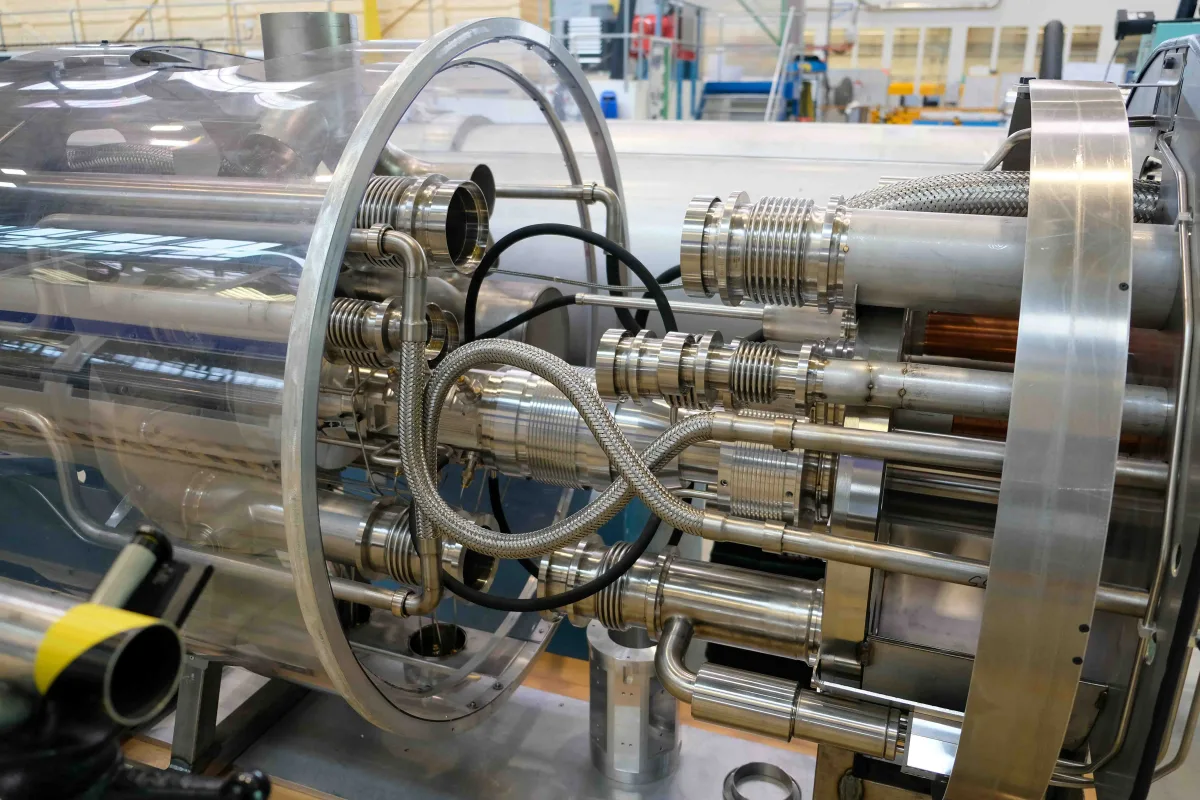
The Cryogenic Challenge: Why It's So Hard
Working with cryogenic fluids in space presents problems that seem almost impossible to solve. These super-cold liquids must remain liquid for the entire duration of a mission, but space itself works against this goal. The sun's heat constantly warms spacecraft surfaces, while the extreme cold of deep space creates temperature swings that make materials contract and expand at different rates. This thermal cycling causes stress on tanks and connections, leading to potential leaks and failures.
Boil-off represents the single biggest enemy of cryogenic fuel storage. When liquid hydrogen reaches about -423°F, any heat input causes it to boil and turn into gas. In space, heat comes from many sources – solar radiation, spacecraft electronics, even the warmth from human bodies. This means that even the best-insulated tanks will gradually lose their super-cold liquids through evaporation. Current systems can only keep liquid hydrogen cold for about 21 days in space, which is nowhere near enough for Mars missions that require 6-12 months of fuel storage.
The problem gets even more complicated in microgravity. On Earth, gravity makes liquids settle at the bottom of tanks, allowing for easy measurement and transfer. In space, however, liquids float around and slosh against tank walls, making it nearly impossible to know exactly how much fuel remains. This uncertainty is unacceptable for critical missions where every drop of propellant counts.
NASA's Approach: Technology Breakthroughs
NASA's Cryogenic Fluid Management (CFM) program represents the agency's most ambitious effort to solve these fundamental challenges. The program encompasses 24 different development activities aimed at reducing boil-off, improving fuel measurement, and advancing transfer techniques. These technologies are essential for making deep space exploration possible.
Radio Frequency Mass Gauges (RFMG) represent one of the most promising solutions. Instead of relying on physical measurements that don't work in microgravity, RFMG uses electromagnetic waves to measure the amount of fuel in a tank. By analyzing how radio waves behave inside the tank, engineers can determine exactly how much liquid remains. This technology has already been tested on the International Space Station and is scheduled for lunar demonstrations in the coming years.
Cryocoolers act like sophisticated space refrigerators for fuel tanks. These systems pump special cooling fluids through networks of tubes installed on tank walls, actively removing heat to prevent boil-off. NASA has partnered with companies like Creare to develop high-capacity cryocooler systems that can keep large tanks cold for extended periods. The technology works by using a closed-loop system that transfers heat away from the fuel, similar to how a home refrigerator removes heat from its interior.
Industry Partnerships and Flight Demonstrations
In 2020, NASA awarded four major Tipping Point contracts to American companies to develop and demonstrate cryogenic fluid management technologies in space. These partnerships represent a new approach to space technology development, where government agencies work with private companies to accelerate innovation.
SpaceX received $53.2 million to develop cryogenic propellant transfer capabilities, essential for their Starship Mars architecture. The company plans to demonstrate tank-to-tank transfers of liquid hydrogen in orbit, a capability that has never been achieved at scale. If successful, this technology would enable refueling missions in Earth orbit, dramatically increasing the payload capacity for Mars missions.
Lockheed Martin focuses on developing advanced storage tanks with improved insulation and active cooling systems. Their approach combines traditional insulation with cryocooler technology to create zero-boil-off storage capable of holding liquid hydrogen for months rather than days.
United Launch Alliance (ULA) works on improved transfer systems that can handle the unique challenges of moving cryogenic fluids between spacecraft in microgravity. Their technology addresses the "slosh" problem by using advanced fluid control systems that work without relying on gravity.
Eta Space develops specialized sensors and measurement systems that can accurately gauge fuel levels in space. Their technology helps solve the uncertainty problem that has plagued cryogenic fuel management for decades.
The Road to Mars: What Still Needs to Be Done
Despite significant progress, several major challenges remain before cryogenic fluid management will be ready for Mars missions. The most critical need is developing zero-boil-off storage systems that can keep fuels cold for the entire duration of a Mars mission – about 6-12 months in space.
In-situ resource utilization (ISRU) presents both opportunities and challenges. While future missions plan to produce liquid oxygen and methane on the lunar and Martian surfaces, storing these fuels remains problematic. The same boil-off issues that affect Earth-launched propellants will be even more severe on planetary surfaces where temperature variations are extreme.
Transfer reliability represents another critical hurdle. Current systems can move small amounts of cryogenic fluid, but the large-scale transfers needed for Mars missions have never been demonstrated. Engineers need to develop systems that can transfer thousands of gallons of super-cold fluid between spacecraft without losing precious fuel to evaporation.
Material science breakthroughs are also essential. Current tank materials degrade under repeated thermal cycling, and new materials must be developed that can withstand the extreme temperature changes of space while maintaining structural integrity.

The Future of Space Exploration
Solving cryogenic fluid management won't just enable Mars missions – it will revolutionize space exploration as a whole. With reliable fuel storage and transfer capabilities, we could establish sustainable lunar bases, build orbital fuel depots, and launch missions throughout the solar system. The economic impact would be enormous, potentially unlocking hundreds of billions of dollars in new markets for space exploration and development.
The technologies being developed today represent the foundation for humanity's expansion into the solar system. When we finally master cryogenic fluid management, we'll open the door to a future where Mars colonies, asteroid mining, and interplanetary travel become not just possible, but routine. The challenge is great, but the potential rewards – becoming a truly multi-planetary species – make the effort worthwhile.
Table 1: Cryogenic Fluid Management Timeline
Table 2: Recent and Upcoming Projects
References
- NASA Cryogenic Fluid Management Program - https://www.nasa.gov/space-technology-mission-directorate/tdm/cryogenic-fluid-management-cfm
- NASA's Cryo Efforts Beyond the Atmosphere - https://www.cryogenicsociety.org/index.php?option=com_dailyplanetblog&view=entry&category=industry-news&id=280:nasa-s-cryo-efforts-beyond-the-atmosphere
- Zero Boil-Off Tank Experiments - https://science.nasa.gov/science-research/science-enabling-technology/zero-boil-off-tank-experiments-to-enable-long-duration-space-exploration
- Cryogenic Propellant Management in Space: Open Challenges - https://www.nature.com/articles/s41526-024-00377-5
- NASA Tests New Refuel Device - https://www.nasa.gov/directorates/stmd/tech-demo-missions-program/cryogenic-fluid-management-cfm/nasa-tests-new-refuel-device-for-future-in-space-refueling-missions
- SpaceX Cryogenic Fluid Management - https://techport.nasa.gov/projects/116764
- Radio Frequency Mass Gauge Development - https://www.nasa.gov/directorates/stmd/tech-demo-missions-program/cryogenic-fluid-management-cfm