
Blue Origin Rebuilds Lunar Lander: Inside the New Blue Moon
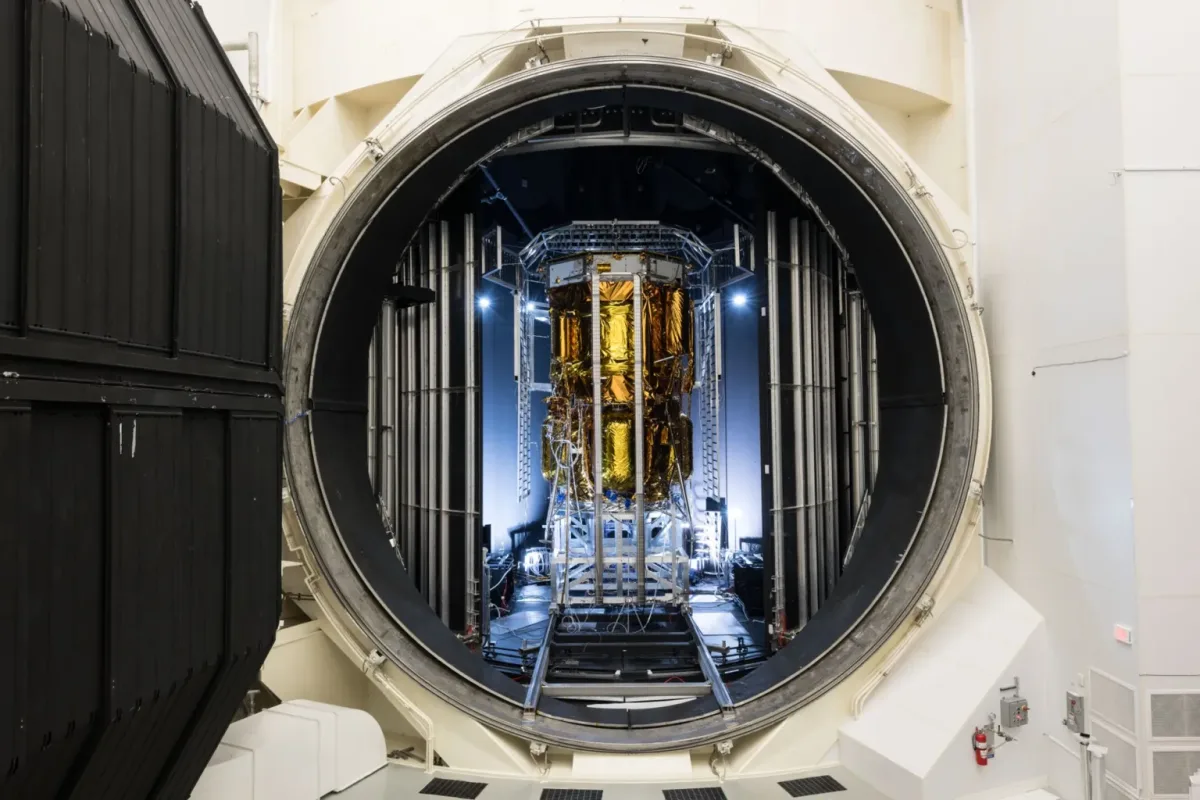
Blue Origin’s Blue Moon lunar program is moving into an important new phase as the company works through the consequences of the May 2026 New Glenn ground-test accident. The Blue Moon Mark 1 lander, known as Endurance, has completed major thermal-vacuum testing at NASA and is now targeted for a January 2027 lunar mission. At the same time, Blue Origin is rebuilding its damaged New Glenn launch infrastructure and continuing development of the larger Blue Moon Mark 2 human lander for NASA’s Artemis program. The goal is bigger than one Moon landing: Blue Origin wants Blue Moon to become part of a repeatable system for cargo, power, science and eventually astronauts at the lunar South Pole.
Summary
- Company: Blue Origin
- Program: Blue Moon lunar landers
- Mark 1 name: Endurance
- Role: Uncrewed cargo and technology demonstration
- Payload capability: Up to 3 metric tons
- Destination: Lunar South Pole region
- Latest launch target: January 2027
- Human lander: Blue Moon Mark 2
- NASA role: Human Landing System for Artemis
- Current challenge: Rebuilding New Glenn launch infrastructure
- Recent milestone: Mark 1 completed thermal-vacuum testing at NASA’s Johnson Space Center
What Is the New Blue Moon?
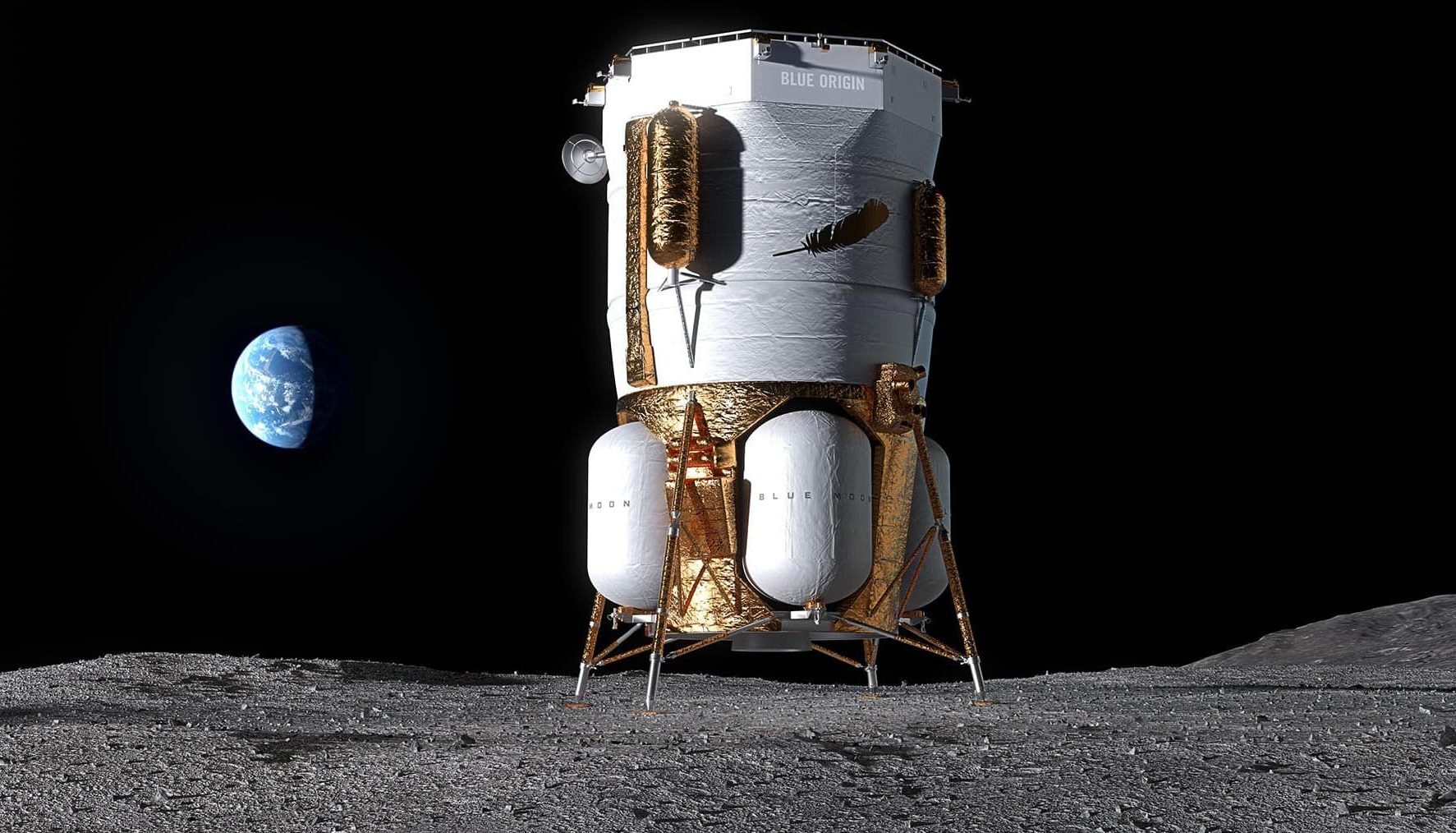
Blue Moon is Blue Origin’s family of lunar landers designed for both cargo and crew missions. The company says its Mark 1 can deliver up to three metric tons to the lunar surface using a New Glenn launch, while the larger Mark 2 is being developed for NASA’s Artemis missions. The current Mark 2 concept is designed for crew operations, with Blue Origin stating that its crew variant is capable of carrying four people.
The important distinction is that Blue Origin is not rebuilding a destroyed Blue Moon lander. The major reconstruction under way concerns Launch Complex 36 in Florida after the New Glenn accident on May 28, 2026. That event damaged important launch infrastructure and forced the company to rethink how it prepares and launches New Glenn.
Early Development and Endurance
The first major step is Blue Moon Mark 1, officially called Endurance. Unlike the future crewed vehicle, Endurance is an uncrewed lander intended to prove technologies needed for more demanding lunar missions.
NASA reports that Endurance completed environmental testing inside Thermal Vacuum Chamber A at Johnson Space Center in May 2026. Engineers tested the spacecraft under simulated vacuum and extreme temperature conditions similar to those it could experience on the Moon. The mission is designed to demonstrate precision landing, cryogenic propulsion and autonomous guidance, navigation and control.
Endurance is also expected to carry NASA technology payloads, including cameras that will study interactions between the lander's engine plume and the lunar surface and a laser retroreflector designed to improve spacecraft positioning.
Why the Launch Delay Matters
Endurance was originally expected to fly in 2026, but the plan changed after the New Glenn ground-test accident.
On May 28, 2026, a New Glenn integrated vehicle experienced a major anomaly during a hotfire test at Launch Complex 36. Blue Origin later said the problem originated at the main oxygen valve on one of the rocket's BE-4 engines. The company reported damage to the lightning tower, transporter-erector and hydraulic systems, although several other major pieces of infrastructure survived.
Instead of rebuilding the launch complex exactly as it was, Blue Origin is moving toward a horizontal/vertical hybrid launch configuration. The company says this approach can remove the need for a new transporter-erector and could also improve future launch cadence.
As of October 8, 2026, Reuters reported that Blue Origin plans to resume New Glenn launches by December 2026. NASA currently lists the Blue Moon Mark 1 mission for January 2027, making the recovery of New Glenn directly important to the lunar schedule.
Blue Moon Mark 1 vs. Mark 2
| Vehicle | Role | Capacity/Goal | Current Status |
|---|---|---|---|
| Blue Moon Mark 1 | Cargo and technology demonstration | Up to 3 metric tons | Preparing for January 2027 mission |
| Blue Moon Mark 2 | Crewed and cargo lunar lander | Crew variant supports astronauts | In development for Artemis |
| Mark 2 Pathfinder | Earth-orbit demonstration | Test docking and lander systems | Part of revised Artemis III plan |
NASA has changed Artemis III into a demonstration mission in Earth orbit. The mission is expected to test commercial lunar lander operations before the first Artemis lunar landing, now targeted for Artemis IV in 2028. Blue Origin’s Mark 2 development remains tied to NASA’s Artemis human-landing strategy.
The Bigger Idea: A Lunar Infrastructure System
Blue Origin is increasingly presenting Blue Moon as more than a spacecraft that lands, delivers cargo and stops.
In September 2026, the company showcased a Power Tower, a vertically deployed solar-energy system designed to stand about 20 meters tall and provide more than 10 kilowatts of power for lunar South Pole operations. The concept is intended to extend electrical power beyond a single lander and could eventually support a wider network of lunar equipment.
That fits NASA’s broader Moon Base strategy, which focuses on building infrastructure for repeated missions and eventually sustained human activity rather than treating every lunar landing as an isolated event.
Current Projects
| Project | Status | Expected Date | Importance |
|---|---|---|---|
| Blue Moon MK1 Endurance | Testing/integration | January 2027 | First major Blue Moon lunar demonstration |
| New Glenn recovery | Rebuild and testing | Return targeted by end of 2026 | Required for future Blue Moon missions |
| Blue Moon MK2 | In development | Artemis-era missions | Future human lunar landing system |
| Artemis III lander demonstration | Planned | 2027 | Earth-orbit test before lunar landing |
NASA's current launch schedule places Endurance in January 2027, while Artemis III is planned for 2027 and Artemis IV for early 2028.
Blue Origin’s Financial Picture
Blue Origin does not have a traditional publicly traded-company “net worth,” so a valuation is more useful than a celebrity-style net-worth estimate. Reuters reported on October 8, 2026, that Blue Origin raised $10 billion in its first external funding round, with the company valued at about $140 billion according to reporting cited by Reuters. The financing comes as Blue Origin continues spending heavily on New Glenn, Blue Moon and other space systems.
Career Highlights of the Blue Moon Program
| Year | Milestone |
|---|---|
| 2023 | NASA selected Blue Origin for the Artemis V human landing system |
| 2026 | Mark 1 completed major thermal-vacuum testing |
| 2026 | New Glenn suffered a major ground-test anomaly |
| 2026 | Blue Origin began rebuilding launch infrastructure |
| 2026 | Power Tower lunar-energy concept was unveiled |
| 2027 | Mark 1 Endurance is currently scheduled for launch |
| 2028 | NASA targets Artemis IV as the first Artemis lunar landing |
NASA awarded Blue Origin a $3.4 billion contract in 2023 to develop its human landing system for Artemis V, including an uncrewed demonstration before the crewed mission.
Frequently Asked Questions
Is Blue Origin rebuilding the Blue Moon lunar lander?
No. The major reconstruction is at New Glenn's launch infrastructure in Florida. Blue Moon Mark 1 has been undergoing testing and integration.
What is Blue Moon Mark 1?
It is Blue Origin's uncrewed lunar cargo and technology-demonstration lander, also called Endurance.
When will Blue Moon Mark 1 launch?
NASA currently lists the mission for January 2027.
What will Endurance do on the Moon?
It will deliver NASA science and technology payloads and demonstrate precision landing, cryogenic propulsion and autonomous navigation systems.
What is Blue Moon Mark 2?
Mark 2 is Blue Origin's larger human-capable lunar lander being developed for NASA's Artemis program.
How many astronauts can Blue Moon Mark 2 carry?
Blue Origin currently describes the crew variant as capable of carrying four crew members.
Why was the Blue Moon launch delayed?
The main reason was the May 2026 New Glenn hotfire accident, which damaged launch infrastructure and pushed the Mark 1 mission toward 2027.
What is Blue Origin's Power Tower?
It is a proposed vertically deployed lunar solar-power system designed to provide more than 10 kilowatts for Moon Base operations.
When will humans next land on the Moon under the current Artemis plan?
NASA currently targets Artemis IV in early 2028 as the first Artemis lunar landing, with Artemis III serving as an Earth-orbit demonstration mission in 2027.
Why is Blue Moon important to NASA?
It is part of NASA's strategy to use commercial partners to provide lunar transportation and support a sustainable human presence on the Moon.
References
NASA — Blue Origin Moon Lander Completes Testing at NASA Vacuum Chamber. NASA source
NASA — Moon Base: Blue Origin Blue Moon Mark 1. NASA launch schedule
NASA — Artemis Partners. NASA Artemis partners
NASA — NASA Outlines Preliminary Artemis III Mission Plans. NASA Artemis III update
Blue Origin — New Glenn Return to Flight. Blue Origin update
Blue Origin — Blue Moon. Blue Origin Blue Moon program
Reuters — Bezos says Blue Origin likely to pursue IPO in coming years, October 8, 2026. Reuters report
NASA Office of Inspector General — Management of the Human Landing System Contracts. NASA OIG report