
Beyond the ISS: The Future of Commercial Space Stations
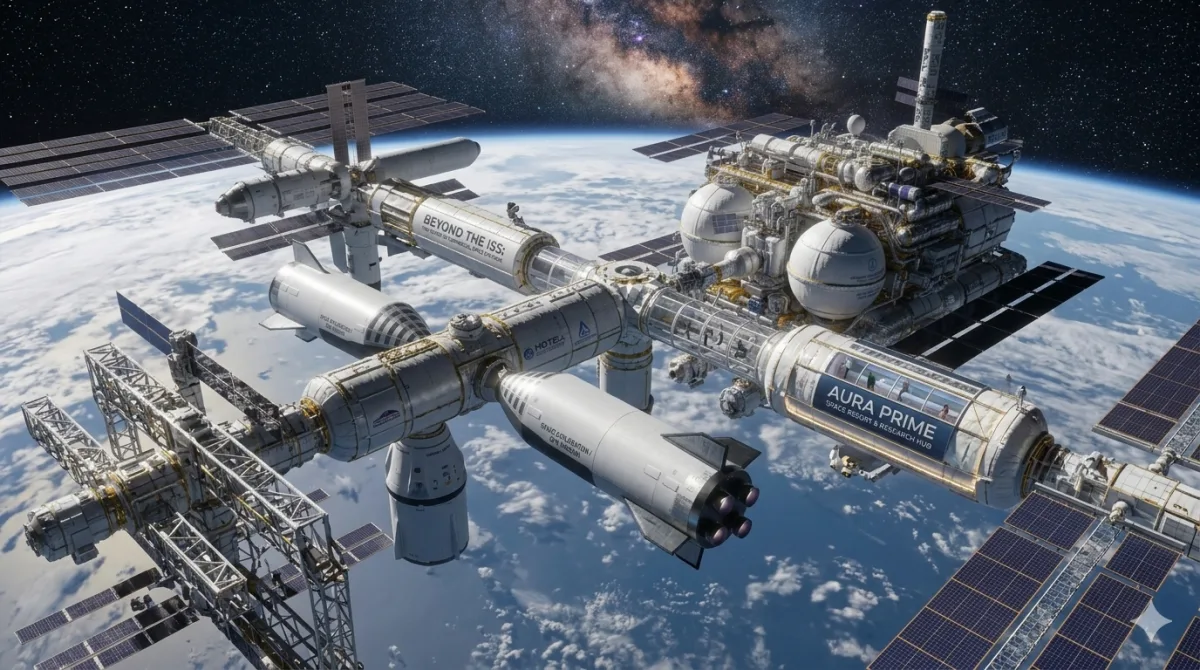
The International Space Station (ISS) is approaching the end of its operational life, and a new era of commercial space stations is rapidly emerging to take its place. Multiple private companies and international partnerships are developing next-generation space stations that promise to revolutionize space exploration, research, and commercial activities in low Earth orbit. These new platforms will offer more affordable access to space, greater commercial opportunities, and potentially more sustainable operations than the ISS, marking a significant shift from government-led to private-sector space infrastructure development.
Summary of Next Commercial Space Stations
- • Axiom Space - Developing commercial modules to attach to ISS first, then standalone station by 2030
- • Orbital Reef - Blue Origin and Sierra Space's "space business park" concept targeting 2028-2030
- • Starlab - Nanoracks and Lockheed Martin's 300m³ station planned for 2028 launch
- • Northrop Grumman Station - Under development with NASA funding, expected late 2020s
- • Vast Space Station - Vast-1 habitat with expandable modules, targeting 2025-2027
- • Rogozin Orbital Station - Russian commercial station concept in development
- • Axiom Station - First fully commercial space station with private modules and crew access
- • Commercial LEO Destinations - NASA's program funding multiple commercial station developers
- • Private Investment Surge - Billions being invested in commercial space infrastructure
- • Research Opportunities - New platforms for microgravity research and development
- • Tourism Potential - Increased opportunities for private space tourism and experiences
- • International Collaboration - New partnerships between space agencies and private companies
- • Sustainability Focus - Next-gen stations designed for longer operational lifespans
- • Cost Reduction - Expected to dramatically reduce costs for accessing and using space
- • Technological Innovation - Advanced life support, propulsion, and habitation systems

Major Commercial Space Station Projects
Axiom Space Station
Axiom Space has emerged as a leader in the commercial space station race, initially focusing on adding commercial modules to the ISS before developing a standalone facility. The company's approach is strategic: begin with ISS modules to establish market presence and revenue streams, then transition to an independent station. Axiom's first modules are scheduled for attachment to the ISS as early as 2024, with the standalone station expected to be operational by 2030. The company has already secured significant contracts with NASA and has strong backing from private investors, positioning it as a major player in the commercial space station market.
Orbital Reef
Orbital Reef, a joint venture between Blue Origin and Sierra Space, envisions a "space business park" that will serve as a commercial hub in low Earth orbit. This ambitious project aims to create a multi-use space station capable of supporting research, manufacturing, tourism, and other commercial activities. The station is designed to be modular and expandable, with an initial target launch date of 2028-2030. Blue Origin's expertise in launch systems and Sierra Space's experience in space habitats make this partnership particularly promising for developing a robust commercial space infrastructure.
Starlab Space Station
Starlab represents a more focused approach to commercial space stations, developed through a partnership between Nanoracks and Lockheed Martin. This station is designed as a single-launch, 300-cubic-meter habitat that can accommodate up to four crew members. Unlike some of the larger, more ambitious projects, Starlab aims to be a more compact, cost-effective solution that can be deployed relatively quickly. The project is targeting a 2028 launch date and has received significant attention for its practical approach and the strong credentials of its development partners.
Comparison of Leading Commercial Space Stations
Technology and Innovation
The next generation of commercial space stations incorporates significant technological advancements over the ISS. These include more efficient life support systems that reduce the need for resupply, advanced propulsion for station-keeping and debris avoidance, and improved habitation designs that enhance crew comfort and productivity. Many of these stations will also feature enhanced connectivity capabilities, with high-speed data links to Earth and potential for in-space communications networks. Additionally, the modular design philosophy allows for easier expansion and adaptation to different commercial needs, making these platforms more versatile than their predecessors.
Commercial Opportunities
Commercial space stations open up a wide range of economic opportunities beyond traditional government-funded research. These include microgravity manufacturing for materials with unique properties, pharmaceutical development, and agricultural research. Tourism represents another significant potential revenue stream, with companies already planning private missions to these stations. The business park concept of stations like Orbital Reef could support startups and established companies looking to conduct space-based activities, creating a new ecosystem of space commerce. Additionally, these stations could serve as platforms for satellite servicing, in-space construction, and other infrastructure support activities.
International Cooperation and Competition
While commercial space stations are primarily being developed by American companies, international cooperation remains a key aspect of the new space ecosystem. NASA's Commercial LEO Destinations program actively involves international partners and encourages collaboration between space agencies and private companies. However, competition is also driving innovation, as companies race to develop the most attractive and capable stations. This competitive environment is likely to result in better value for customers, including government agencies, researchers, and commercial users.
Sustainability and Future Development
Sustainability is a major focus for the next generation of space stations. Unlike the ISS, which relies on regular resupply missions, these new stations are being designed with more closed-loop life support systems and the ability to generate their own power. Some concepts even include in-space manufacturing capabilities to produce replacement parts and supplies. Additionally, these stations are being designed with longer operational lifespans in mind, potentially 15-20 years or more, with plans for eventual upgrade and expansion rather than complete replacement.
Challenges and Risks
Despite the promising outlook, commercial space stations face significant challenges. Technical risks include the complexity of developing reliable systems for long-duration human spaceflight, while financial risks involve the substantial capital requirements and uncertain market demand. Regulatory hurdles also exist, as governments work to develop appropriate frameworks for commercial space activities. Additionally, the space environment itself presents challenges, including orbital debris, radiation exposure, and the psychological effects of long-duration spaceflight on crews.

The transition from the ISS to commercial space stations represents one of the most significant developments in the history of space exploration. These new platforms promise to make space more accessible, affordable, and commercially viable than ever before. While challenges remain, the momentum behind commercial space station development is strong, driven by both government support and private investment. As these stations become operational, they will not only continue humanity's presence in space but also open up new possibilities for scientific discovery, economic development, and human expansion into the solar system.
References
- NASA Commercial LEO Destinations Program - https://www.nasa.gov/mission_pages/station/partnerships/commercial_leo_destinations.html
- Axiom Space Station Information - https://www.axiomspace.com/station
- Orbital Reef Project Overview - https://www.blueorigin.com/orbital-reef
- Starlab Space Station Details - https://www.nanoracks.com/starlab
- NASA's Transition to Commercial Destinations - https://www.nasa.gov/content/nasa-s-transition-to-commercial-destinations-in-low-earth-orbit
- Space Station Market Analysis - https://www.morganstanley.com/ideas/space-station-market
- Commercial Space Station Development Timeline - https://www.space.com/commercial-space-stations-iss-replacement