
Astronaut Health in Deep Space: Fixing Radiation and Bone Loss
TL;DR

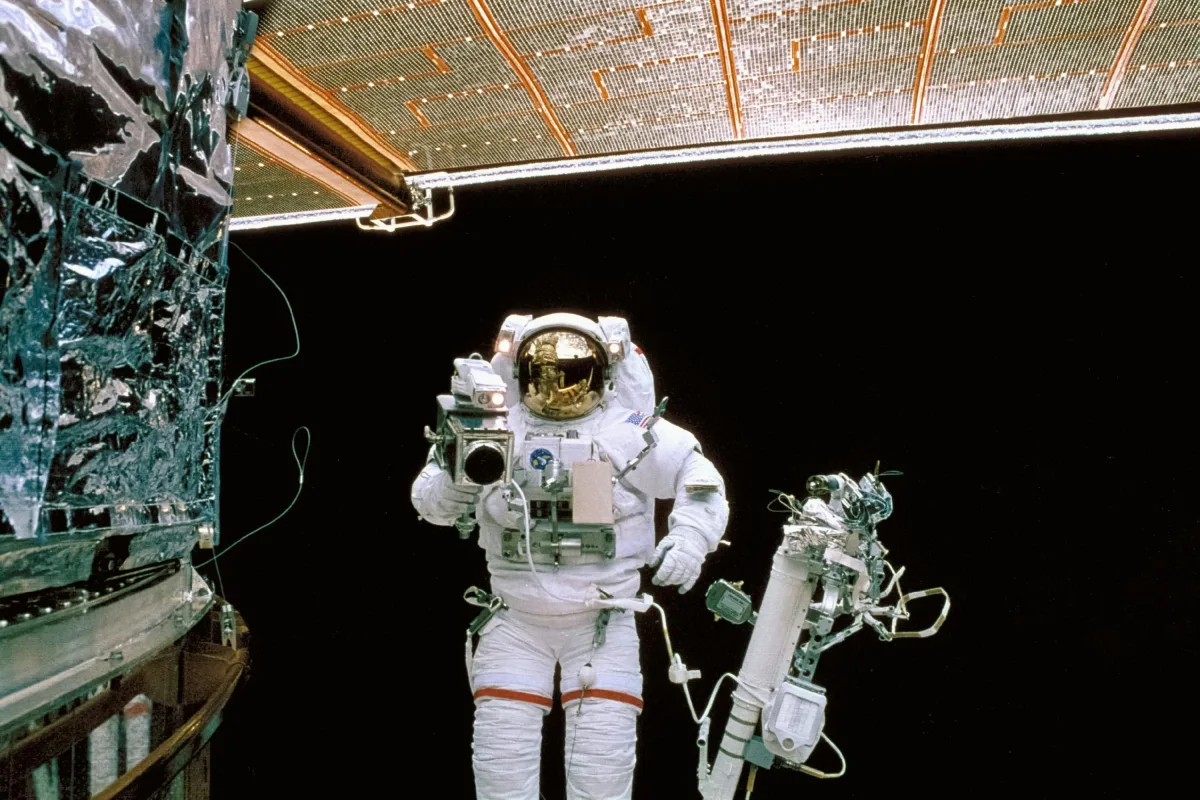
As humanity prepares for longer missions to Mars and beyond, scientists are working tirelessly to solve critical health challenges facing astronauts, particularly the dual threats of radiation exposure and bone density loss. These issues represent some of the most significant barriers to deep space exploration, requiring innovative solutions that will not only protect astronaut health but also pave the way for humanity's future among the stars.

Astronaut Health in Deep Space: Fixing Radiation and Bone Loss

An astronaut on a mission to Mars could lose as much bone mass in one month as an elderly person on Earth loses in an entire year? When you leave the protective bubble of our atmosphere, your body faces environments it never evolved to handle. NASA is currently working to solve two massive hurdles - invisible high energy particles and the thinning of human skeletons. If we want to live on other planets, we have to find ways to keep our bodies from breaking down during the long journey.

You might think of space as a vacuum but it is actually filled with silent dangers that can damage your cells and weaken your frame. Scientists are focusing on shielding and specialized fitness routines to make these trips safer for you. Understanding these risks is the first step toward becoming a multi planetary species.

The Invisible Threat of Space Radiation

Deep space is full of galactic cosmic rays and solar particles that move at nearly the speed of light - these particles are tiny but carry enough energy to pass through the walls of a spacecraft and enter your body. Once inside, they can tear through your DNA, which increases the chance that you will develop cancer or heart disease later in life. Radiation also poses a threat to your brain and central nervous system.

The danger is higher once you move beyond low Earth orbit because you no longer have the planet's magnetic field to deflect the rays. NASA monitors these levels constantly to see how much exposure a human can tolerate. Researchers are still looking for a complete solution, as some high energy particles are almost impossible to stop entirely with current technology.

Practical Ways to Block Cosmic Rays

To keep you safe from these particles, engineers use three main strategies. They focus on shielding, which involves placing thick materials between you and the space environment. While heavy metals can sometimes create secondary radiation when hit, materials rich in hydrogen work well to stop incoming particles. Mission planners try to time trips when solar activity is less likely to produce massive storms.

Current methods to lower radiation risks

  • Time Engineers design faster rockets to spend fewer days in deep space.
  • Shielding Using water tanks or polyethylene plastic in cabin walls to soak up particles.
  • Pharmacology Testing medicines that might help your cells repair themselves after damage.

NASA also looks at mission planning as a shield - By choosing the right year for a launch, they can avoid the most intense periods of solar weather. Galactic cosmic rays stay constant regardless of the sun's cycle, making them a permanent obstacle for your journey.

Why Bones Melt in Microgravity

Your bones stay strong on Earth because they constantly work against gravity. When you float in microgravity, your body decides it no longer needs a heavy, dense skeleton. It begins to break down bone tissue and flush the minerals out through your waste - this process makes your bones brittle and much more likely to snap during a landing or a simple fall.

This loss of density is one of the fastest changes your body undergoes in space. It does not just affect your legs - your entire skeletal structure changes its mineral balance. If scientists cannot stop this, your bones might become too fragile to support your weight when you finally step onto the surface of Mars.

Keeping a Strong Skeleton in Deep Space

You can fight bone loss - putting physical stress back on your body. Astronauts on the International Space Station spend hours every day using specialized machines that mimic the weight of Earth's gravity - these machines use vacuum cylinders or heavy duty bungees to provide the resistance your muscles and bones need to stay healthy.

Strategies for maintaining bone density

  • High-intensity exercise Using treadmills and resistance devices for two hours daily.
  • Nutritional support Eating diets high in Vitamin D and calcium to provide raw materials for bone growth.
  • Bisphosphonates Taking medications that doctors usually prescribe for osteoporosis patients on Earth.


NASA is still researching how well the methods work over multiple years. While exercise slows the loss, it does not always stop it completely. Combining these physical efforts with the right medicine is currently the most effective way to ensure you can walk upright once your mission ends.

FAQ

Can we just build lead spaceships to stop radiation?

Lead is very heavy, which makes it expensive to launch into space. When high energy cosmic rays hit heavy metals like lead, they can shatter atoms and create even more dangerous secondary radiation inside the ship.

Do astronauts ever get their bone density back?

Many astronauts recover much of their bone density after returning to Earth but it can take multiple years. Some parts of the bone architecture may never fully return to the way they were before the mission.

Is there a pill to stop space radiation?

There is no "magic pill" but - Scientists are testing antioxidants and other drugs that might help your body fix DNA damage but these are supplements to shielding, not a replacement for it.

References

  1. NASA Office of the Chief Health & Medical Officer. (2023). Bone Loss OCHMO-MTB-013 Rev D. NASA Technical Brief. https://www.nasa.gov/wp-content/uploads/2023/12/ochmo-tb-030-bone-loss.pdf

  2. Genah, S. (2021). The Effect of Space Travel on Bone Metabolism. National Institutes of Health. https://pmc.ncbi.nlm.nih.gov/articles/PMC8123809

  3. ISS National Laboratory. (2025). Wearable Radiation Shielding: ISS Testing Advances a Vest to Shield Astronauts From Space Radiation. https://issnationallab.org/case_study/wearable-radiation-shielding-astrorad-vest

  4. NASA. (2015). How to Protect Astronauts from Space Radiation on Mars. NASA Science. https://www.nasa.gov/science-research/heliophysics/real-martians-how-to-protect-astronauts-from-space-radiation-on-mars

  5. Cavanagh, PR., Licata, AA., Rice, AJ. (2005). Exercise and pharmacological countermeasures for bone loss during long-duration space flight. EPA HERO. https://hero.epa.gov/reference/1298999

J

Jonathan Bala

Contributing writer for ALLTHINGSGEO.

Related Articles