
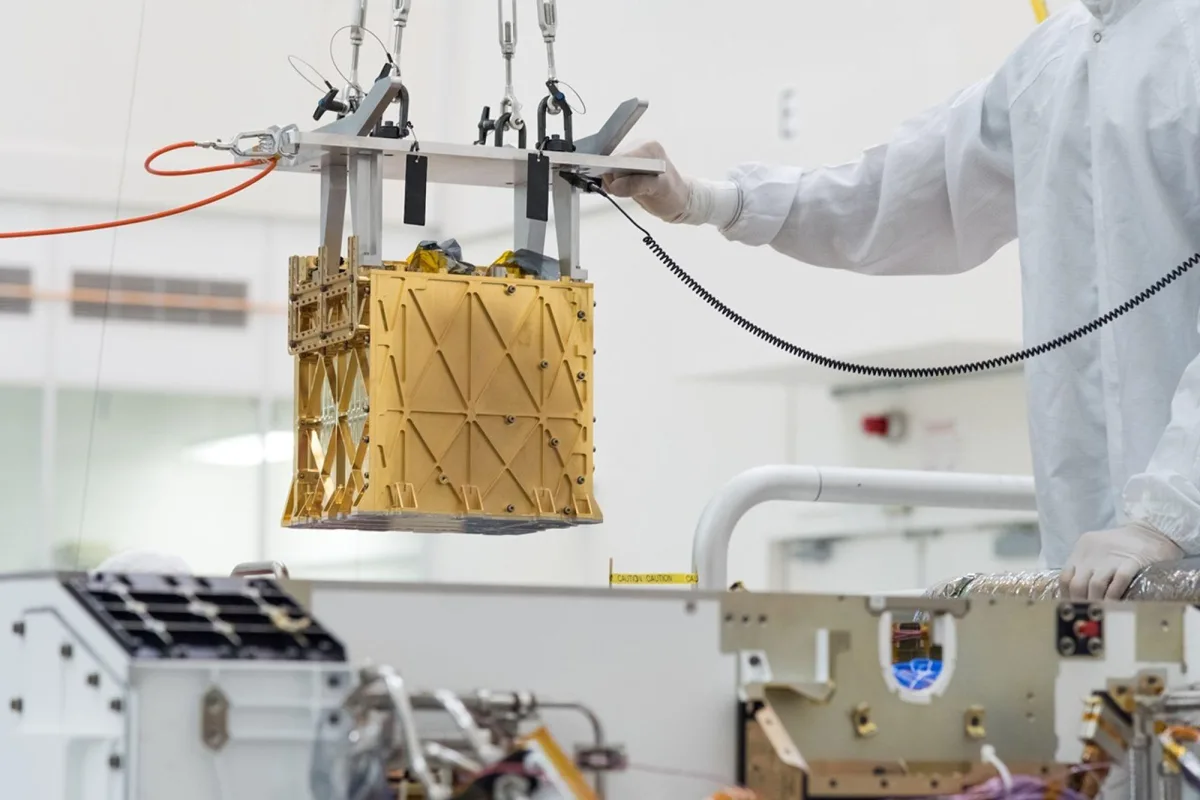
Methane Production on Mars: Testing Sabatier Reactors
Methane production on Mars could help future astronauts make rocket fuel using resources available on the Red Planet. Sabatier reactors are designed to combine carbon dioxide from the Martian atmosphere with hydrogen to produce methane and water. NASA has studied these systems as part of its work on in-situ resource utilization, which means making useful materials directly where they are needed. However, producing methane reliably on Mars will require further testing of catalysts, heat control, gas purification, hydrogen supplies, and long-term equipment performance. Recent research published in 2025 also explores membrane-based reactors that could improve the process by removing water during the reaction.
Summary
-
Topic: Methane production on Mars using Sabatier reactors.
-
Main chemical inputs: Carbon dioxide and hydrogen.
-
Main products: Methane and water.
-
Primary purpose: Supporting future Mars exploration by producing fuel locally.
-
Key technology: A catalytic reactor that controls a chemical reaction.
-
Major challenge: Operating reliably with limited power, extreme environmental conditions, and restricted resources.
-
Related NASA achievement: The MOXIE experiment successfully produced oxygen from the Martian atmosphere, demonstrating one important part of local resource production.
-
Research direction: Improving reactor efficiency, catalyst durability, water removal, and integrated fuel-production systems.
Why Methane Production Matters for Mars
Sending a spacecraft to Mars requires substantial fuel, equipment, and supplies. Carrying everything from Earth increases launch mass and mission costs. Producing some of these resources on Mars could reduce the amount that spacecraft must transport.
Mars has an atmosphere made mostly of carbon dioxide, which provides an important raw material for chemical processing. Water ice is also known to exist in parts of the planet, although future missions would need to locate suitable deposits and develop reliable extraction systems.
Methane is particularly useful because it can serve as rocket fuel. When combined with liquid oxygen, it can power engines designed for methane-based propellants. A local fuel-production facility could therefore help prepare for a future crew's return journey or support other transportation needs.
NASA identifies in-situ resource utilization, commonly called ISRU, as an important area of technology development for future exploration. Its work includes processing atmospheric gases, extracting water, and developing systems that can produce useful resources away from Earth.
How the Sabatier Reaction Works
The Sabatier reaction combines carbon dioxide with hydrogen in the presence of a catalyst. A catalyst helps the chemical reaction take place without being consumed as a reactant.
The chemical equation is:
In simple terms, one molecule of carbon dioxide reacts with four molecules of hydrogen to produce one molecule of methane and two molecules of water.
The reaction releases heat, so engineers must carefully manage the reactor's temperature. If the system becomes too hot or its operating conditions change, performance can suffer and components may wear out more quickly.
Hydrogen is a major consideration. It could be obtained by extracting water from Martian soil or ice and splitting that water through electrolysis. The process requires energy, and the water must be accessible in sufficient quantities. Engineers must therefore assess the complete production system, not just the reactor itself.
Testing Sabatier Reactors for Mars Missions
Testing begins on Earth because engineers need to understand how a reactor behaves before attempting to operate one in a remote environment.
Researchers feed carbon dioxide and hydrogen into a reactor containing a suitable catalyst. They then measure the gases entering and leaving the system to determine how much methane is produced and how efficiently the carbon dioxide is converted.
NASA's research on Mars propellant-production systems has examined reactor design, thermal management, gas separation, and the possible use of multiple reactors. These factors affect whether a system can operate continuously and produce fuel at the rate a mission requires.
Important tests include:
-
Temperature control: Checking whether the reactor maintains a suitable temperature while releasing heat.
-
Catalyst durability: Measuring whether the catalyst continues working after extended operation.
-
Gas purity: Checking whether the methane contains unwanted gases or moisture.
-
Start-up and shutdown: Confirming that the system can begin operating and stop safely under changing conditions.
-
Contamination resistance: Testing how dust, water exposure, and unwanted chemicals affect performance.
-
Long-duration operation: Measuring reliability over repeated operating cycles.
NASA's catalyst research has specifically examined performance and possible effects from vibration during launch, liquid-water exposure, particulate contamination, and chemical contamination. Such testing helps engineers identify weaknesses before equipment is sent to Mars.
Key Reactor Testing Requirements
The table below summarizes major engineering questions that researchers must address before a Sabatier system can support a Mars mission.
|
Test area |
What engineers measure |
Why it matters |
|---|---|---|
|
Reaction efficiency |
Carbon dioxide conversion and methane yield |
Determines how much fuel can be produced |
|
Thermal management |
Reactor temperature and heat distribution |
Helps prevent overheating and unstable performance |
|
Catalyst life |
Changes in activity over time |
Determines maintenance and replacement needs |
|
Gas purification |
Methane purity and moisture levels |
Supports safe storage and reliable fuel use |
|
System reliability |
Performance over repeated cycles |
Reduces the risk of equipment failure |
|
Power consumption |
Electricity required per unit of fuel |
Helps determine whether the system is practical on Mars |
The goal is not simply to demonstrate that methane can be produced. Engineers must show that the complete system can make enough usable fuel, with acceptable energy requirements, over the period needed for a mission.
New Research: Improving Sabatier Reactor Performance
One important development appeared in a study published in Nature Communications on September 29, 2025. Researchers presented a membrane-based Sabatier system that combines a catalytic reactor with a membrane designed to remove water vapor during the reaction.
Removing water as it forms can help improve carbon dioxide conversion and methane production under suitable operating conditions. The researchers reported high methane yield and long-term stability, while also examining how the system performed under intermittent power supplies. This is relevant to space applications, where available power may change with sunlight and other operating demands.
The research is promising, but a laboratory result does not automatically establish that a technology is ready for a Mars mission. The system would still need further assessment for mission-specific requirements, including durability, power use, equipment mass, environmental resistance, and integration with other fuel-production equipment.
NASA has also investigated larger-scale methanation systems and combined chemical-processing technologies. One approach described in its technology records combines carbon dioxide processing with methanation to produce fuel-related products and water. These projects show that researchers are examining complete production systems rather than treating methane synthesis as an isolated chemical reaction.
What MOXIE Has Already Demonstrated

NASA's MOXIE experiment provides an important example of resource-production technology operating on another planet. Carried aboard the Perseverance rover, MOXIE extracted carbon dioxide from the Martian atmosphere and used solid oxide electrolysis to produce oxygen.
The experiment completed its operations in August 2023 after producing a total of 122 grams of oxygen. At its best, it produced 12 grams per hour at a purity of at least 98 percent. These results demonstrated that a compact instrument could process Martian atmospheric gas under real planetary conditions.
MOXIE did not produce methane. It used a different chemical process to make oxygen. Its importance is that it demonstrated an essential part of the wider goal of using local resources to support exploration.
Future systems could combine atmospheric processing, water extraction, electrolysis, methane production, and oxygen storage. Each component would have to work reliably for the complete system to support a crewed mission.
Major Challenges Ahead
The first major challenge is obtaining enough hydrogen. Although carbon dioxide is abundant in the Martian atmosphere, hydrogen must come from another source. Extracting and processing water requires equipment, energy, and access to suitable deposits.
The second challenge is energy. Reactors, compressors, heaters, electrolysis equipment, and gas-purification systems all require power. Dust storms and changing sunlight can affect solar-powered systems, making energy storage and efficient operation important.
The third challenge is reliability. A reactor may perform well in a laboratory but face different conditions on Mars, including dust exposure, limited maintenance, and long periods of operation without human intervention.
Finally, methane must be separated, purified, and stored. For rocket use, the fuel may need to be cooled into liquid form, which introduces additional equipment and energy requirements. Oxygen must also be available in suitable quantities for combustion.
|
Challenge |
Potential solution |
|---|---|
|
Limited hydrogen supply |
Extract water from accessible Martian ice or soil |
|
Variable power availability |
Improve energy storage and reactor operating flexibility |
|
Catalyst degradation |
Develop durable catalysts and monitor performance |
|
Water and gas separation |
Use improved condensers, membranes, and purification equipment |
|
Long-term equipment reliability |
Conduct extended tests and environmental simulations |
NASA's ISRU development work includes testing equipment under conditions such as thermal vacuum, dust exposure, vibration, and other stresses relevant to space missions. These tests help reveal problems that ordinary laboratory operation may not expose.
The Future of Methane Production on Mars
Methane production could become an important part of preparing for human exploration of Mars. By using carbon dioxide from the atmosphere and hydrogen obtained from water, future missions may be able to manufacture some of the fuel they need rather than transport every supply from Earth.
NASA's MOXIE experiment has already demonstrated that atmospheric resource processing can work on Mars. Meanwhile, Sabatier reactor studies and newer membrane-based designs are addressing the different challenges involved in making methane efficiently and reliably.
The next step is to improve the technology as a complete system. Researchers must demonstrate dependable fuel production, effective heat management, long-lasting catalysts, reliable power supplies, and safe storage. Until these challenges are addressed, methane production on Mars remains a developing technology rather than an established capability for crewed missions.
Even so, continued testing could help turn local fuel production into a practical part of future Mars exploration.
References
-
NASA Technical Reports Server, Sabatier System Design Study for a Mars ISRU Propellant Production Plant.
-
NASA Technical Reports Server, Study of Sabatier Catalyst Performance for a Mars ISRU Propellant Production Plant.
-
Nature Communications, A membrane Sabatier system for water recovery and rocket propellant production, September 29, 2025.
-
NASA, In-Situ Resource Utilization.
-
NASA TechPort, ISRU-O2 Production on Mars.